
 Photo: NPS / Tom Engberg
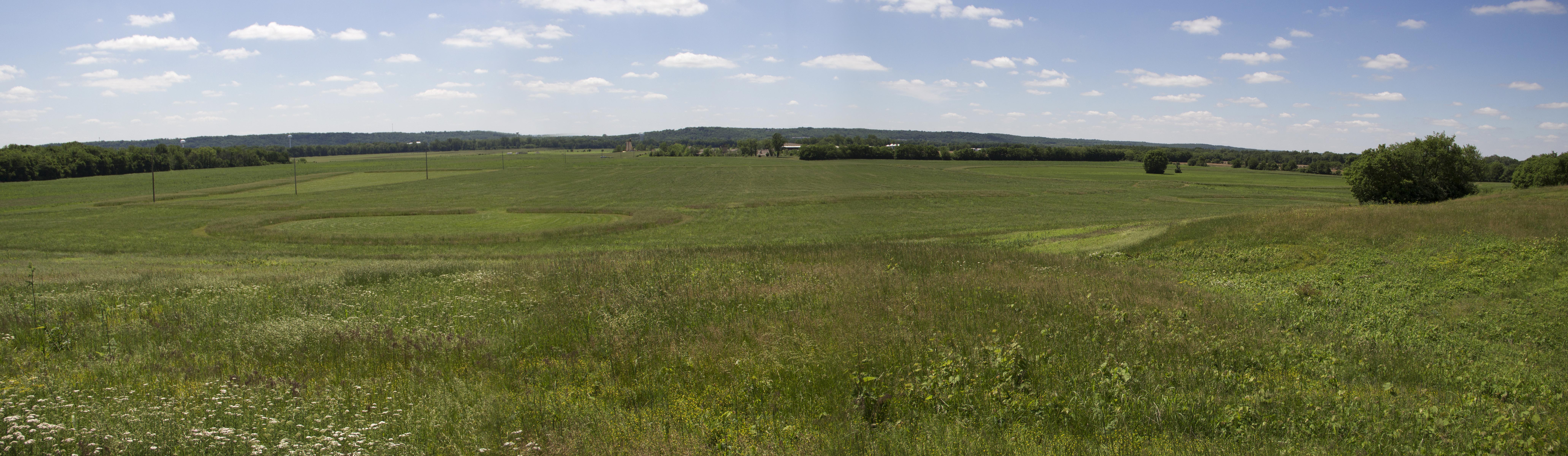
Hopewell Culture National Historical Park preserves the most concentrated collection of ancient Native American earthworks in North America, with massive geometric enclosures and burial mounds built by the Hopewell people between 100 BCE and 500 CE. Families explore five distinct sites including Mound City Group with its 23 burial mounds arranged in a perfect square, and the enormous Seip Earthworks featuring a circular enclosure nearly 1,800 feet in diameter. The park's Hopewell Mound Group contains the largest Hopewell burial mound ever discovered, standing 30 feet tall and 140 feet in diameter. What sets this park apart from other archaeological sites is the engineering precision of these earthworks—the Great Circle at Newark (associated site) aligns with lunar cycles, demonstrating the Hopewell people's sophisticated understanding of astronomy.
Junior Ranger Program at Hopewell Culture National Historical Park
The Junior Ranger program at Hopewell Culture transforms young visitors into budding archaeologists through hands-on activities that bring ancient history to life. Kids complete age-appropriate challenges like artifact identification, earthwork exploration, and cultural discovery activities that help them understand how the Hopewell people lived and built these remarkable sites.
- Explore massive ancient earthworks and ceremonial mounds
- Try hands-on archaeological activities and artifact handling
- Learn about Native American astronomy and engineering skills
Program Details
Best Ages for Hopewell Culture National Historical Park
Ages 5–8
Young kids love the treasure hunt aspect of finding different mound shapes around Mound City Group and imagining what ancient ceremonies might have looked like. The visitor center exhibits with replica artifacts help them understand what the Hopewell people used in daily life. Keep visits to 1-2 hours as the earthworks can feel abstract to this age group.
Ages 9–12
This age group truly connects with the archaeological detective work, comparing artifact photos and learning about burial customs and trade networks that stretched from the Gulf Coast to the Great Lakes. They're fascinated by the geometric precision of the earthworks and can grasp the impressive scale when walking the perimeter trails. The activities help them understand how archaeologists piece together ancient cultures.
Ages 13+
Teens and adults appreciate the sophisticated engineering and astronomical alignments of these 2,000-year-old earthworks, along with the complex trade relationships evidenced by materials from across North America. They can handle the longer hikes required to see all five park sites and engage with deeper questions about social organization and religious practices. The Junior Archeologist program offers additional challenges perfect for this age group.
Planning Your Visit
Getting There
The main visitor center at Mound City Group has ample parking for large vehicles and serves as your base for exploring the other four earthwork sites. No reservations needed, but definitely start at the visitor center to get oriented with the park film and exhibits before heading to the earthworks. The other sites (Hopewell Mound Group, Hopeton, and Seip Earthworks) require separate drives of 10-20 minutes each.
Van & RV Notes
Our high-roof Sprinter fits easily in the visitor center parking lot, and all five park sites accommodate larger RVs without height restrictions since they're all surface lots. No camping is available within the park, but nearby state parks offer RV-friendly campgrounds about 30 minutes away. The flat, paved trails at most sites work well for families with mobility needs.
Best Time to Visit
Late spring through early fall offers the most comfortable weather for outdoor exploration, with May and September providing ideal temperatures for walking the earthwork perimeter trails. Summer can be hot and humid, but early morning visits work well. Winter visits are possible but focus more on indoor exhibits since the earthworks are less impressive under snow cover.
How Long to Spend
Plan a full day if you want to visit all five earthwork sites, but families often find 3-4 hours at Mound City Group plus one other site provides plenty of ancient history. The visitor center film and exhibits alone take about an hour, which helps kids understand what they're seeing outdoors.
Don't Miss
Walk the entire perimeter of the Great Circle at Seip Earthworks to truly grasp the massive scale of what ancient people built with simple tools—it takes about 30 minutes and kids love timing the walk. The museum's comparison of Hopewell trade goods showing materials from across the continent absolutely amazes families when they realize these people were part of vast trade networks 2,000 years ago.
Fun Facts for Kids
The Hopewell people moved over 200,000 tons of earth to build Mound City Group using only baskets, wooden tools, and their hands
Archaeologists have found obsidian from Yellowstone, shells from the Gulf of Mexico, and copper from the Great Lakes in Hopewell burial mounds, proving they traded across thousands of miles
The Great Circle at Newark Earthworks (related site) is precisely aligned with the 18.6-year cycle of the moon's rising and setting positions
Some Hopewell burial mounds contained mica sheets cut into perfect geometric shapes, including a 13-foot-long silhouette of a human hand
Plan Your Stay
Save on park entry with the America the Beautiful Pass — $80 for unlimited access to all 400+ National Park sites for a full year.
Where to Stay
Some of the links above are affiliate links. If you book through them, we may earn a small commission at no extra cost to you.
Nearby Parks to Earn More Badges
Charles Young Buffalo Soldiers National Monument
Charles Young Buffalo Soldiers National Monument honors the first African American colonel in the U.S. Army and tells the story of the famous Buffalo Soldiers cavalry units.
Dayton Aviation Heritage National Historical Park
Dayton Aviation Heritage National Historical Park celebrates the Wright brothers' achievements with multiple sites including their original bike shop and Huffman Prairie Flying Field where they perfected powered flight.
William Howard Taft National Historic Site
William Howard Taft National Historic Site preserves the birthplace and boyhood home of America's 27th president and only president to later serve as Chief Justice of the Supreme Court.
See all Junior Ranger badges
Track your family's progress across every National Park Service site
View Badge Tracker