
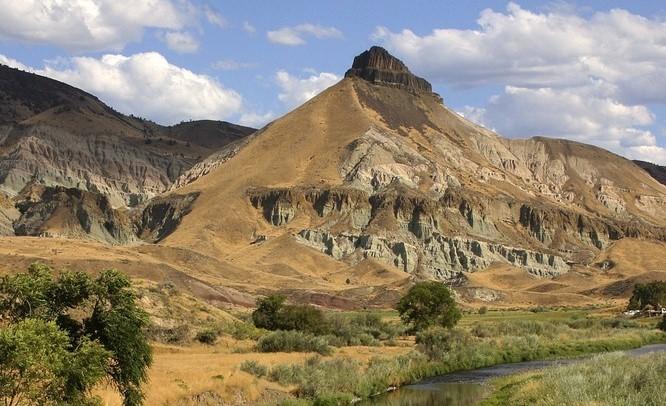
John Day Fossil Beds National Monument
John Day Fossil Beds National Monument preserves one of the world's most complete fossil records spanning 40 million years, with three distinct units showcasing different prehistoric eras across Oregon's high desert. Families discover fossils of ancient three-toed horses, saber-tooth cats, and rhinoceros-like brontotheres that once roamed semitropical forests here. The colorful Painted Hills Unit displays stunning red, yellow, and black striped claystone formations created by ancient volcanic ash and climate changes. Unlike other fossil sites where specimens are housed indoors, the Trail of Fossils at Sheep Rock Unit lets families see actual leaf imprints and petrified wood embedded in fallen boulders along an easy quarter-mile walk.
Junior Ranger Program at John Day Fossil Beds National Monument
The Junior Ranger program at John Day Fossil Beds engages kids with hands-on fossil exploration activities and geological discovery challenges. Young paleontologists complete age-appropriate booklets while learning about ancient mammals, plants, and the forces that shaped these colorful badlands.
- Seeing real fossils embedded in ancient rock layers
- Exploring the vibrant Painted Hills with their rainbow-striped formations
- Hiking easy trails through landscapes that look like another planet
Program Details
Best Ages for John Day Fossil Beds National Monument
Age ranges are suggested groupings — check at the visitor center for the official Junior Ranger booklet breakdown.
Ages 4–7
Young paleontologists love the easy Trail of Fossils where they can spot leaf imprints in rocks without any difficult hiking. The Thomas Condon Visitor Center's fossil exhibits and hands-on displays perfectly capture their attention spans. The mostly level Painted Cove Trail's colorful striped rocks feel like walking through a rainbow.
Ages 8–12
This age group truly connects with the prehistoric timeline concepts and gets excited identifying different fossil types along the trails. They're old enough to appreciate the geological forces that created these colorful badlands while still maintaining wonder about ancient saber-tooth cats and three-toed horses. The Story in Stone Trail's dramatic blue-green claystone pillars spark their imagination about Oregon's ancient past.
Ages 13+
Teens and adults appreciate the scientific significance of this world-class fossil record and can tackle longer combinations of trails across multiple units in one day. They enjoy learning about paleontology careers and understanding how climate changes affected ancient ecosystems. The park's three distinct units offer enough variety and geological complexity to keep older Junior Rangers engaged throughout their visit.
Planning Your Visit
Getting There
The three units span over 100 miles, so plan your route carefully — GPS can be unreliable in this remote area. Thomas Condon Visitor Center at Sheep Rock Unit serves as the main hub with restrooms, exhibits, and Junior Ranger materials. No entrance fees, but bring water and snacks as services are extremely limited between units.
Van & RV Notes
Our Sprinter fits comfortably in all visitor center parking areas, though spaces at Painted Hills can fill quickly during peak wildflower season. No campgrounds within the monument, but nearby Clyde Holliday State Recreation Site accommodates RVs up to 60 feet with hookups. The three units require significant driving between them, making a central base camp in Mitchell or Dayville most practical.
Best Time to Visit
May through October offers the most comfortable weather, with spring wildflowers adding extra color to the Painted Hills Unit. Summer temperatures can reach 110°F, making early morning or late afternoon visits essential during July and August. Fall provides ideal hiking weather with fewer crowds, while winter visits are possible but some higher elevation areas may have snow.
How Long to Spend
Plan a full day minimum to visit all three units and complete the Junior Ranger program, though families often split this across two days to avoid rushing. Each unit deserves 2-3 hours to properly explore the trails and fossil sites.
Don't Miss
The Trail of Fossils absolutely delivers on its promise — kids consistently get excited spotting actual leaf fossils in the trail-side boulders. The Painted Hills Overlook provides Instagram-worthy photos, but the real magic happens walking through Painted Cove Trail where the striped claystone formations tower overhead in brilliant yellows, reds, and blacks.
Fun Facts for Kids
The fossils here span 40 million years, making it one of the most complete fossil records in North America
Ancient horses at John Day had three toes instead of hooves and were only the size of dogs
The colorful stripes in the Painted Hills were created by volcanic ash that fell during different climate periods
Saber-tooth cats and bear dogs once hunted through the forests that covered this now-desert landscape
Plan Your Stay
Save on park entry with the America the Beautiful Pass — $80 for unlimited access to all 400+ National Park sites for a full year.
Where to Stay
Some of the links above are affiliate links. If you book through them, we may earn a small commission at no extra cost to you.
Nearby Parks to Earn More Badges
Fort Vancouver National Historic Site
Whitman Mission National Historic Site near Walla Walla tells the story of Oregon Trail pioneers and offers a completely different historical perspective just 120 miles northeast.
Mount St. Helens National Volcanic Monument
Fort Vancouver National Historic Site preserves the Pacific Northwest's fur trading headquarters with living history demonstrations that kids love.
Whitman Mission National Historic Site
Mount St. Helens National Volcanic Monument shows the dramatic results of the 1980 eruption and provides excellent contrast to John Day's ancient geological story.
Our Adventures at John Day Fossil Beds National Monument
See all Junior Ranger badges
Track your family's progress across every National Park Service site
View Badge Tracker