
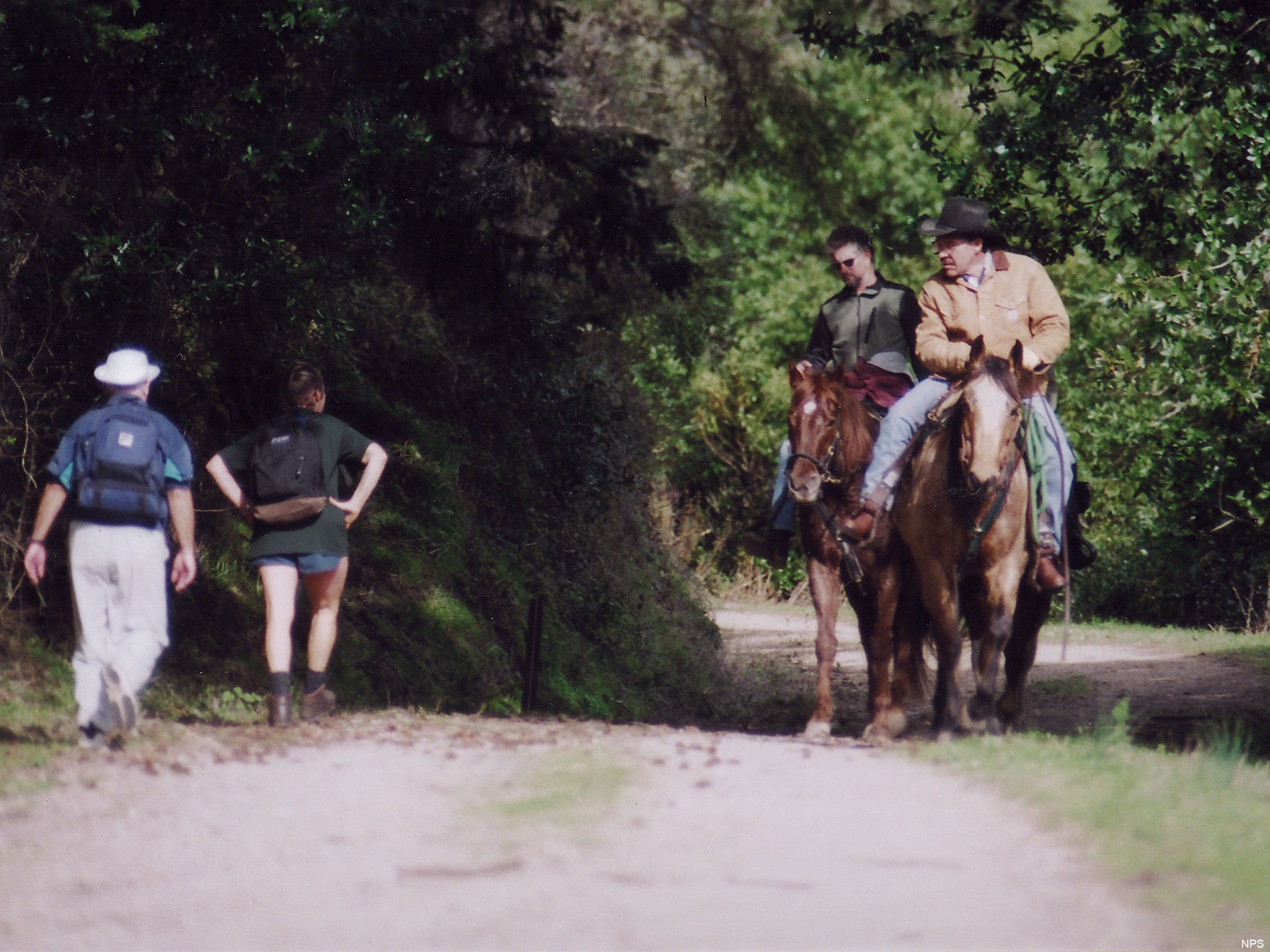
Point Reyes National Seashore
Point Reyes National Seashore sits on the Pacific Plate, moving northwest at two inches per year along the San Andreas Fault that runs directly through the park. Families can explore dramatic contrasts from the historic Point Reyes Lighthouse perched on windswept cliffs to the sheltered waters of Drakes Estero where harbor seals raise their pups. The park protects over 1,500 species of plants and animals, including a significant population of elephant seals, with the Drakes Beach colony viewable from the Chimney Rock overlook. What sets Point Reyes apart is its position on a moving landmass—kids can literally stand on the fault line and straddle two tectonic plates at the earthquake trail.
Junior Ranger Program at Point Reyes National Seashore
The Junior Ranger program at Point Reyes focuses on marine ecology and coastal conservation, with kids completing activities about lighthouse history, elephant seal behavior, and tide pool ecosystems. Young rangers explore the visitor center exhibits, participate in guided tide pool walks, and learn about protecting fragile coastal habitats while earning their official Junior Ranger badge.
- Tide pool exploration with crabs, sea anemones, and starfish
- Elephant seal viewing at Drakes Beach during pupping season
- Historic Point Reyes Lighthouse tours and whale watching opportunities
Program Details
Our Earned Badge
Best Ages for Point Reyes National Seashore
Ages 5–8
Young children love the tide pool discovery activities and learning about friendly marine animals like harbor seals. The lighthouse visit and simple wildlife watching activities work well for shorter attention spans. Keep beach exploration close to visitor centers where restrooms and exhibits provide breaks.
Ages 9–12
This age group excels at the marine life studies, particularly elephant seal behavior and gray whale migration patterns. They can handle longer hikes to complete booklet activities and truly appreciate the Coast Miwok cultural history sections. The lighthouse maritime history activities perfectly match their developing interest in real-world connections.
Ages 13+
Teens and adults dive deep into the park's complex ecosystems and geological processes along the San Andreas Fault. They can tackle challenging hikes to remote areas for wildlife observation and appreciate the sophisticated conservation concepts. The program encourages exploring all aspects of the seashore's natural and cultural history.
Planning Your Visit
Getting There
Approach via winding Highway 1 or Sir Francis Drake Boulevard—both routes offer scenic drives but expect narrow, curvy roads. Parking fills up early at popular spots like the lighthouse, so arrive by 9am on weekends. No entrance fees, but some areas require short hikes from parking areas.
Van & RV Notes
Our 22-foot Sprinter fits in most parking areas, though spaces at Drakes Beach and the lighthouse can be tight. No RV camping within the park, but nearby Samuel P. Taylor State Park offers excellent hookup sites as a base camp. Low-hanging branches on some approach roads require attention with high-profile vehicles.
Best Time to Visit
April through June offers the best tide pooling conditions and wildflower displays, with comfortable temperatures for outdoor activities. Summer brings persistent fog that can limit lighthouse views but creates magical atmospheric conditions. Winter storms can be spectacular from safe viewing areas, though some trails may be muddy.
How Long to Spend
Plan a full day to properly experience both visitor centers and complete Junior Ranger activities. The park's 71,000 acres deserve multiple visits—families often return for seasonal changes and different wildlife viewing opportunities.
Don't Miss
Time your visit with low tide to explore the incredible tide pools at Drakes Beach where kids discover sea anemones, hermit crabs, and colorful sea stars. The Earthquake Trail offers a unique chance to walk directly along the San Andreas Fault and see how the 1906 earthquake shifted the landscape—it's a powerful geology lesson that brings textbooks to life.
Fun Facts for Kids
Point Reyes moves northwest two inches per year, meaning it will reach Alaska in about 20 million years
The Point Reyes Lighthouse has a first-order Fresnel lens weighing over 6,000 pounds that can be seen 24 miles out to sea
Elephant seals can hold their breath for up to two hours and dive deeper than 5,000 feet while hunting for food
The park sits in the fog belt, receiving over 60 inches of rainfall annually while areas just 20 miles inland stay dry
Plan Your Stay
Save on park entry with the America the Beautiful Pass — $80 for unlimited access to all 400+ National Park sites for a full year.
Where to Stay
Some of the links above are affiliate links. If you book through them, we may earn a small commission at no extra cost to you.
Nearby Parks to Earn More Badges
Fort Point National Historic Site
Fort Point National Historic Site showcases a massive Civil War-era fortress built to defend San Francisco Bay, with Junior Rangers exploring military history and engineering marvels.
Golden Gate National Recreation Area
Golden Gate National Recreation Area offers urban-meets-nature experiences from Alcatraz Island to coastal bluffs, perfect for families wanting diverse activities in one trip.
Muir Woods National Monument
Muir Woods National Monument protects ancient coast redwoods in cathedral-like groves where Junior Rangers learn about these living giants that can live over 1,000 years.
See all Junior Ranger badges
Track your family's progress across every National Park Service site
View Badge Tracker