
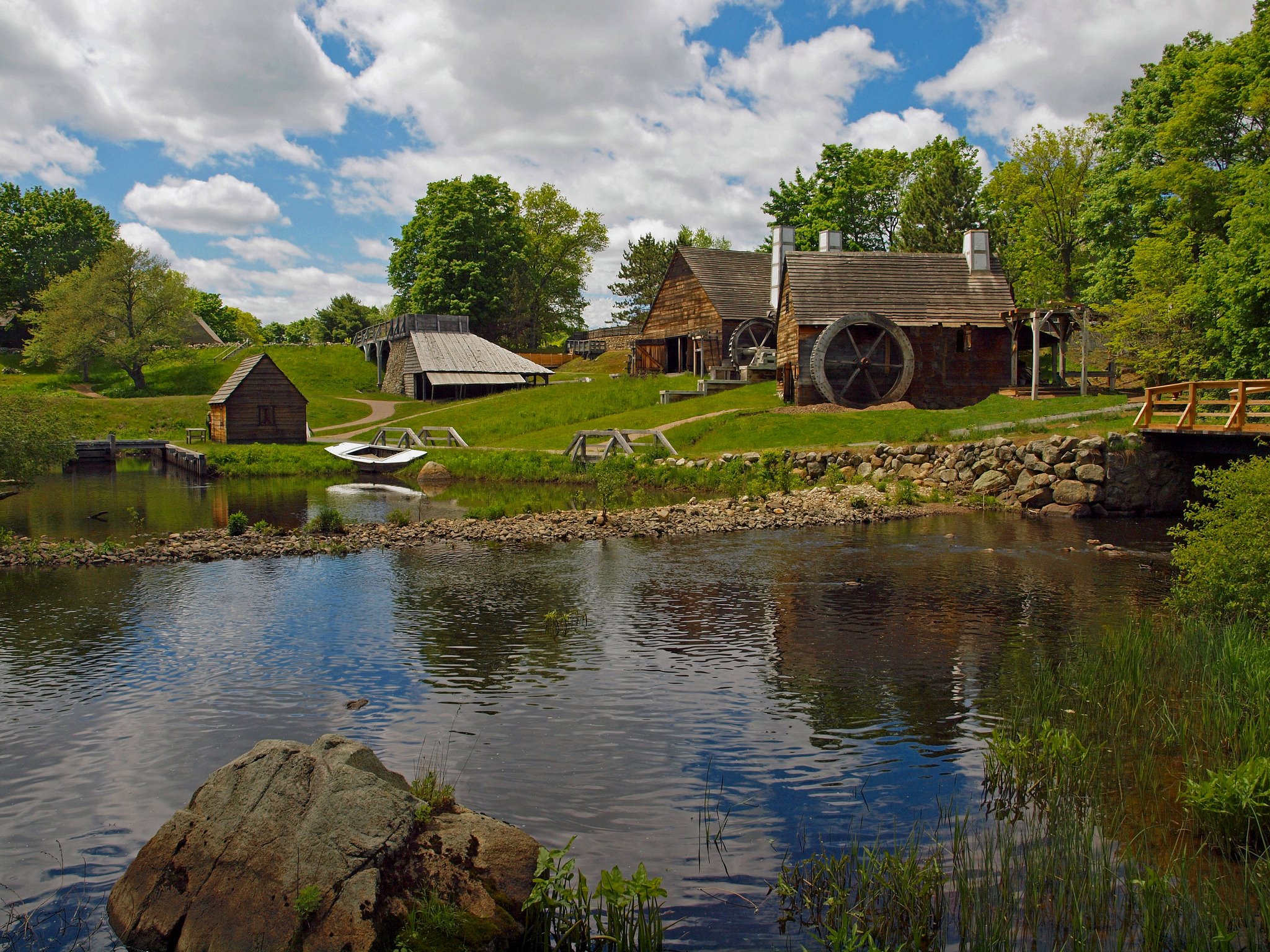
 Photo: NPS Photo / Don Woods
Saugus Iron Works National Historic Site preserves America's first successful integrated ironworks, established in 1646 on the banks of the Saugus River. Families can watch working waterwheels turn and explore the restored 17th-century Iron Works House, one of the few surviving Puritan-era homes in Massachusetts. The site's unique bog iron deposits made this location ideal for colonial iron production, transforming raw marsh ore into tools that built early America. Kids love seeing the massive reconstructed blast furnace and forge, while parents appreciate learning how European ironmaking technology shaped New England's industrial future.
Junior Ranger Program at Saugus Iron Works National Historic Site
The Junior Ranger program at Saugus Iron Works transforms kids into historical detectives as they explore America's first integrated ironworks. Children complete activity booklets while discovering how colonists created iron tools, nails, and household items that built early America.
- Watch blacksmith demonstrations and see sparks fly
- Explore the restored blast furnace and waterwheel
- Learn how colonists turned bog iron into essential tools
Program Details
Download Junior Ranger Booklet
Get a head start! Download and print the booklet before your visit.
Source: NPS Junior Ranger Program Page
Best Ages for Saugus Iron Works National Historic Site
Ages 4–8
Young children love the hands-on exploration aspects and connecting to stories from the past. The self-guided format works well for families with multiple ages, allowing little ones to focus on what interests them most. Parents should help with reading the activity prompts and facilitate the three discussion questions at the end.
Ages 9–12
This age group truly shines as group facilitators, which the program specifically encourages. They can lead younger siblings through the Explore, Learn, Protect activities and ask thoughtful questions about historic preservation and biodiversity. The program's emphasis on creating connections to the past resonates strongly with kids developing their own sense of history.
Ages 13+
Teens and adults can dive deeper into the complex stories of indigenous history, colonial industry, and environmental stewardship. The program encourages exploring untold stories and having courage to ask for more information, perfect for older participants interested in nuanced historical narratives. The three reflection questions at the end create meaningful family discussions about resource protection and historical significance.
Planning Your Visit
Getting There
The visitor center parking lot accommodates larger vehicles but spaces fill quickly during peak season. Arrive early morning for the best parking spots and cooler conditions for exploring outdoor exhibits. Public transportation via MBTA provides an alternative for families staying in Boston.
Van & RV Notes
The main parking area works for Sprinter vans and smaller RVs, though maneuvering space is limited in the historic district setting. No overnight parking or camping facilities available on-site - families typically stay at nearby private campgrounds. The compact 12-acre site makes this an easy day trip addition to longer New England tours.
Best Time to Visit
Visit May through October when blacksmith demonstrations and guided tours run regularly, with summer offering the most consistent programming. Spring and fall provide comfortable temperatures for exploring outdoor exhibits without summer crowds. Winter visits focus on indoor exhibits at the visitor center, though grounds remain accessible year-round.
How Long to Spend
Plan 2-3 hours to complete the Junior Ranger program and explore the historic buildings at a comfortable pace. Families often combine this with nearby Boston attractions for a full day of historical exploration.
Don't Miss
Time your visit to catch a blacksmith demonstration - kids absolutely love watching metal objects being forged using traditional techniques. The working waterwheel demonstrations during guided tours bring the colonial ironmaking process to life in ways textbooks simply cannot match.
Fun Facts for Kids
The Saugus River's bog iron deposits were created over thousands of years as iron-rich groundwater mixed with organic matter in wetlands
Colonial ironworkers at Saugus produced the first cast iron pots made in America, revolutionizing cooking in New England homes
The site includes one of New England's few surviving 17th-century homes, still standing after nearly 400 years
European ironmaking techniques brought to Saugus required teams of skilled workers including forgemen, molders, and colliers who made charcoal fuel
Plan Your Stay
Save on park entry with the America the Beautiful Pass — $80 for unlimited access to all 400+ National Park sites for a full year.
Where to Stay
Some of the links above are affiliate links. If you book through them, we may earn a small commission at no extra cost to you.
Nearby Parks to Earn More Badges
Boston African American National Historic Site
Boston African American National Historic Site preserves the largest concentration of pre-Civil War Black history sites in the United States along the Black Heritage Trail
Boston National Historical Park
Boston National Historical Park includes iconic sites like the USS Constitution and Bunker Hill Monument, perfect for Revolutionary War history enthusiasts
Longfellow House Washington's Headquarters National Historic Site
Longfellow House Washington's Headquarters National Historic Site showcases both George Washington's Cambridge headquarters and poet Henry Wadsworth Longfellow's later family home
See all Junior Ranger badges
Track your family's progress across every National Park Service site
View Badge Tracker