
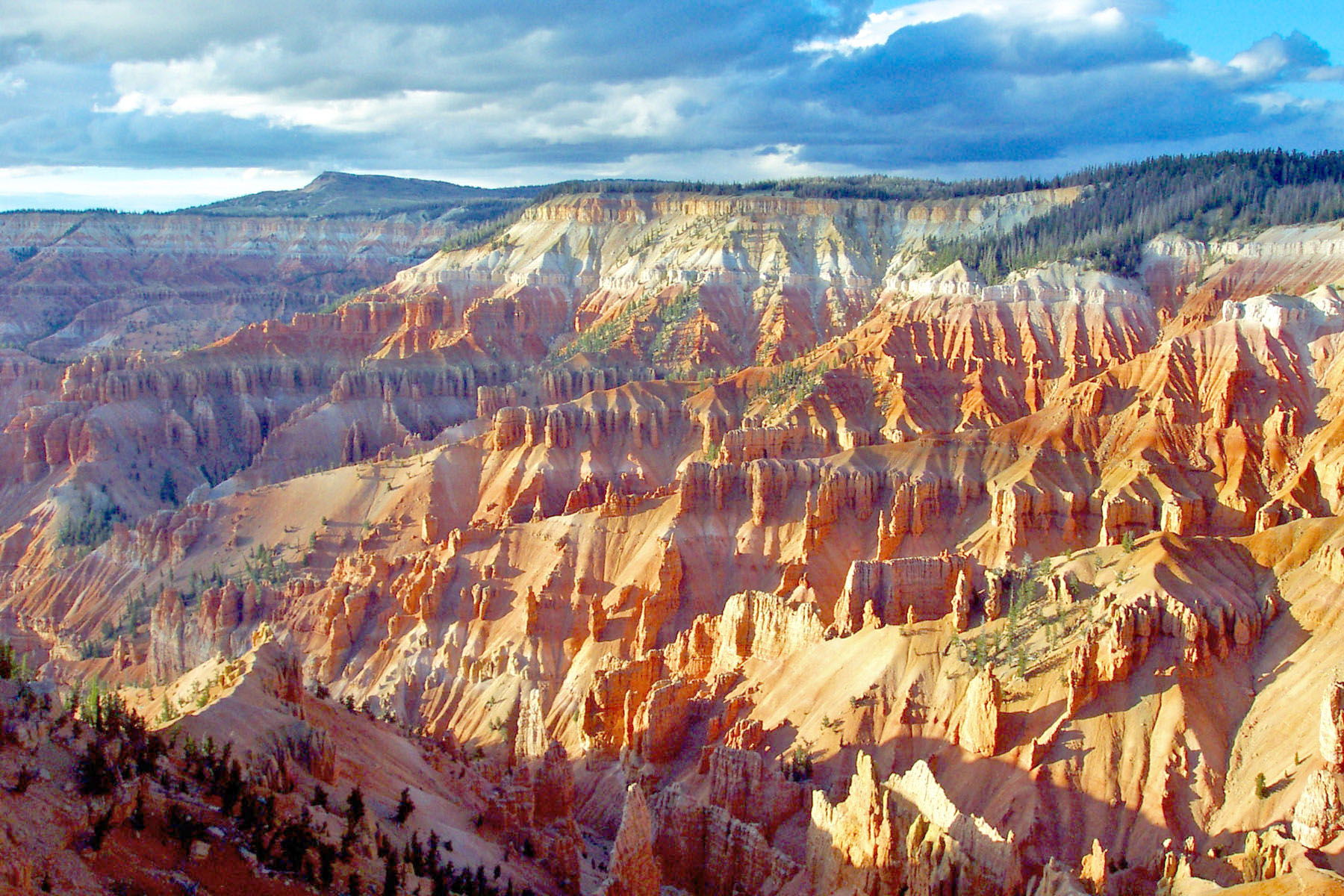
Cedar Breaks National Monument showcases a spectacular natural amphitheater carved into the Markagunt Plateau, revealing over 60 million years of colorful sedimentary rock layers in vibrant reds, oranges, and yellows. At over 10,000 feet elevation, this high-altitude wonderland stays refreshingly cool even in summer, with ancient bristlecone pines—some over 1,500 years old—clinging to the rim alongside meadows that burst with wildflowers from July through August. The monument's dramatic overlooks like Sunset View and Spectra Point offer families breathtaking vistas into the half-mile-deep geological amphitheater, while the cooler mountain climate provides a welcome respite from the desert heat of nearby parks. What sets Cedar Breaks apart is its unique combination of high-altitude ecology and stunning geological formations, creating an alpine environment rare among Utah's national park sites.
Junior Ranger Program at Cedar Breaks National Monument
The Junior Ranger program at Cedar Breaks focuses on geology and alpine ecology, teaching kids about the forces that carved this natural amphitheater. Children complete activities about rock layers, wildlife adaptation to high altitude, and conservation while exploring the rim trails and visitor center exhibits.
- Learning about the colorful rock layers and geological time
- Spotting marmots, chipmunks, and other alpine wildlife
- Earning a badge while enjoying cool mountain air and panoramic views
Program Details
Download Junior Ranger Booklet
Get a head start! Download and print the booklet before your visit.
Source: NPS Junior Ranger Program Page
Best Ages for Cedar Breaks National Monument
Ages 9 or younger
Youngest visitors complete just 3 activities from the booklet, making this program very manageable for families with small children. Kids love the wildlife tracking activity and planning their park exploration by circling fun symbols like snowshoeing, painting, and looking for hoodoos. The simple format keeps little ones engaged while still teaching them about Cedar Breaks' unique high-altitude environment.
Ages 10–13
Middle-age junior rangers tackle 6 activities from the booklet, diving deeper into Cedar Breaks' geology and seasonal changes. This age group particularly enjoys learning about the different types of park rangers and matching animal tracks to the wildlife that calls this high-altitude environment home. The seasonal activity connecting to Southern Paiute language and land use adds meaningful cultural context that resonates with this age group.
Ages 14 or older
Teens and adults complete all activities in the comprehensive booklet, exploring everything from geological formations and light pollution to detailed trail planning and wildlife habitat. This age group appreciates the night sky protection activity and the comprehensive hiker's checklist that teaches real outdoor preparedness skills. The program's emphasis on stewardship and conservation connects with older participants who can understand the broader environmental significance of protecting this unique high-altitude ecosystem.
Planning Your Visit
Getting There
Cedar Breaks sits along Highway 148 between Cedar City and the junction with Highway 14, accessible from Interstate 15. The monument typically opens to vehicle traffic from late May through mid-October, weather dependent, with snow closing the high-elevation road during winter months. Parking is available at overlooks and the visitor center, though spaces can fill during peak wildflower season in July and August.
Van & RV Notes
Our Sprinter van handled the winding mountain road to Cedar Breaks just fine, though the steep grades and tight turns require careful driving and using pullouts for faster traffic. The monument doesn't offer camping, but nearby Duck Creek Village provides RV-friendly campgrounds about 30 minutes away. Point Supreme Campground within the monument accommodates RVs up to 35 feet, though sites fill quickly during summer months.
Best Time to Visit
Visit between June and September when the high-altitude road stays snow-free and wildflowers paint the alpine meadows in brilliant colors. July and August offer the most reliable weather and peak wildflower displays, though afternoon thunderstorms are common. September brings cooler temperatures and fewer crowds, with golden aspen adding another layer of color to the already spectacular views.
How Long to Spend
Plan a half-day visit to complete the Junior Ranger program and explore the main overlooks, though families often extend their stay to enjoy the cooler mountain environment. The monument's compact size makes it perfect for combining with nearby Bryce Canyon or Zion during a longer Utah adventure.
Don't Miss
Don't miss the view from Sunset Point during golden hour when the amphitheater's red rocks absolutely glow against the deep blue sky. The short walk along the rim trail reveals different perspectives of the geological formations, while the visitor center's exhibits help kids understand how millions of years of erosion created this natural masterpiece.
Fun Facts for Kids
Cedar Breaks sits at over 10,000 feet elevation, making it usually 20-30 degrees cooler than nearby Zion National Park
The bristlecone pine trees growing on the rim are among the oldest living things on Earth, with some over 1,500 years old
Despite its name, there are no cedar trees at Cedar Breaks—early settlers mistakenly called the juniper trees 'cedars'
The amphitheater contains rock layers that represent over 60 million years of geological history, visible in the colorful cliff faces
Plan Your Stay
Save on park entry with the America the Beautiful Pass — $80 for unlimited access to all 400+ National Park sites for a full year.
Where to Stay
Some of the links above are affiliate links. If you book through them, we may earn a small commission at no extra cost to you.
Nearby Parks to Earn More Badges
Bryce Canyon National Park
Bryce Canyon National Park lies just 30 miles southeast, offering families the chance to hike down into similar but more extensive hoodoo formations at a slightly lower elevation.
Pipe Spring National Monument
Zion National Park sits 60 miles southwest, providing desert canyon adventures and the famous Narrows hike that contrasts beautifully with Cedar Breaks' high-altitude environment.
Zion National Park
Pipe Spring National Monument offers families a glimpse into pioneer history and Native American culture just 45 miles south, making an interesting cultural addition to the geological wonders.
See all Junior Ranger badges
Track your family's progress across every National Park Service site
View Badge Tracker