
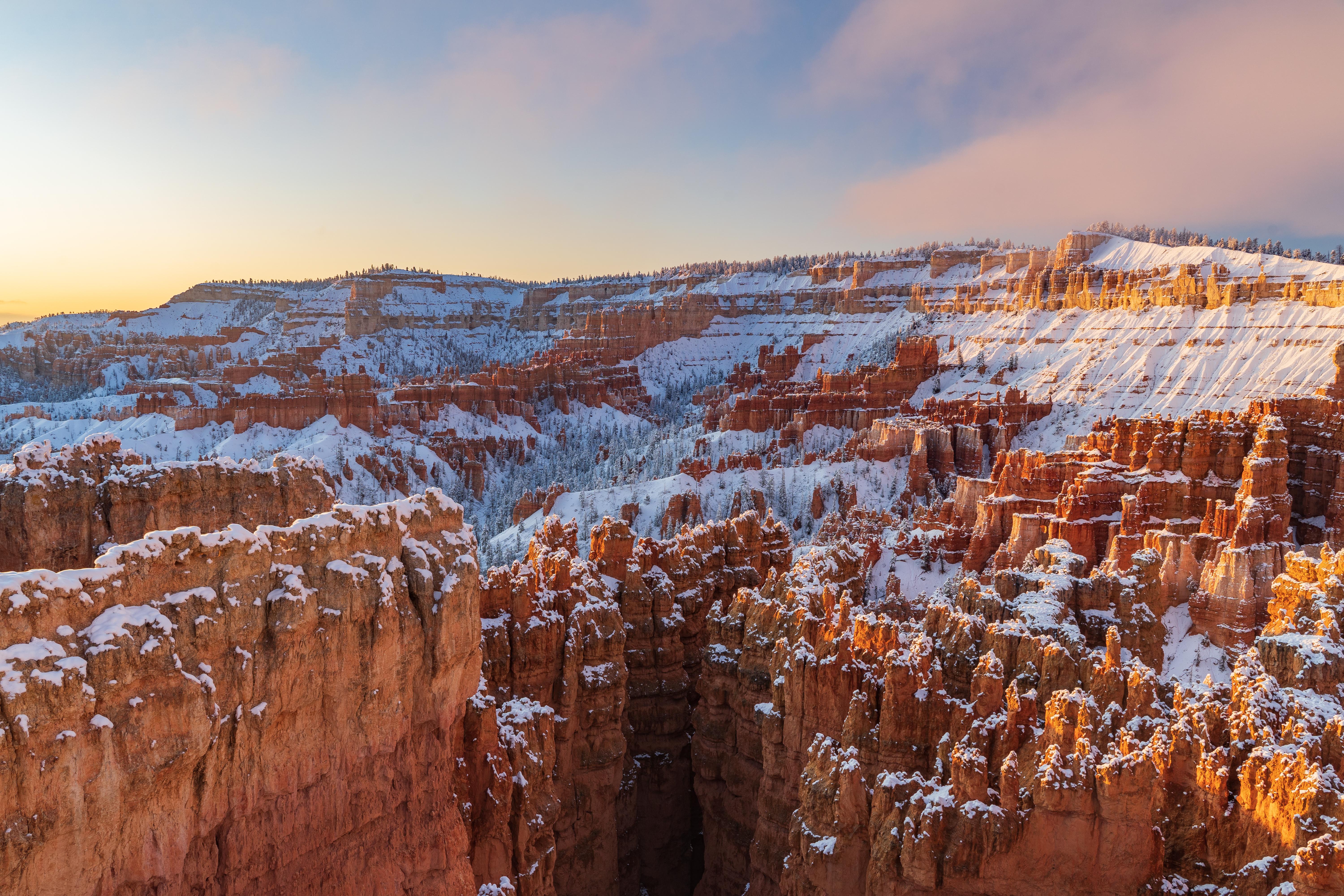
 Photo: NPS Photo / Keith Moore
Bryce Canyon National Park showcases the world's largest collection of hoodoos—towering red rock spires that create an otherworldly landscape unlike anywhere else on Earth. At elevations reaching over 9,000 feet, families can witness these geological masterpieces from the Rim Trail or descend into the amphitheater via the Queen's Garden Trail to walk among the formations. The park's high plateau location along the Grand Staircase offers incredible dark skies for stargazing and unique life communities ranging from desert scrub to bristlecone pine forests. Ancient bristlecone pines here can live over 1,800 years, making them a species among the oldest living organisms on the planet.
Junior Ranger Program at Bryce Canyon National Park
The Junior Ranger program at Bryce Canyon engages kids with hands-on geology activities, fossil discovery sessions, and guided hoodoo explorations that bring the park's unique formations to life. Rangers lead interactive programs where children learn about erosion, wildlife adaptation, and the cultural history of the Paiute people who called this land home.
- Exploring the famous hoodoo formations up close on family-friendly trails
- Learning about fossils and ancient sea creatures that once lived here
- Night sky programs featuring some of the darkest skies in the country
Program Details
Download Junior Ranger Booklet
Get a head start! Download and print the booklet before your visit.
Source: NPS Junior Ranger Program Page
Our Earned Badges
Best Ages for Bryce Canyon National Park
Age ranges are suggested groupings — check at the visitor center for the official Junior Ranger booklet breakdown.
Ages 4–7
Young children love the short walk to Sunset Point for incredible hoodoo views without difficult hiking. The visitor center museum provides perfect indoor exploration when little legs get tired, and ranger programs help them understand how these amazing rock towers formed.
Ages 8–12
This age group thrives on the Queen's Garden Trail, where they can hike down among the hoodoos and spot the Queen Victoria formation. They're old enough to appreciate the geological concepts in their activity booklet and enjoy identifying different rock layers and formations throughout the amphitheater.
Ages 13+
Teens and adults can tackle more challenging combinations like the Queen's/Navajo Loop or even venture into backcountry areas. They'll appreciate the complex geological history and can complete more in-depth activities that explore erosion processes, wildlife adaptation, and the cultural significance of this landscape to the Paiute people.
Planning Your Visit
Getting There
The park sits along scenic Highway 12 and 63, easily accessible from I-15 via various routes depending on your direction. Parking at viewpoints can fill quickly during peak season, but the main visitor center area typically accommodates families well. No reservations required for most areas, though backcountry permits are needed for overnight camping.
Van & RV Notes
Sunset Campground works well for larger RVs and vans, though sites have varying length limits—longer Sprinters should reserve specific sites in advance. The campground provides easy access to the Rim Trail, perfect for catching sunrise without moving your rig. Some park roads have tight turns, so scout your route to popular viewpoints before committing with a 22-foot van.
Best Time to Visit
Late spring through early fall offers the most comfortable hiking weather, though crowds peak in summer months. Winter visits provide magical snowy hoodoo scenes but require preparation for freezing temperatures and potential road closures. Spring storms through April can still produce heavy snowfall that impacts travel, so check conditions before departing.
How Long to Spend
Plan a full day to properly experience both rim viewpoints and a descent into the amphitheater, especially with Junior Ranger program requirements. The 3-6 hour time commitment for the program fits perfectly with exploring multiple viewpoints and completing at least one hoodoo hike.
Don't Miss
The Queen's Garden Trail offers families the quintessential Bryce experience—descending into the amphitheater to walk among towering hoodoos with manageable difficulty for most ages. Sunrise or sunset viewing from any rim viewpoint transforms the red rocks into glowing sculptures, creating memories that truly last a lifetime.
Fun Facts for Kids
Bryce Canyon isn't actually a canyon—it's a series of natural amphitheaters carved into cliffs by erosion
The hoodoos grow about one to four feet every thousand years, and some reach heights of 150 feet
Despite being in Utah, Bryce Canyon sits at higher elevations than many Colorado mountains, reaching over 9,000 feet
The park's bristlecone pines can live over 1,800 years—some were seedlings when the Roman Empire was thriving
Plan Your Stay
Save on park entry with the America the Beautiful Pass — $80 for unlimited access to all 400+ National Park sites for a full year.
Where to Stay
Some of the links above are affiliate links. If you book through them, we may earn a small commission at no extra cost to you.
Nearby Parks to Earn More Badges
Cedar Breaks National Monument
Cedar Breaks National Monument offers even more spectacular hoodoos at 10,000 feet elevation with cooler summer temperatures and incredible wildflower displays.
Grand Staircase-Escalante National Monument
Zion National Park provides the perfect contrast with its towering sandstone cliffs, river hiking, and dramatically different desert ecosystem just 85 miles southwest.
Zion National Park
Grand Staircase-Escalante National Monument encompasses vast wilderness areas perfect for families seeking remote slot canyon adventures and dinosaur fossil discoveries.
Our Adventures at Bryce Canyon National Park
See all Junior Ranger badges
Track your family's progress across every National Park Service site
View Badge Tracker