
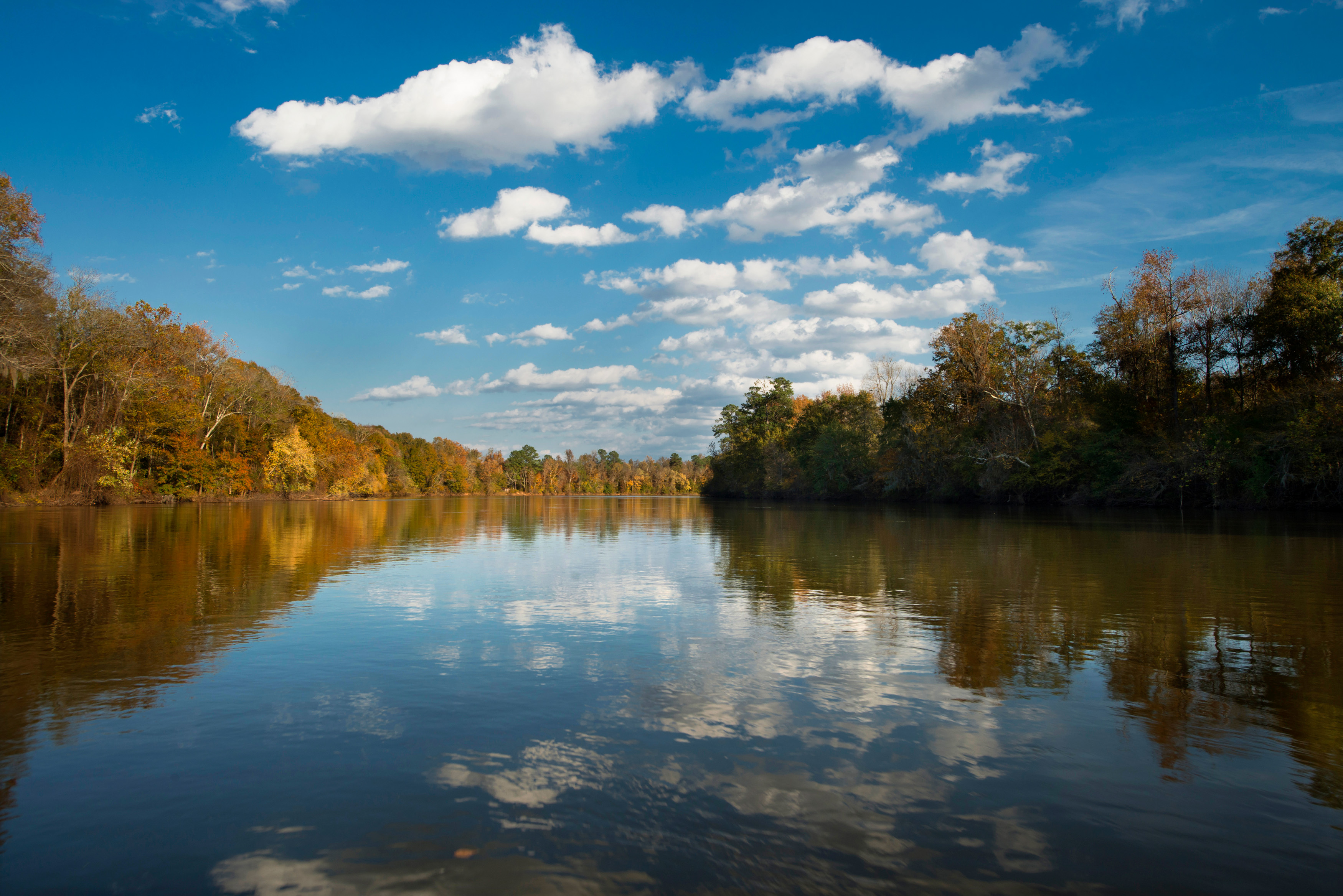
Congaree protects towering bald cypress and loblolly pine trees that rise over 160 feet tall, creating cathedral-like canopies in America's largest intact old-growth bottomland hardwood forest. Families walk elevated boardwalks through a primeval landscape where champion trees—the largest known specimens of their species—thrive in nutrient-rich floodplain soils deposited by the Congaree and Wateree Rivers. The park's synchronous fireflies create one of nature's most magical spectacles each May and June, blinking in perfect unison across the forest floor. This wilderness feels prehistoric, offering families a chance to experience the southeastern United States as it existed centuries ago.
Junior Ranger Program at Congaree National Park
The Junior Ranger program at Congaree engages kids in forest ecology through hands-on activities like identifying champion trees, learning about the unique floodplain ecosystem, and discovering the creatures that call this ancient forest home. Children complete age-appropriate activities in their Junior Ranger booklet while exploring boardwalks and trails through this incredible wilderness.
- Spotting synchronous fireflies during their famous light show
- Walking among some of the tallest trees in the Eastern United States
- Learning about the unique bottomland forest ecosystem and its wildlife
Program Details
Download Junior Ranger Booklet
Get a head start! Download and print the booklet before your visit.
Source: NPS Junior Ranger Program Page
Best Ages for Congaree National Park
Ages 4–6
Young children absolutely love the elevated Boardwalk Loop Trail, which keeps little legs off the sometimes muddy forest floor while offering close-up views of massive trees. The visitor center exhibits help them understand basic forest concepts before heading outside. Stick to shorter walks during their visit since the forest can feel overwhelming for very young explorers.
Ages 7–10
This age group thrives on the Junior Ranger activities that teach forest identification skills and ecosystem connections. They're old enough to appreciate the champion tree concept and can handle longer walks on the Boardwalk Loop and Weston Lake Loop. The forest's incredible biodiversity keeps their attention as they search for different species mentioned in their booklet.
Ages 11+
Older kids and teens can tackle the more challenging backcountry trails while completing their Junior Ranger requirements. They grasp the complex floodplain ecology concepts and truly appreciate witnessing trees that have stood for centuries. Many families find this age group becomes genuinely passionate about forest conservation after experiencing Congaree's ancient wilderness.
Planning Your Visit
Getting There
The Harry Hampton Visitor Center sits about one mile from the park entrance off Old Bluff Road, with ample parking for families. No reservations needed for day visits, though the park can close temporarily during flooding events. Always check current conditions before your visit since water levels can change rapidly.
Van & RV Notes
The park offers no RV hookups or designated RV camping, though the parking areas accommodate Sprinter vans easily for day visits. Congaree Creek Heritage Preserve nearby offers primitive camping options, or families often stay at Poinsett State Park about 45 minutes away for full hookups. The visitor center parking area works well for larger vehicles.
Best Time to Visit
Late spring through early summer offers the best combination of comfortable weather and the chance to witness the famous synchronous fireflies in May and June. Fall brings beautiful foliage, while winter offers easier hiking when floodwaters recede. Summer can be quite hot and humid with more mosquitoes, though the forest canopy provides natural cooling.
How Long to Spend
Plan a full day to complete the Junior Ranger program and experience both the Boardwalk Loop and visitor center exhibits. The 2.4-mile Boardwalk Loop takes about 1-2 hours at a family pace, leaving plenty of time for other activities and learning.
Don't Miss
The synchronous fireflies display in late May and early June creates an absolutely magical experience families never forget—thousands of fireflies blinking in perfect unison across the forest floor. Walking among the champion trees feels like stepping into a living cathedral, with some specimens reaching record-breaking heights that truly humble visitors of all ages.
Fun Facts for Kids
Some of Congaree's bald cypress trees are over 500 years old and were growing when Christopher Columbus reached the Americas
The park contains 11 national champion trees and 35 state champion trees—the largest known specimens of their species
Synchronous fireflies at Congaree are one of only two populations in North America that blink in perfect unison
The forest floor can flood up to 10 feet deep during major river events, which actually helps nourish the massive trees
Plan Your Stay
Save on park entry with the America the Beautiful Pass — $80 for unlimited access to all 400+ National Park sites for a full year.
Where to Stay
Some of the links above are affiliate links. If you book through them, we may earn a small commission at no extra cost to you.
Nearby Parks to Earn More Badges
Charles Pinckney National Historic Site
Charles Pinckney National Historic Site preserves the plantation home of a Constitution signer and tells important stories about enslaved African Americans who shaped early American history.
Fort Sumter and Fort Moultrie National Historical Park
Fort Sumter and Fort Moultrie National Historical Park in Charleston Harbor marks where the Civil War began, with ferry rides adding adventure to the historical experience.
Ninety Six National Historic Site
Ninety Six National Historic Site features colonial and Revolutionary War history with easy walking trails through reconstructed fortifications and a historic village site.
See all Junior Ranger badges
Track your family's progress across every National Park Service site
View Badge Tracker