
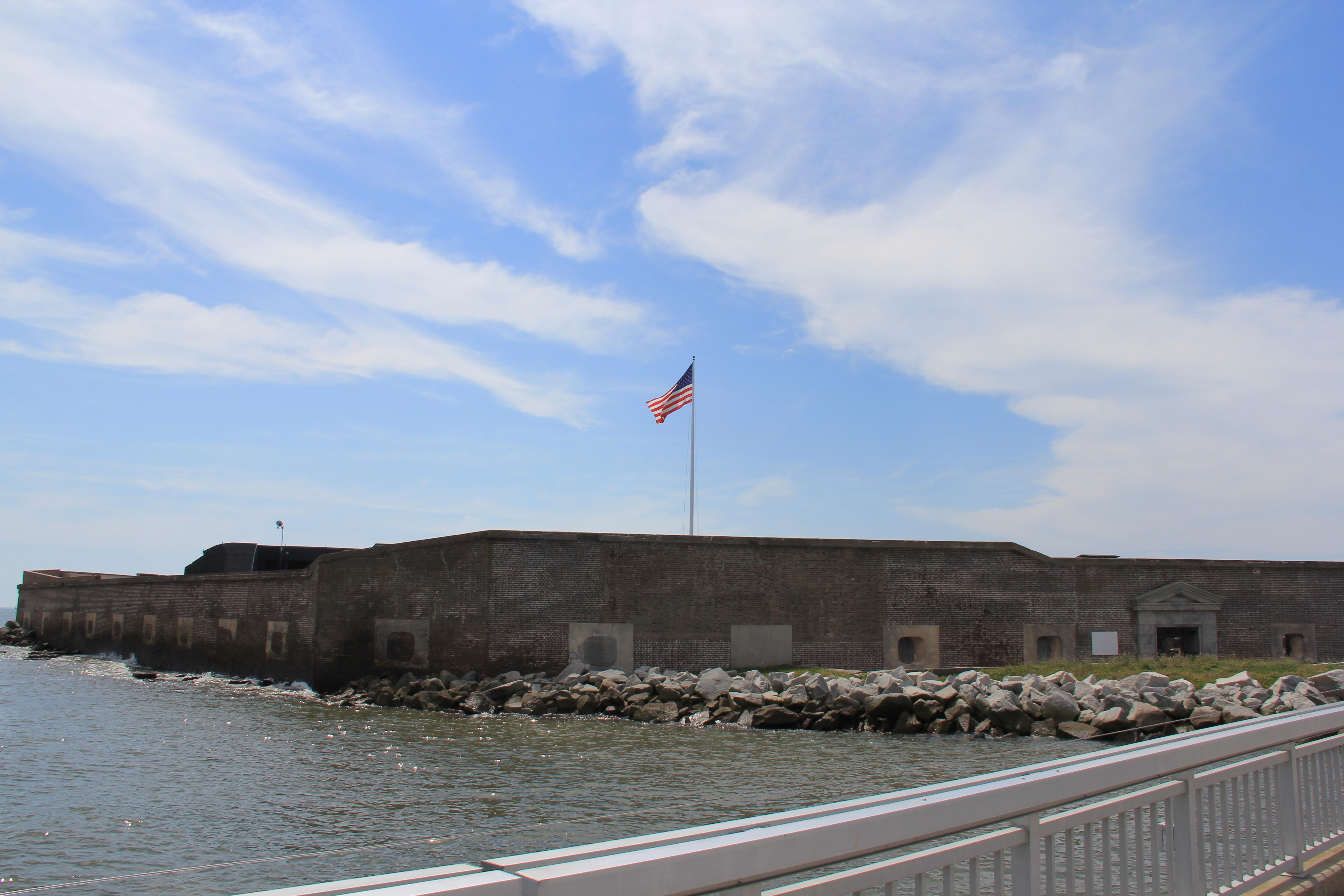
Fort Sumter and Fort Moultrie National Historical Park
Fort Sumter and Fort Moultrie National Historical Park preserves the fort where the Civil War's first shots rang out on April 12, 1861, plus Fort Moultrie, which defended Charleston Harbor for over 170 years. Fort Sumter itself stands on a man-made island in Charleston Harbor, built entirely from New England granite and local sand. Families reach this historic fortress only by ferry, creating an adventure-filled approach that builds anticipation as the fort grows larger across the water. Kids love spotting dolphins during the ferry ride and exploring the fort's bomb-proof rooms where soldiers once lived under siege.
Junior Ranger Program at Fort Sumter and Fort Moultrie National Historical Park
The Junior Ranger program here transforms young visitors into Civil War historians through engaging activities and fort exploration. Kids complete hands-on challenges, learn about soldier life, and discover how these historic fortifications shaped American history while earning their official Junior Ranger badge.
- Explore the actual fort where the Civil War's first shots were fired
- Take a scenic ferry ride to Fort Sumner with dolphin spotting opportunities
- Participate in cannon firing demonstrations and military drills
Program Details
Download Junior Ranger Booklet
Get a head start! Download and print the booklet before your visit.
Source: NPS Junior Ranger Program Page
Best Ages for Fort Sumter and Fort Moultrie National Historical Park
Ages 3–6
Young children complete 5 pages of activities including flag identification, sensory exploration, and an I Spy game featuring fort artifacts. The ferry ride to Fort Sumter becomes part of the adventure, and kids love spotting pelicans and dolphins in Charleston Harbor. Simple matching activities and drawing prompts keep little hands busy while learning about Civil War history.
Ages 7–12
Middle-grade participants complete 8 pages covering Charleston Harbor's ecosystem, historical figures like Abraham Lincoln and Jefferson Davis, and fort architecture. They learn to identify different types of Civil War cannons and discover how the harbor's brackish water supports dolphins year-round. Activities include timeline creation, word searches, and matching artillery to projectile types found embedded in the fort walls.
Ages 13+
Teens and adults complete the full 10-page program, diving deep into topics like enslaved labor in fort construction, the Underground Railroad, and complex military strategies. They analyze primary source materials and explore conservation challenges facing historic masonry structures in a marine environment. Advanced activities include creating ranger presentations and understanding why protecting artifacts like embedded cannonballs matters for future generations.
Planning Your Visit
Getting There
Take the ferry from Liberty Square Visitor Center in downtown Charleston (primary departure point) or Patriots Point in Mount Pleasant. Ferry tickets include round-trip transportation and fort admission, with boats departing at scheduled times throughout the day. We recommend booking ferry tickets in advance during peak season and arriving 30 minutes early for check-in.
Van & RV Notes
Park at Liberty Square parking garage in downtown Charleston, as street parking near the ferry terminal is extremely limited and expensive. The garage accommodates standard-height vans but check clearance for high-roof models. Fort Moultrie on Sullivan's Island has a small parking area that typically fits our 22-foot Sprinter, though spaces fill quickly on weekends.
Best Time to Visit
Spring (March-May) and fall (October-November) offer the most comfortable weather for ferry rides and outdoor fort exploration. Summer brings intense heat and humidity but also the most ferry departures, while winter provides fewer crowds and mild temperatures perfect for history-focused families. Afternoon ferries often provide the best wildlife viewing as dolphins become more active.
How Long to Spend
Plan a full day to truly experience both forts, with 3-4 hours for Fort Sumter (including ferry time) and 2-3 hours at Fort Moultrie. The Junior Ranger program works well as a multi-day experience, starting booklet activities at Liberty Square before the ferry ride.
Don't Miss
The observation deck at Fort Sumter offers spectacular 360-degree views of Charleston Harbor, where kids often spot bottlenose dolphins playing in the ferry's wake. At Fort Moultrie, families love the hands-on artillery demonstrations and discovering how the fort's design evolved through five different periods of construction, from Revolutionary War palmetto logs to World War II concrete bunkers.
Fun Facts for Kids
Fort Sumter was built on an artificial island created entirely by dumping 70,000 tons of granite from New England quarries into Charleston Harbor
The fort's original walls stood 50 feet high, but Confederate bombardment reduced them to just 5 feet in some places by war's end
Charleston Harbor is home to a resident pod of about 150 bottlenose dolphins that families frequently see during ferry rides
The H.L. Hunley, the world's first successful combat submarine, sank a Union ship in these very waters in 1864
Plan Your Stay
Save on park entry with the America the Beautiful Pass — $80 for unlimited access to all 400+ National Park sites for a full year.
Where to Stay
Some of the links above are affiliate links. If you book through them, we may earn a small commission at no extra cost to you.
Nearby Parks to Earn More Badges
Charles Pinckney National Historic Site
Fort Pulaski National Monument features a massive masonry fort where kids learn about rifled cannon technology that changed warfare forever.
Fort Pulaski National Monument
Charles Pinckney National Historic Site tells the story of one of the Constitution's framers while exploring Gullah culture and rice plantation history.
Reconstruction Era National Historical Park
Reconstruction Era National Historical Park preserves Penn Center, where formerly enslaved people built one of the South's first schools for African Americans.
See all Junior Ranger badges
Track your family's progress across every National Park Service site
View Badge Tracker