
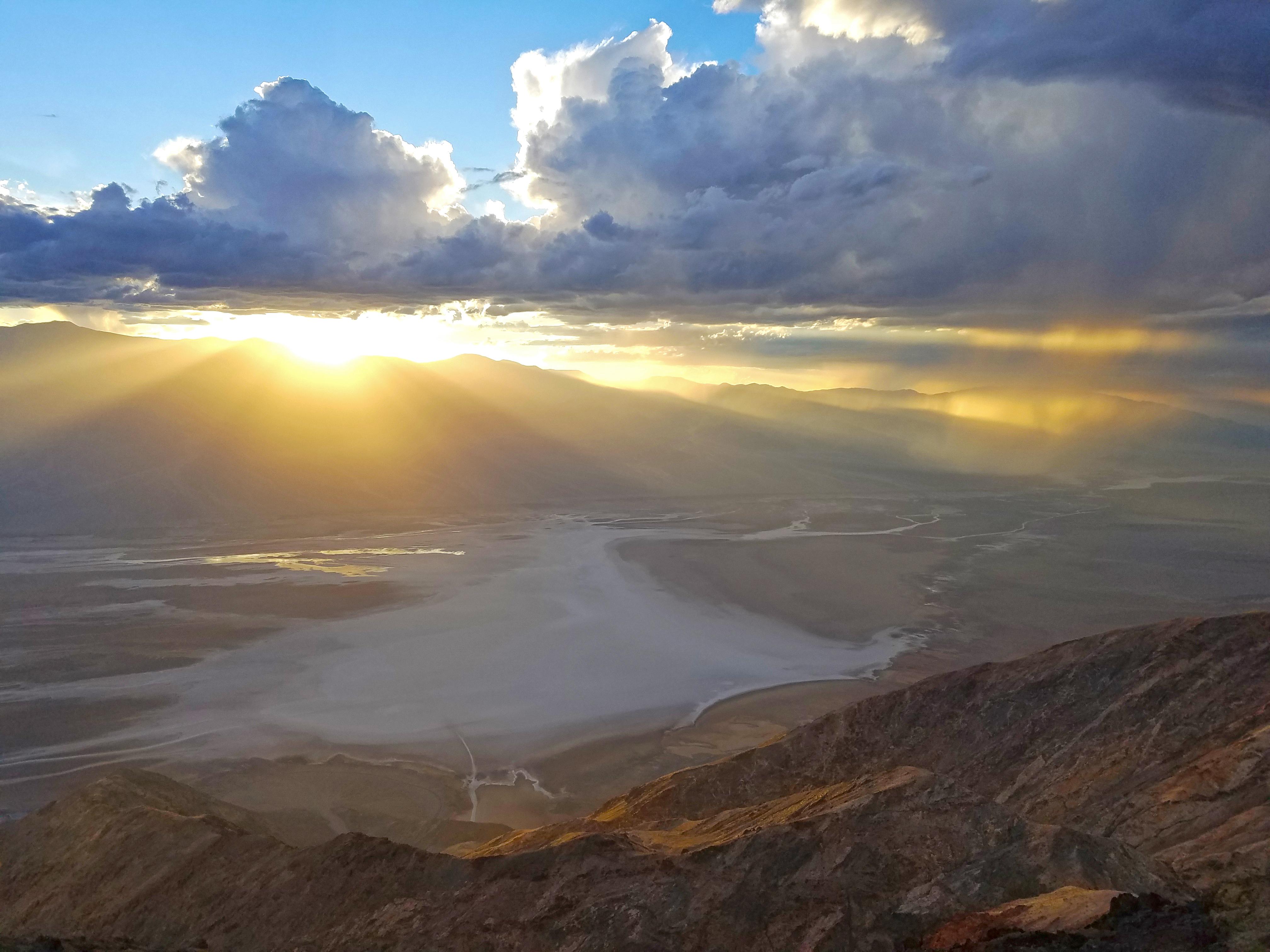
 Photo: NPS / Jan Vanderlay
Death Valley National Park showcases extreme desert environments where families discover fascinating contrasts — the lowest point in North America at Badwater Basin sits just 85 miles from the highest peak in the contiguous United States. Kids are amazed by the colorful badlands of Artists Drive, the mysterious sailing stones of Racetrack Playa, and vast salt flats that create otherworldly landscapes. The park harbors surprising life, from desert pupfish surviving in salt pools to bighorn sheep navigating steep canyon walls. What sets Death Valley apart is its combination of record-breaking extremes with unexpected beauty — rare wildflower blooms, snow-capped peaks visible from below-sea-level valleys, and some of the darkest night skies in the country.
Junior Ranger Program at Death Valley National Park
The Junior Ranger program at Death Valley challenges kids to explore extreme desert environments while learning about survival adaptations of plants and animals. Young rangers complete activities focused on desert ecology, geological wonders like the famous moving rocks at Racetrack Playa, and the unique history of this remarkable landscape.
- Discover how desert animals survive in extreme heat
- Learn about the mysterious moving rocks phenomenon
- Explore colorful badlands and salt flats formations
Program Details
Download Junior Ranger Booklet
Get a head start! Download and print the booklet before your visit.
Source: NPS Junior Ranger Program Page
Best Ages for Death Valley National Park
Ages 4–8
Younger kids love the short walk to Badwater Basin's salt formations and the colorful rocks along Artists Drive that they can spot from the van. The visitor center exhibits help them understand how animals survive in the desert, and they enjoy creating their own constellation activity from the Junior Ranger book.
Ages 9–12
This age group gets excited about the science behind Death Valley's extremes and can handle longer activities like the Harmony Borax Works walk. They truly engage with the desert adaptation activities in the Junior Ranger book and love learning about the twenty mule teams that once hauled borax across the desert.
Ages 13+
Teens and adults appreciate the geological complexity and can tackle more challenging hikes during cooler months. They're fascinated by the park's mining history and enjoy the tall tale writing activity that connects them to Death Valley Scotty's legendary stories.
Planning Your Visit
Getting There
Multiple park entrances provide access, with Furnace Creek being the main hub for visitor services and Junior Ranger activities. The park is open year-round with no reservations needed, though entrance fees apply ($30 for seven days). Parking at major attractions like Badwater Basin and Artists Drive is generally adequate except during peak wildflower season.
Van & RV Notes
Death Valley accommodates larger RVs and Sprinter vans well, with Furnace Creek Campground offering sites suitable for 40+ foot rigs and partial hookups. Texas Spring Campground works for smaller rigs but has no hookups, and dispersed camping is available throughout the park. Road conditions vary — stick to main paved roads during your visit as some areas require high-clearance vehicles.
Best Time to Visit
November through March offers the most comfortable temperatures for families, with January and February being ideal for exploring with kids. Spring (March-May) brings possible wildflower blooms but increasingly hot temperatures, while summer months are dangerous for outdoor activities. Winter occasionally brings snow to higher elevations, creating stunning contrasts with the desert floor.
How Long to Spend
Plan a full day to complete Junior Ranger activities and visit key sites like Badwater Basin, Artists Drive, and Harmony Borax Works. The drive distances between attractions are substantial, so factor in significant travel time within the park.
Don't Miss
Families absolutely love the short walk onto the Badwater Basin salt flats, where kids can touch the lowest point in North America and see the colorful mineral deposits up close. The Artists Drive scenic loop provides incredible photo opportunities and easy wildlife spotting from your vehicle, making it perfect for families with young children.
Fun Facts for Kids
Death Valley holds the world record for the hottest air temperature ever recorded — 134°F at Furnace Creek on July 10, 1913
The mysterious sailing stones at Racetrack Playa can weigh hundreds of pounds but move across the desert floor, leaving trails behind them when rare ice sheets form and melt
Despite its name, Death Valley supports over 1,000 plant species and 400 animal species, including the endangered Death Valley pupfish found nowhere else on Earth
The park spans two states and covers more than 3.3 million acres, making it the largest national park in the lower 48 states
Plan Your Stay
Save on park entry with the America the Beautiful Pass — $80 for unlimited access to all 400+ National Park sites for a full year.
Where to Stay
Some of the links above are affiliate links. If you book through them, we may earn a small commission at no extra cost to you.
Nearby Parks to Earn More Badges
César E. Chávez National Monument
Manzanar National Historic Site preserves the history of Japanese American incarceration during World War II, offering powerful educational opportunities about civil rights and wartime experiences just two hours north of Death Valley.
Manzanar National Historic Site
Mojave National Preserve protects vast desert landscapes including singing sand dunes, Joshua tree forests, and volcanic cinder cones, providing a gentler introduction to desert ecosystems than Death Valley's extremes.
Sequoia & Kings Canyon National Parks
Sequoia & Kings Canyon National Parks showcase giant sequoia groves and dramatic Sierra Nevada mountain scenery, offering a complete contrast to Death Valley's desert environment with cooler temperatures and lush forests.
See all Junior Ranger badges
Track your family's progress across every National Park Service site
View Badge Tracker