
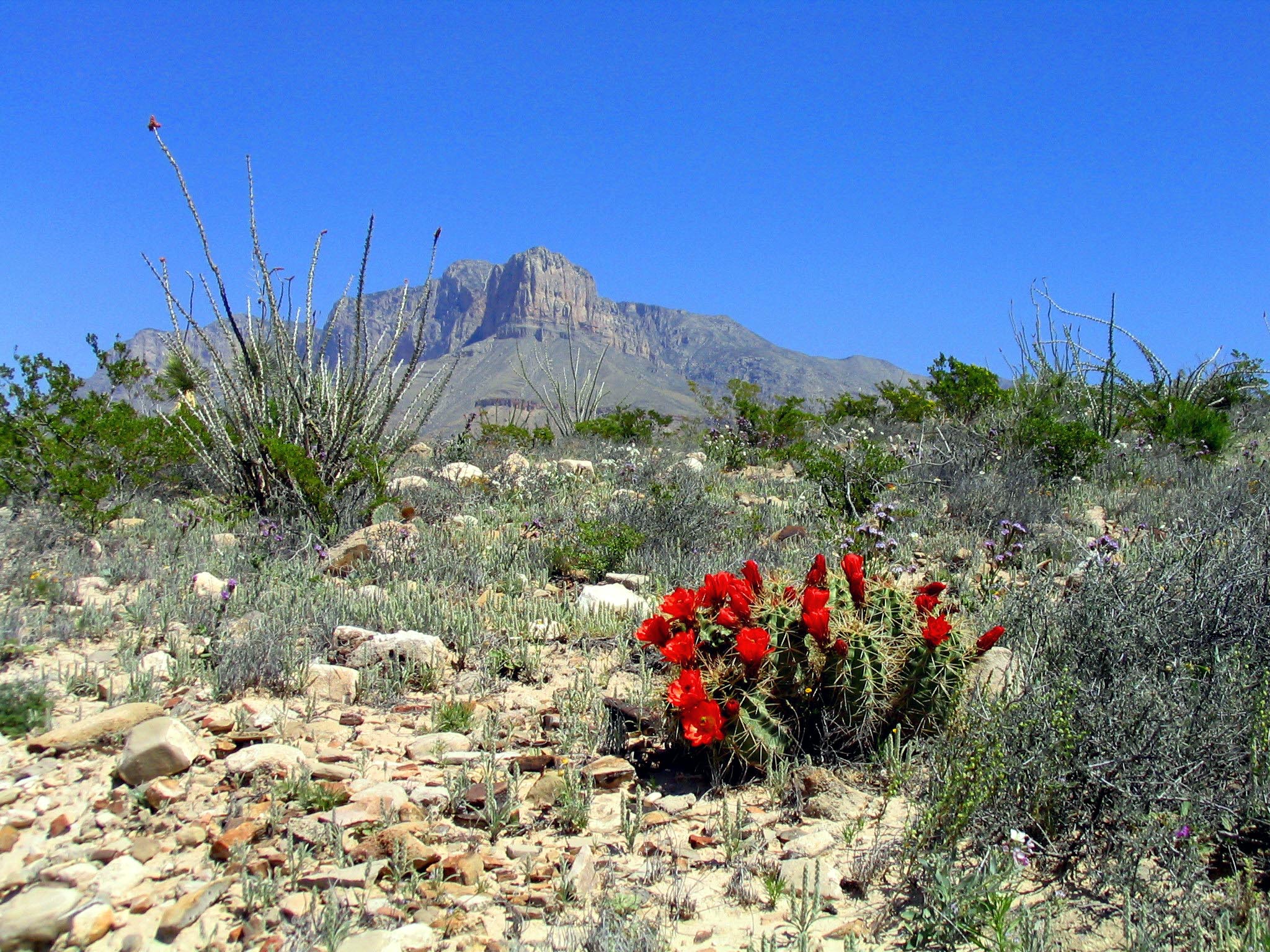
 Photo: NPS/Bieri
Guadalupe Mountains National Park preserves the world's most extensive Permian fossil reef, where families can literally walk through an ancient ocean floor that's now the highest peaks in Texas. The park's incredible elevation range creates distinct ecosystems from Chihuahuan Desert at the base to Douglas-fir forests at McKittrick Ridge, offering kids the chance to experience dramatic climate changes within a single park. Unlike other desert parks, Guadalupe Mountains showcases this ancient reef structure throughout trails like Devil's Hall Canyon and McKittrick Canyon, where limestone walls reveal 250-million-year-old marine fossils. The park's remote location and rugged terrain create an authentic wilderness experience where families can explore places like the Salt Basin Dunes and historic Frijole Ranch while learning about the dramatic geological transformation from sea to sky.
Junior Ranger Program at Guadalupe Mountains National Park
The Junior Ranger program at Guadalupe Mountains focuses on desert ecology, fossil discovery, and Leave No Trace principles through hands-on activities and self-guided exploration. Kids complete age-appropriate workbooks while hiking trails, identifying desert plants and animals, and learning about the area's ancient marine history. Rangers lead special programs during peak seasons where young explorers can earn their badges while discovering how this underwater reef became a mountain range.
- Hunt for 250-million-year-old marine fossils along the trails
- Spot roadrunners, elk, and over 60 butterfly species in diverse habitats
- Experience some of the darkest night skies in Texas for incredible stargazing
Program Details
Best Ages for Guadalupe Mountains National Park
Age ranges are suggested groupings — check at the visitor center for the official Junior Ranger booklet breakdown.
Ages 4–7
Young kids love the hands-on fossil identification activities and desert wildlife spotting that help them understand how these mountains were once an underwater reef. The program's place-based activities work well for little explorers who enjoy collecting and observing nature around the visitor center area and easy trail sections.
Ages 8–12
Kids in this range truly engage with the geological time concepts and can handle more challenging activities like understanding how the Permian Sea became today's mountain range. They're perfectly suited for exploring McKittrick Canyon's easier sections and connecting the park's ancient marine history with what they observe on trails.
Ages 13+
Teens and adults appreciate the complex geological story and can tackle more demanding sections of the program that explore the park's role in telling Earth's history. This age group often enjoys the challenge of connecting scientific concepts with real-world observations during more ambitious hikes like the Devil's Hall Canyon trail.
Planning Your Visit
Getting There
The park sits directly on US Highway 62/180, making it easily accessible by van with no challenging mountain roads to navigate. Pine Springs Visitor Center provides ample parking for larger vehicles, though arrive early during peak season as spaces fill up. No reservations needed for day visits, but the remote location means limited services nearby.
Van & RV Notes
Pine Springs Campground accommodates RVs up to 40 feet with no hookups, making it perfect for self-contained Sprinter vans with full water and waste tanks. The campground sits at over 5,000 feet elevation, so plan for cooler temperatures than expected and potential high winds year-round. Sites are first-come, first-served with picnic tables and fire rings.
Best Time to Visit
October through April offers the most comfortable hiking temperatures, avoiding the intense summer heat that can reach over 100°F in lower elevations. Spring visits in March and April may coincide with desert wildflower blooms if winter rains were adequate. Summer visits require very early morning starts and plenty of water, while winter can bring occasional light snow to higher elevations.
How Long to Spend
Plan a full day to properly explore the visitor center, complete Junior Ranger activities, and hike at least one trail like Devil's Hall Canyon or the easier McKittrick Canyon sections. The place-based nature of the Junior Ranger program requires time to observe and engage with different areas of the park rather than rushing through activities.
Don't Miss
McKittrick Canyon offers families the chance to walk through a dramatic limestone canyon where kids can spot actual fossilized sea creatures in the walls, making the ancient reef story come alive. The Salt Basin Dunes on the park's west side provide a completely different landscape where kids can experience massive gypsum sand dunes that few visitors know about, though the clay access road becomes impassable when wet.
Fun Facts for Kids
The limestone cliffs contain fossils of ancient sea creatures like sponges, algae, and marine animals that lived in a tropical reef 250 million years ago when Texas was underwater
Guadalupe Peak at 8,751 feet is the highest point in Texas, rising nearly 3,000 feet above the surrounding desert floor
The park experiences some of the strongest winds in Texas, with gusts regularly reaching 60+ mph year-round due to the mountain's position in the path of prevailing westerly winds
McKittrick Canyon is famous for its bigtooth maple trees that create brilliant fall colors, unusual for a desert park and remnants of when this area had a much wetter climate
Plan Your Stay
Save on park entry with the America the Beautiful Pass — $80 for unlimited access to all 400+ National Park sites for a full year.
Where to Stay
Some of the links above are affiliate links. If you book through them, we may earn a small commission at no extra cost to you.
Nearby Parks to Earn More Badges
Carlsbad Caverns National Park
Carlsbad Caverns National Park in New Mexico offers families the chance to explore massive underground chambers just 40 miles north, creating a perfect contrast to Guadalupe's above-ground desert mountains.
Chamizal National Memorial
White Sands National Park provides kids with the ultimate playground of pure white gypsum sand dunes perfect for sledding and exploration, located about 100 miles northeast in New Mexico.
White Sands National Park
Chamizal National Memorial in El Paso commemorates the peaceful resolution of a border dispute and offers cultural programming about the region's international heritage, about 110 miles west.
Our Adventures at Guadalupe Mountains National Park
Big Bend National Park with Kids: Junior Ranger Guide
May 3, 2026
Big Bend National Park is named for the broad, sweeping bend of the Rio Grande as it carves the Texas–Mexico border — a fossil-and-volcano country of Chihuahuan Desert, sky-island Chisos Mountains, and a river that draws its own line. Here's how we returned with the girls two decades after our first visit and earned the Junior Ranger badge.
Guadalupe Mountains National Park with Kids: Junior Ranger Guide
April 30, 2026
Guadalupe Mountains National Park tells the story of a 260-million-year-old Permian Sea, a fossil reef now standing as the highest peaks in Texas — and the last stronghold of Mescalero Apache freedom. Here's how we visited with the girls and earned the Junior Ranger badge.
White Sands National Park with Kids: Junior Ranger Guide
April 21, 2026
It's not actually sand — White Sands sits on the world's largest gypsum dunefield, crystallized from an ancient inland sea. Here's how we finally made it at sunset, earned Junior Ranger badges, and why you shouldn't rush this one.
Fort Davis National Historic Site with Kids: Junior Ranger Guide
April 11, 2026
Fort Davis NHS is one of the best-preserved frontier military posts in the Southwest — where the legendary Buffalo Soldiers served after the Civil War. Here's how to visit with kids and earn a Junior Ranger badge in this overlooked West Texas gem.
See all Junior Ranger badges
Track your family's progress across every National Park Service site
View Badge Tracker