
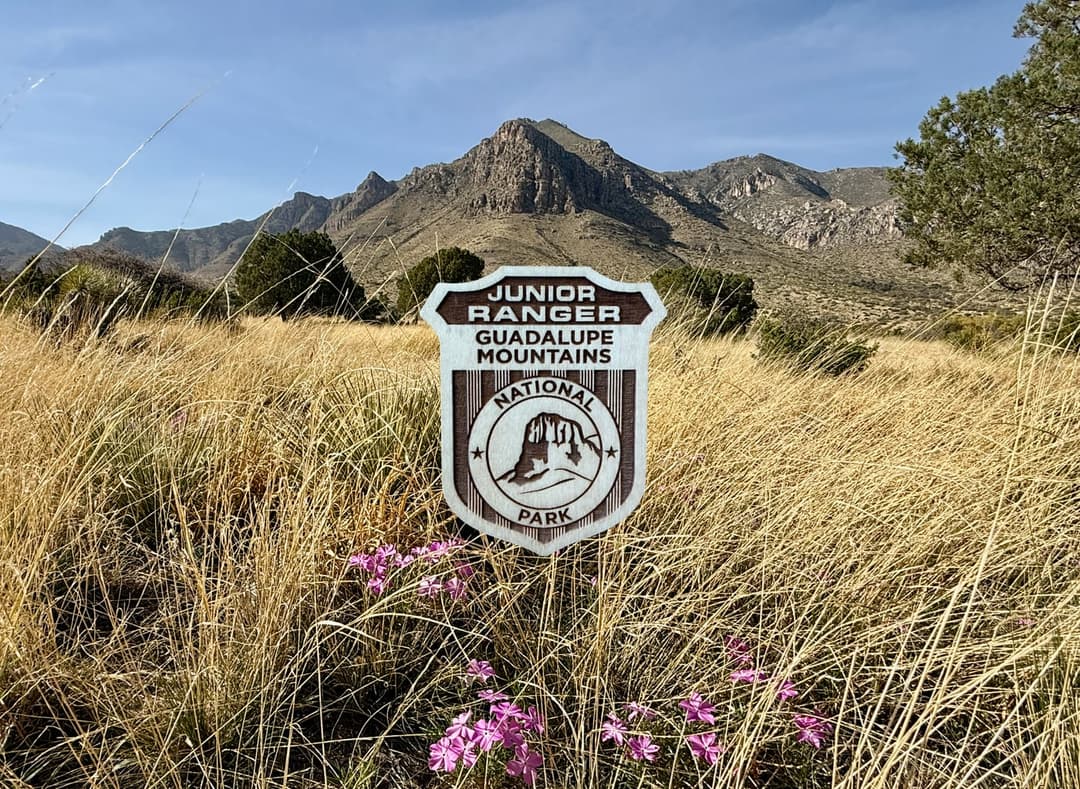
Guadalupe Mountains National Park with Kids: Junior Ranger Guide
Guadalupe Mountains National Park tells the story of a 260-million-year-old Permian Sea, now a fossil reef thrust into the sky as the highest peaks in Texas. It also tells a powerful tale of the Mescalero Apache resistance, one of the last places of true freedom before U.S. westward expansion swallowed the rugged and fiercely independent Southwest.
The Chihuahuan Desert is the largest desert in North America, and it shows you that scale slowly — creosote, cholla, mile after mile of bone-pale grass — and then, all at once, the limestone wall of the Guadalupes rears up against the sky like a ship's prow cutting the horizon.
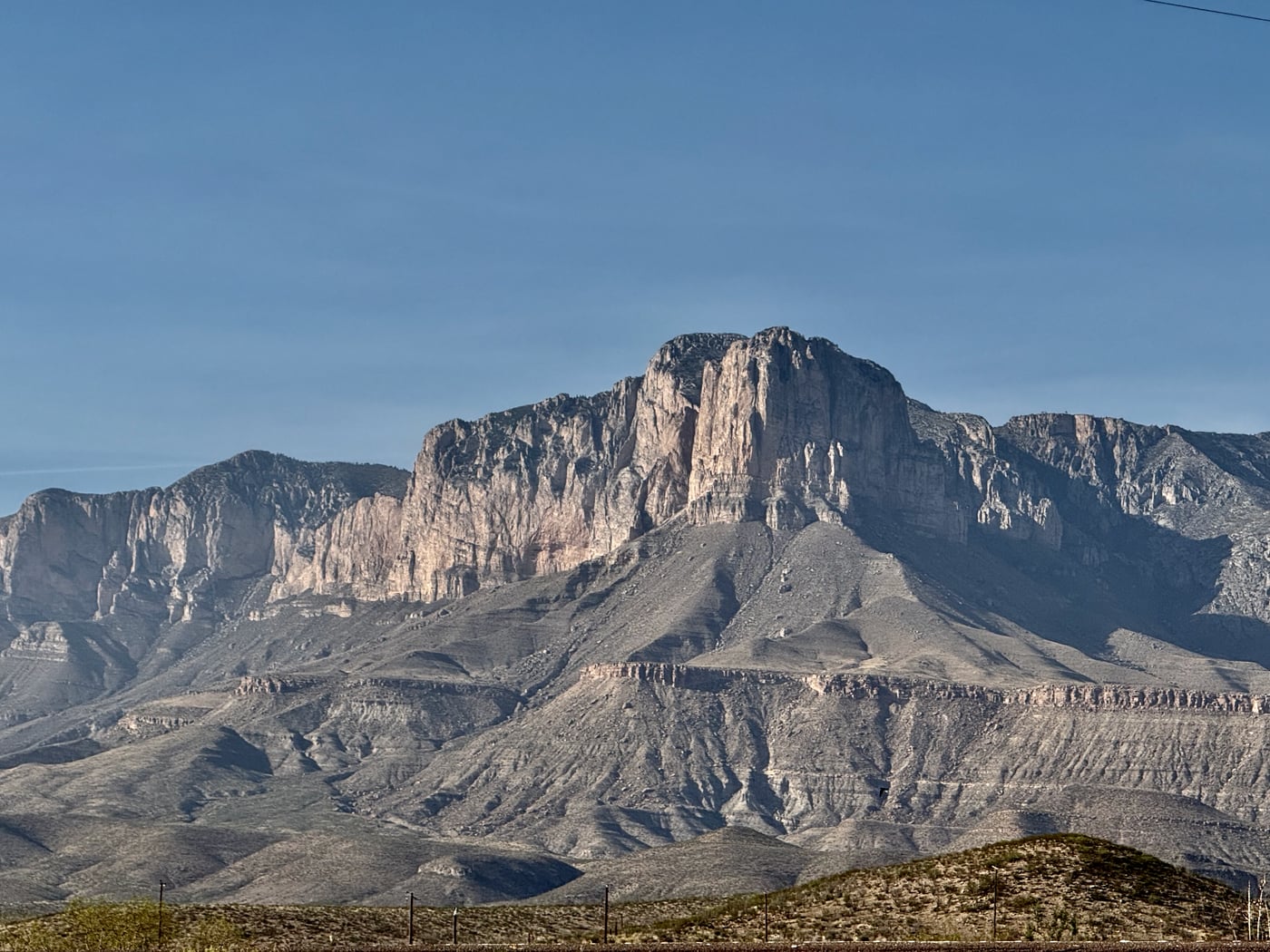 El Capitan — Guadalupe Mountains National Park, West Texas
Most people don't realize there are two El Capitans in this country. One stands granite-faced over Yosemite Valley. The other rises here, sharp and singular and almost lonely, a 260-million-year-old reef that the world has forgotten was ever underwater. Different stones, same kind of silence.
A Quieter Park, A Wilder Story
Guadalupe is not a park that pulls in big crowds. There is no scenic drive looping the basin. No rim village. No packed gift-shop. You park at Pine Springs Visitor Center, you talk to a ranger, and then you walk into the Southwest's natural playground, with Juniper, Pinyon Pine, Yucca, Prickly Pear, that has been bursting with life long before any of us got here.
That is exactly its gift.
The girls felt it almost immediately. Where nature energy is the imprint that is not overtaken by human energy. A groundedness. That is the kind of distinction we forget in civilization, where reality is out of balance where human consciousness far outweighs nature consciousness.
We made our first stop at the Pinery Butterfield Stage Station ruins, just a short walk from the visitor center. In 1858 this was a stop on the Butterfield Overland Mail — a 2,800-mile stagecoach route that ran from St. Louis all the way to San Francisco, twice a week, through some of the most punishing terrain on the continent. What stands here now are stone foundations, roofless and weather-worn, holding the shape of rooms where strangers once slept and ate and changed horses. We could feel the long pull of the old westward route, the human stubbornness of it. Each generation moving onward.
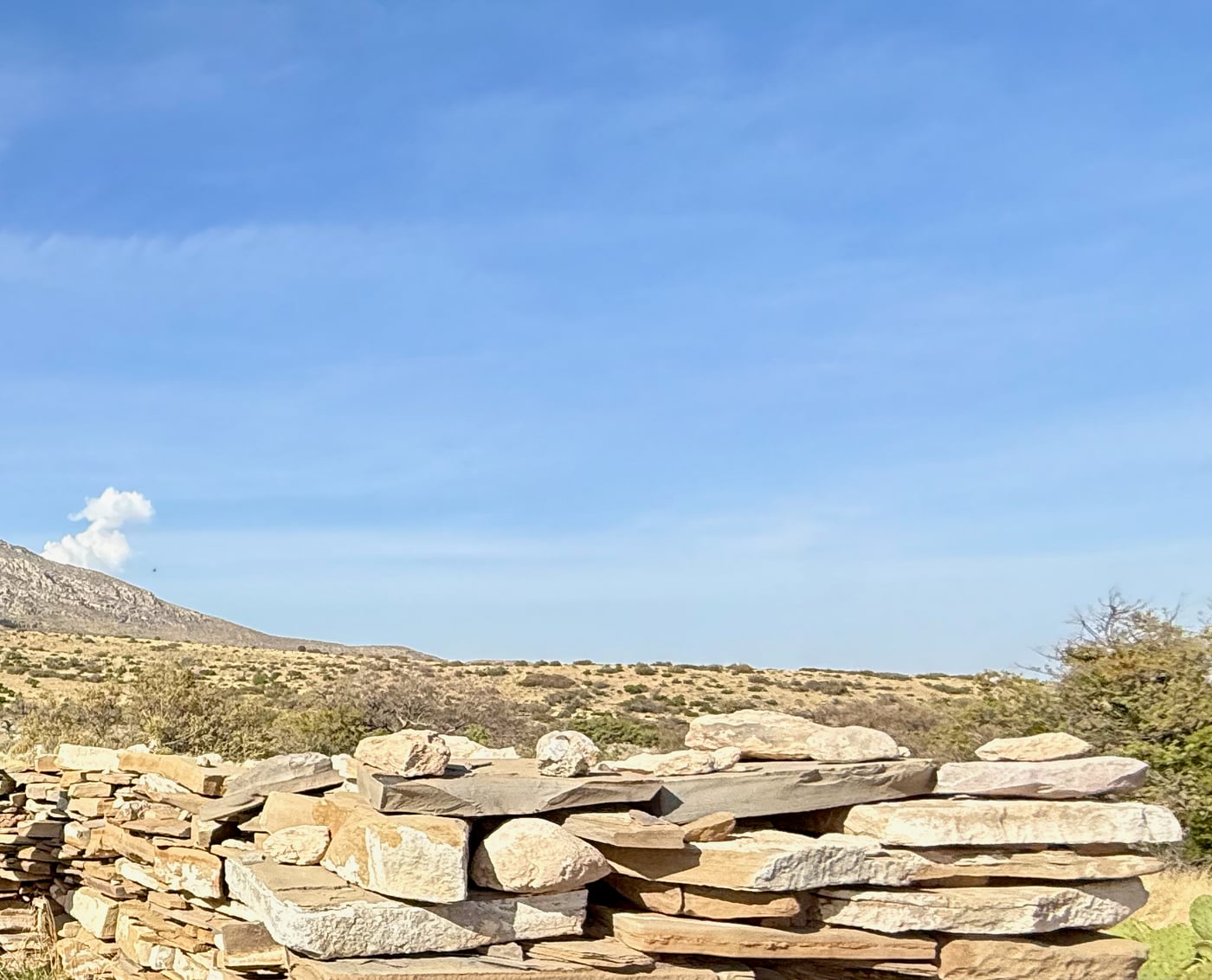 The Pinery — 1858 Butterfield Overland Mail Stage Station Ruins
The surprise of the day was the bloom. We'd come in early spring expecting browns and tans, the desert in its honest dress. Instead the ground was scattered with bursts of pink purslane — small, cheerful, almost defiant little flowers pushing up out of cracked desert soil among the wild grasses. Limestone and flowers. The hard land never stops making delicate things.
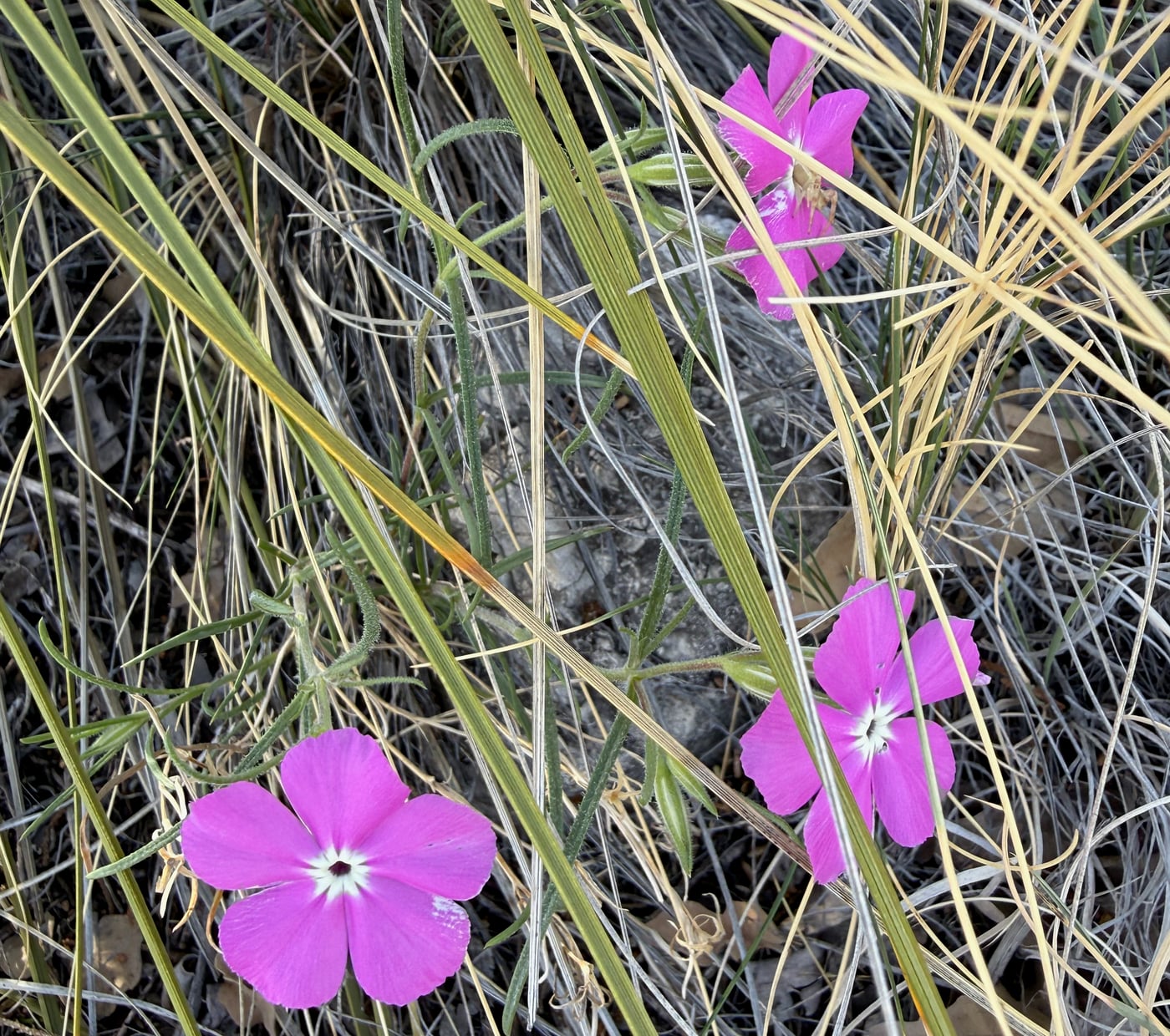 Pink Purslane in the Chihuahuan Desert — Beauty in the Hard Country
Junior Ranger at Guadalupe
The Junior Ranger program at Guadalupe Mountains — full program details on our Guadalupe Mountains park guide — is another win. The booklet opens with the park's many trails and a word search to warm kids up, then moves into Match the Tracks, which has been one of our girls' favorite Junior Ranger games. What tracks do coyote leave? Mountain lion? Ringtail? Mule deer? Lizard, roadrunner, quail? Through repetition and memory, they can finish the page in a flash.
The four mountain peaks rise above the Chihuahuan Desert and the booklet teaches their names: Pine Springs Canyon, Hunter Peak, El Capitan, and Guadalupe Peak. What I love most about the Junior Ranger book here — what I love most about any Junior Ranger book that does this — is that it honors the First Nation history of the land, the original names, the people who knew this country long before it was a park. We learned that the Mescalero Apache called Guadalupe Peak Teshitci, which means "Rock Nose." Once you hear that name, you cannot un-see it. The peak grows a face.
The booklet also taught us what a Wayside is — the outdoor signs that quietly carry a park's information when no ranger is standing there. The book guided the girls through the desert flora: prolific Prickly Pear, Banana Yucca, Cholla, Texas Madrone, Sotol, and Mescal Agave. (We had to stop and research tequila for a minute on that last one) Don't forget the desert wildlife — birds, mule deer, desert cottontail, and the javelina. The girls learned at Big Bend National Park that javelina are not wild pigs, despite looking exactly like wild pigs. They are peccaries, a different family entirely, native to the Americas. And just like that, we wrapped up Guadalupe Mountains National Park — taking in the fossil reef thrust into the sky like silent castles.
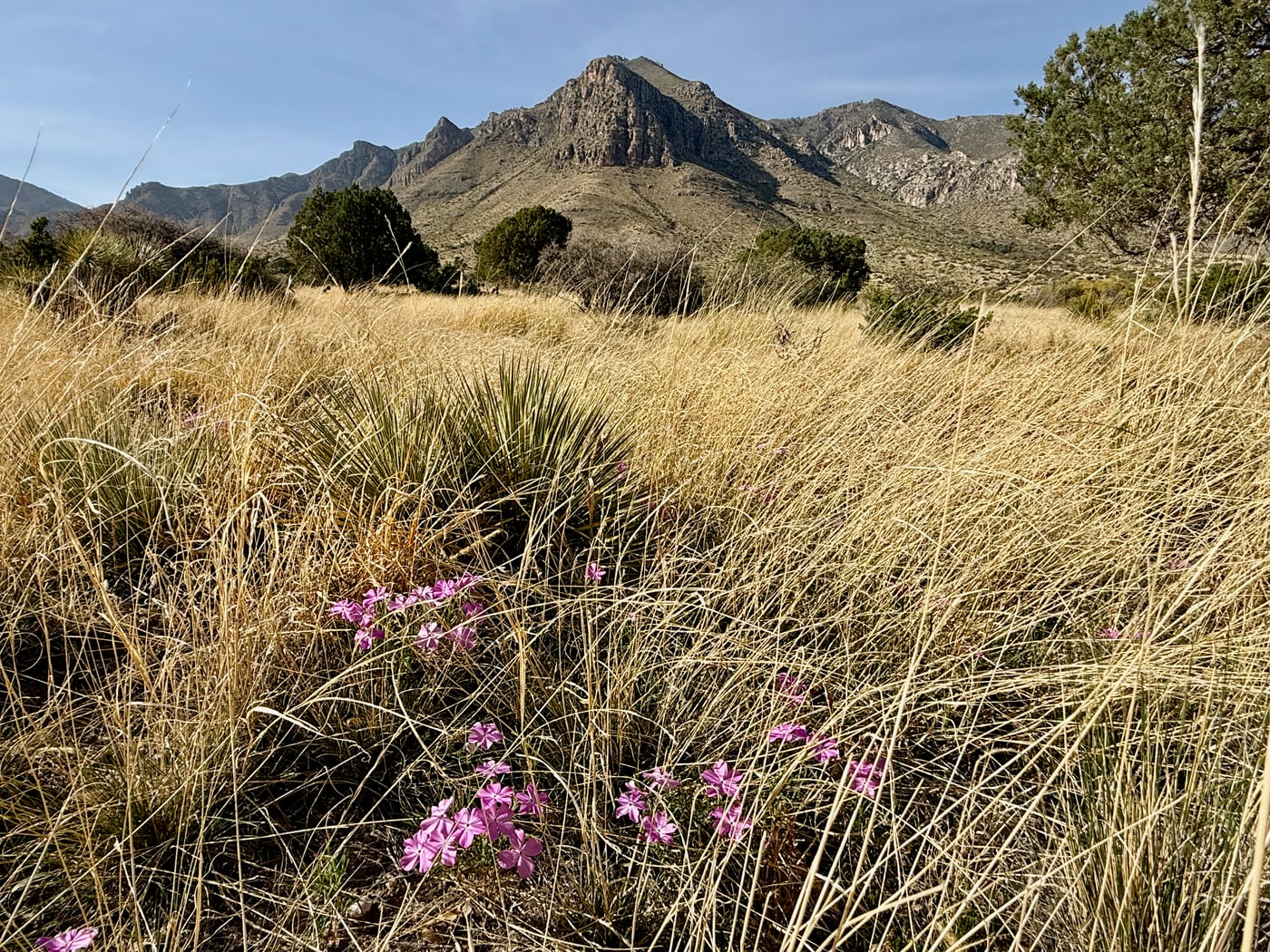 The Ridgeline — Where the Old Reef Meets the Sky
Van Life Tips for Guadalupe Mountains
Where to camp: Guadalupe is remote. The closest in-park option is Pine Springs Campground, dry camping only with a small RV section — first come, first served, and small. We chose to keep moving and boondock that night near the McDonald Observatory in the Davis Mountains a couple of hours south, on one of the darkest stretches of sky in the lower 48. Sleeping under that Milky Way after a day at Guadalupe is a particular kind of contrast that van life loves.
Best time to visit: Spring and fall are the sweet spots. We came in late spring and caught the pink purslane bloom, which is not guaranteed — the desert decides. Summer is brutal heat at the trailheads and winter can pile snow on the high peaks. Wind is constant year-round; this is one of the windiest National Parks in the system.
What to bring: More water than you think you need, sun protection for legs and the backs of hands (the limestone reflects), and real shoes. Even the short walks to the Pinery and the visitor center exhibits make rocky ground feel longer than the map suggests. If your kids are old enough, bring binoculars — the ridgelines reward looking.
Entry: $10 per person, ages 16 and up — or free with an America the Beautiful Annual Pass. Pine Springs Visitor Center hours vary seasonally, so check before you arrive; this is one of those parks where rolling up at the wrong hour means a closed door.
Don't miss: Walk the Pinery Trail to the stage ruins. It is short, paved, doable for little legs, and it does what the rest of the park does — it puts a hand on your chest and makes you slow down.
Where We Headed Next
From Guadalupe we pointed south through the high desert toward the Davis Mountains, the McDonald Observatory, and the dark-sky country that ends at Fort Davis. The Mescalero Apache used to move freely across this whole stretch — Guadalupe to Davis Mountains and beyond — long before any of it was carved into parks and historic sites and county lines. You can feel that older map underneath the newer one if you let yourself.
Guadalupe gives itself slowly. Carlsbad gave itself all at once underground. White Sands gave itself all at once in light. Guadalupe asks you to walk a little, listen a little, and sit with a fossil reef that has been waiting longer than any of us can hold in our minds.
That is exactly the kind of park I want our girls to remember.
More from our Southwest van life journey — White Sands, Carlsbad, Fort Davis, and Big Bend — coming soon.
Wondering how we make these trips happen with the whole family? Read Affordable, Easy and Fun Family Vacations at our National Parks.
Parks Mentioned in This Post
Earn Junior Ranger badges at these parks — track your progress on our badge tracker
Continue the Journey
White Sands National Park with Kids: Junior Ranger Guide
It's not actually sand — White Sands sits on the world's largest gypsum dunefield, crystallized from an ancient inland sea. Here's how we finally made it at sunset, earned Junior Ranger badges, and why you shouldn't rush this one.
Fort Davis National Historic Site with Kids: Junior Ranger Guide
Fort Davis NHS is one of the best-preserved frontier military posts in the Southwest — where the legendary Buffalo Soldiers served after the Civil War. Here's how to visit with kids and earn a Junior Ranger badge in this overlooked West Texas gem.
More in National Parks & Places
Jul 14, 2026
Jul 4, 2026