
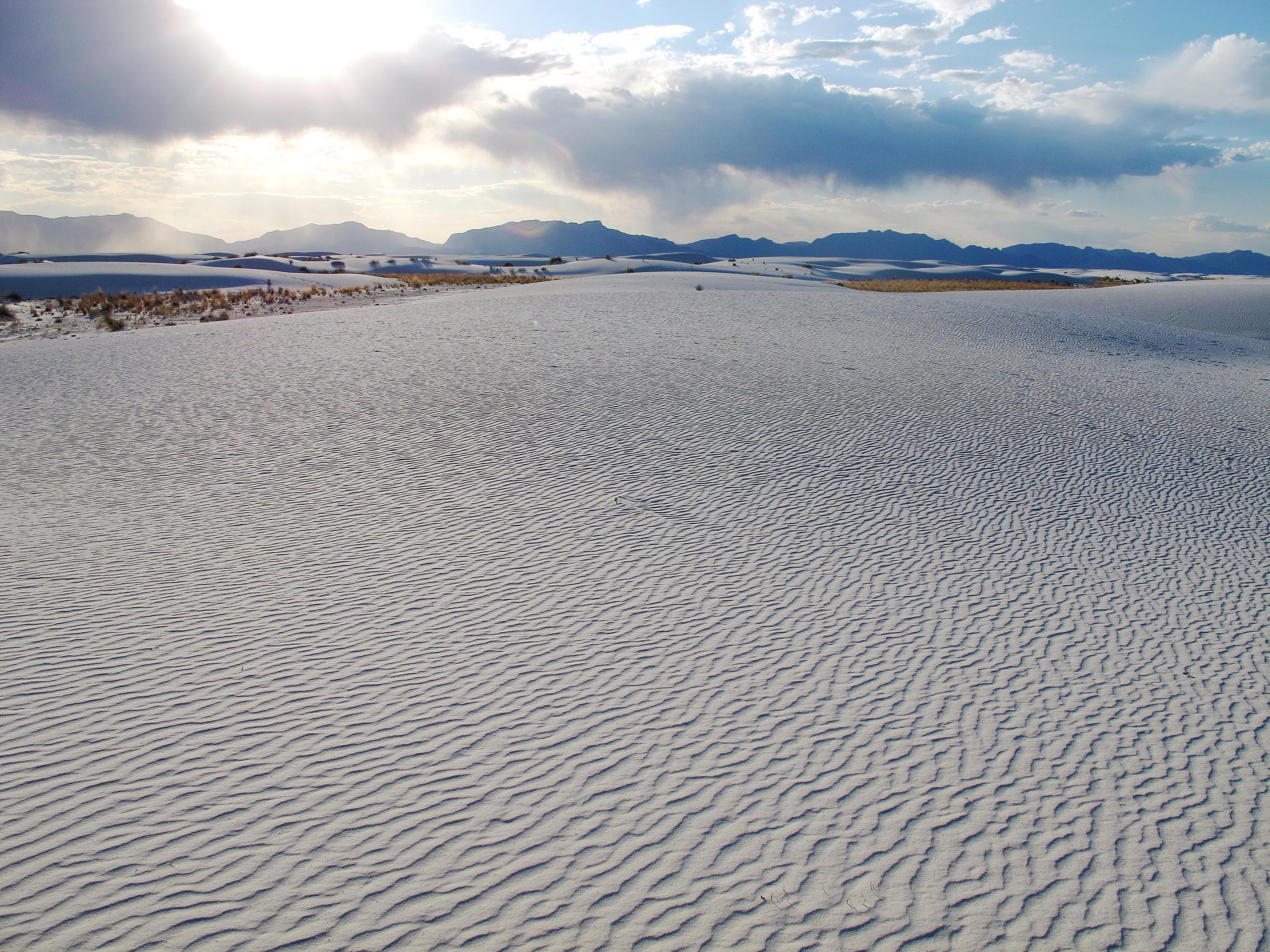
 Photo: NPS Photo
White Sands National Park protects the world's largest gypsum dunefield, where 275 square miles of brilliant white sand dunes create an otherworldly landscape unlike anywhere else on Earth. Unlike traditional sand dunes made of quartz, these gypsum crystals remain cool to the touch even in summer heat, allowing families to explore barefoot year-round. The dunes constantly shift and migrate up to 30 feet per year, swallowing and revealing desert plants that have adapted remarkable survival strategies. Families encounter named features like the Alkali Flat basin and the towering dunes along the scenic drive, where desert animals leave tracks in the pristine white sand that tell stories of nocturnal desert life.
Junior Ranger Program at White Sands National Park
The Junior Ranger program at White Sands combines hands-on desert exploration with fun learning activities about gypsum formation, desert adaptation, and the park's incredible biodiversity. Kids complete activities in their Junior Ranger booklet while exploring the dunes, then participate in ranger-led programs to earn their official badge and certificate.
- Sand sledding down massive white gypsum dunes
- Learning how desert animals like kit foxes and roadrunners survive in the harsh environment
- Discovering why the sand stays cool even in hot desert temperatures
Program Details
Download Junior Ranger Booklet
Get a head start! Download and print the booklet before your visit.
Source: NPS Junior Ranger Program Page
Our Earned Badge
Best Ages for White Sands National Park
Ages 5 and under
Preschoolers love the sensory experience of walking barefoot on the cool gypsum sand and simple activities like finding animal tracks. The shorter Interdune Boardwalk and Playa Trail work perfectly for little legs, while sledding at the Roadrunner Picnic Area provides endless entertainment.
Ages 6-8
This age group typically enjoys the visitor center scavenger hunt and desert safety activities while building confidence on the Dune Life Nature Trail. They're old enough to understand basic concepts about gypsum formation and desert adaptation while still finding pure joy in sledding down the tallest dunes.
Ages 9-12 and 13+
Older kids and teens can tackle the more challenging Alkali Flat Trail and dive deeper into complex desert ecology concepts through word puzzles and wildlife checklists. They often become passionate advocates for desert conservation after learning about the unique adaptations plants and animals have developed to survive in this harsh environment.
Planning Your Visit
Getting There
The park entrance is located 15 miles west of Alamogordo on US Highway 70, with ample parking at the visitor center and along the scenic drive. Gates open at 7:00am daily and close 30 minutes after local sunset, which occurs 8 minutes earlier than Alamogordo's predicted sunset. No advance reservations are required for day visits.
Van & RV Notes
Overnight camping isn't available within White Sands, so families with Sprinter vans should plan to stay at nearby Alamogordo RV parks with full hookups. The park's roads accommodate large vehicles, though the scenic drive has some gentle curves that require attention with longer rigs.
Best Time to Visit
Fall through early spring offers the most comfortable temperatures, with winter months providing perfect sledding conditions without extreme heat. Spring brings windy conditions that can create dramatic dune reshaping, while summer requires early morning or late afternoon visits to avoid intense heat.
How Long to Spend
Plan a full day to truly experience White Sands, allowing time for Junior Ranger activities, multiple trail options, and plenty of sledding. The otherworldly landscape and unique activities make this a park where families consistently want to linger longer than expected.
Don't Miss
Sledding down the massive dunes at Alkali Flat Trailhead creates unforgettable family memories, while the sunset ranger programs reveal how the white sands transform into brilliant colors at golden hour. The Dune Life Nature Trail provides amazing opportunities to discover how plants like soaptree yucca and four o'clock flowers survive being buried and revealed by shifting sands.
Fun Facts for Kids
Gypsum sand stays cool to the touch even in summer because it doesn't absorb heat like regular sand
The dunes move up to 30 feet per year, burying and uncovering desert plants that have adapted to survive being completely buried
White Sands is home to over 40 species of animals that have evolved lighter coloration to blend with the white environment
The gypsum crystals dissolve in water, making White Sands one of the few places where you'll never find permanent streams or lakes within the dune field
Plan Your Stay
Save on park entry with the America the Beautiful Pass — $80 for unlimited access to all 400+ National Park sites for a full year.
Where to Stay
Some of the links above are affiliate links. If you book through them, we may earn a small commission at no extra cost to you.
Nearby Parks to Earn More Badges
Chamizal National Memorial
Chamizal National Memorial in El Paso tells the story of peaceful border resolution between the US and Mexico through exhibits and cultural programs that complement White Sands' natural focus
Guadalupe Mountains National Park
Guadalupe Mountains National Park offers families rugged desert mountain hiking and Texas's highest peak, providing a dramatic contrast to White Sands' gentle dune landscape
Salinas Pueblo Missions National Monument
Salinas Pueblo Missions National Monument preserves ancient Pueblo ruins and Spanish colonial missions, adding rich cultural history to a White Sands desert adventure
Our Adventures at White Sands National Park
Big Bend National Park with Kids: Junior Ranger Guide
May 3, 2026
Big Bend National Park is named for the broad, sweeping bend of the Rio Grande as it carves the Texas–Mexico border — a fossil-and-volcano country of Chihuahuan Desert, sky-island Chisos Mountains, and a river that draws its own line. Here's how we returned with the girls two decades after our first visit and earned the Junior Ranger badge.
Guadalupe Mountains National Park with Kids: Junior Ranger Guide
April 30, 2026
Guadalupe Mountains National Park tells the story of a 260-million-year-old Permian Sea, a fossil reef now standing as the highest peaks in Texas — and the last stronghold of Mescalero Apache freedom. Here's how we visited with the girls and earned the Junior Ranger badge.
White Sands National Park with Kids: Junior Ranger Guide
April 21, 2026
It's not actually sand — White Sands sits on the world's largest gypsum dunefield, crystallized from an ancient inland sea. Here's how we finally made it at sunset, earned Junior Ranger badges, and why you shouldn't rush this one.
Fort Davis National Historic Site with Kids: Junior Ranger Guide
April 11, 2026
Fort Davis NHS is one of the best-preserved frontier military posts in the Southwest — where the legendary Buffalo Soldiers served after the Civil War. Here's how to visit with kids and earn a Junior Ranger badge in this overlooked West Texas gem.
See all Junior Ranger badges
Track your family's progress across every National Park Service site
View Badge Tracker