
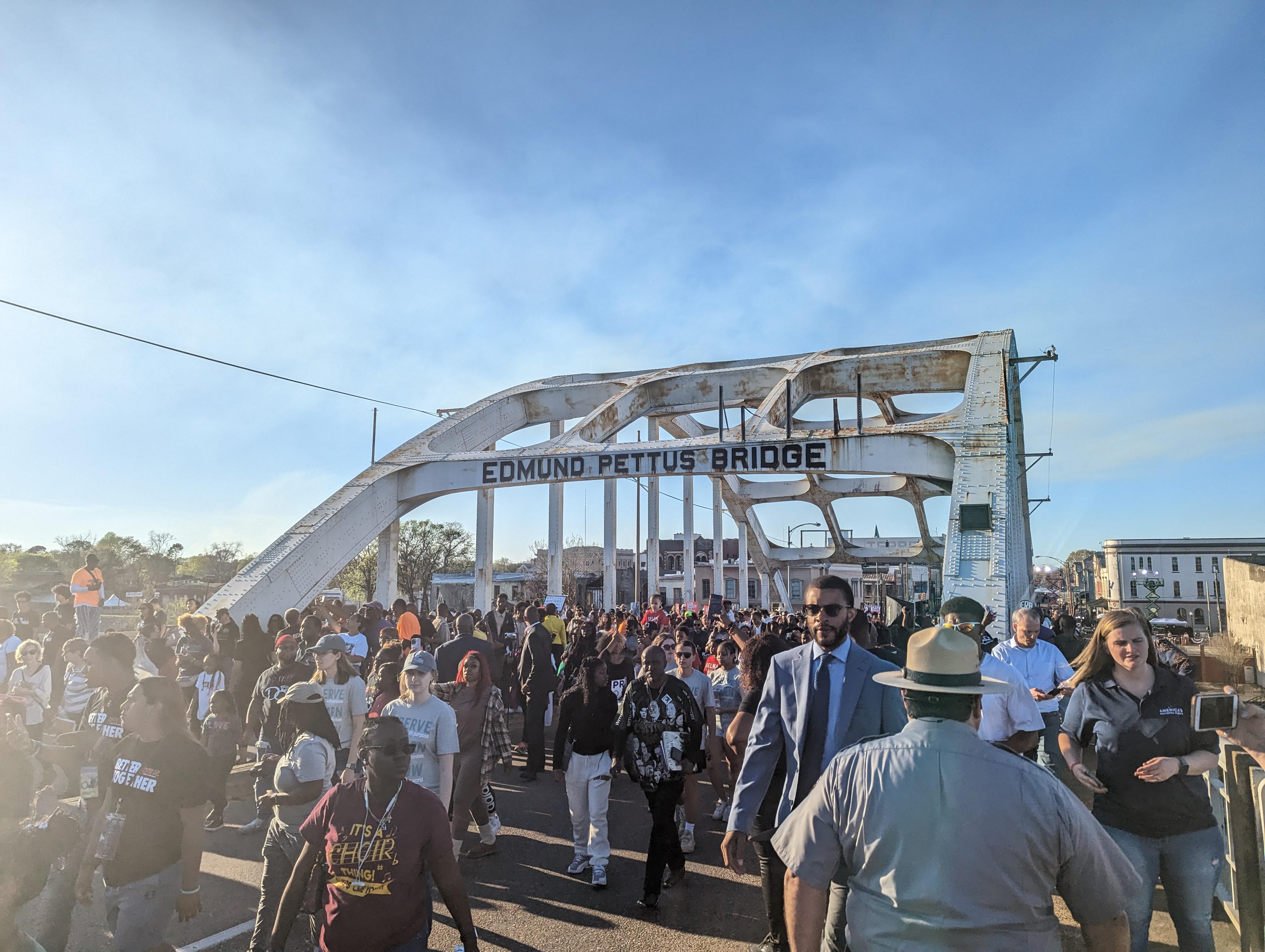
 Photo: NPS Photo
Established by Congress in 1996, this 54-mile National Historic Trail traces the actual route walked by voting rights marchers in 1965, from Brown Chapel A.M.E. Church in Selma, across the Edmund Pettus Bridge, along U.S. Highway 80 through Lowndes County, to the Alabama State Capitol on Dexter Avenue in Montgomery. Unlike a single-site monument, this is a living route families can drive and walk in stages, stopping at interpretive centers along the way to connect the dots between Selma's Bloody Sunday and the marchers' eventual arrival at the Capitol steps. Kids experience history as geography here — the same highway shoulders, the same bridge railing, the same long stretch of Alabama farmland the marchers covered on foot. It's a different kind of park experience: fewer trails and wildlife, more conversation and reflection, with road signs and markers doing much of the storytelling between stops.
Junior Ranger Program at Selma to Montgomery National Historic Trail
Kids complete activities at multiple sites along the trail, including the Selma Interpretive Center, Lowndes County Interpretive Center, and Montgomery's trail terminus, learning about the marchers' bravery and the fight for equal voting rights. The program encourages junior rangers to reflect on civic responsibility and the power of peaceful protest through age-appropriate readings and discussion prompts. Completing it earns kids an official NPS Junior Ranger badge celebrating this pivotal chapter in American history.
- Walk across the famous Edmund Pettus Bridge where history was made
- Explore interactive exhibits at the Lowndes County Interpretive Center
- Collect ranger stamps at multiple sites along the historic 54-mile route
Program Details
Best Ages for Selma to Montgomery National Historic Trail
Ages 4–6
Little ones connect best with the physical experience of walking a short stretch near the Edmund Pettus Bridge or Brown Chapel and hearing a simple version of the story — why people walked, and why it mattered. Skip the denser reading activities in the booklet and let them focus on picture-based or discussion prompts instead.
Ages 7–10
This age group can usually handle the booklet's core activities — matching sites to events, simple timeline questions, and short reflection prompts about courage and fairness. The Lowndes County Interpretive Center's exhibits work well for this age since they break the march into digestible chapters with photos and artifacts.
Ages 11+
Older kids and teens can engage with the full reading and discussion prompts about civic responsibility and peaceful protest, and many find it eye-opening to stand on the actual bridge where Bloody Sunday happened. This is a strong age for completing every booklet page and having a real conversation afterward about what's changed — and what hasn't.
Planning Your Visit
Getting There
The trail follows U.S. Highway 80 between Selma and Montgomery, so there's no single entrance — families typically start at Brown Chapel A.M.E. Church in Selma, drive the marked route through Lowndes County, and finish at the Alabama State Capitol on Dexter Avenue. Parking is available at each interpretive center along the way; no reservations are needed.
Van & RV Notes
There are no posted size restrictions along the highway route itself, and the interpretive center parking lots accommodate full-size vans comfortably. The Lowndes County Interpretive Center has the most generous lot of the three stops, making it an easy place to park a high-roof Sprinter while exploring on foot.
Best Time to Visit
Spring and fall bring mild temperatures that make walking sections of the route and the bridge far more comfortable than Alabama's humid summer months. Winter is generally mild too, though a light jacket is smart for sudden temperature drops; summer visitors should plan for heat and humidity with sunscreen and light clothing.
How Long to Spend
Budget a full day if you want to drive the entire 54-mile route and stop at all open interpretive centers; a half day works if you're focusing on just Selma and the bridge, or just the Montgomery terminus.
Don't Miss
Walking across the Edmund Pettus Bridge with kids and talking through what happened there on Bloody Sunday is the moment most families remember long after the trip. Pairing that with the exhibits at the Lowndes County Interpretive Center, which breaks the march into clear, kid-accessible chapters, helps the whole 54-mile story click into place.
Fun Facts for Kids
The trail was established by Congress in 1996 to preserve the actual 54-mile route marchers walked in 1965.
The route starts at Brown Chapel A.M.E. Church in Selma and ends at the Alabama State Capitol on Dexter Avenue in Montgomery.
Marchers crossed the Edmund Pettus Bridge, which families can still walk across today.
The march followed U.S. Highway 80 through Lowndes County, which still carries the trail's historic markers.
Plan Your Stay
Save on park entry with the America the Beautiful Pass — $80 for unlimited access to all 400+ National Park sites for a full year.
Where to Stay
Some of the links above are affiliate links. If you book through them, we may earn a small commission at no extra cost to you.
Nearby Parks to Earn More Badges
Horseshoe Bend National Military Park
Horseshoe Bend National Military Park preserves the site of an 1814 Creek War battle, offering families a different, earlier chapter of Alabama history with walking trails through the battlefield.
Tuskegee Airmen National Historic Site
Tuskegee Airmen National Historic Site tells the story of the groundbreaking Black military pilots trained here during World War II, with hands-on exhibits kids find genuinely engaging.
Tuskegee Institute National Historic Site
Tuskegee Institute National Historic Site centers on the school founded by Booker T. Washington, pairing well with Selma to Montgomery for families building a broader civil rights and African American history road trip.
See all Junior Ranger badges
Track your family's progress across every National Park Service site
View Badge Tracker