
White Sands National Park with Kids: Junior Ranger Guide
White Sands National Park is the largest gypsum dune field in the world — 275 square miles of blinding white dunes formed when an ancient inland sea evaporated and left its crystallized minerals behind in the New Mexico desert.
Through the Chihuahuan Desert, an unusual landscape unfolds, quiet and vast, filled with creosote plant, scrub, and wide open sky, yet also marked by military missile testing grounds. As you roll through the National Park gate, the snow white dunes appear. That white, ironically, is not sand at all, even though this is White Sands National Park. It is gypsum, crystallized from an ancient inland sea that evaporated and left its minerals behind like a time capsule. We drove toward it like we were dreaming an alien landscape.
This March day was cool and clear, the kind of light that makes the American Southwest feel like it's deciding what it wants to be, a hot taste of summer or a cool memory of winter's exit. The gypsum dunes were brilliant and strange and impossibly pure against the outline of the San Andres range. There is no gradual introduction at White Sands. The landscape simply becomes itself all at once.
White Sands National Park was a place that we attempted to go several times on our New Mexico journeys and could never quite get there at the right time, and season, because July afternoon here was simply not happening for this van family. We had been in Roswell the year before, and it would have been a perfect off-shoot just a few hours away. But alas, you cannot fit it all in every time between work, school, and normie life. This March, was the time, and in our typical squeeze-it-all-in fashion, we made it to the visitor center just a few minutes before it closed after booking it four hours straight without stopping to make it just in time.
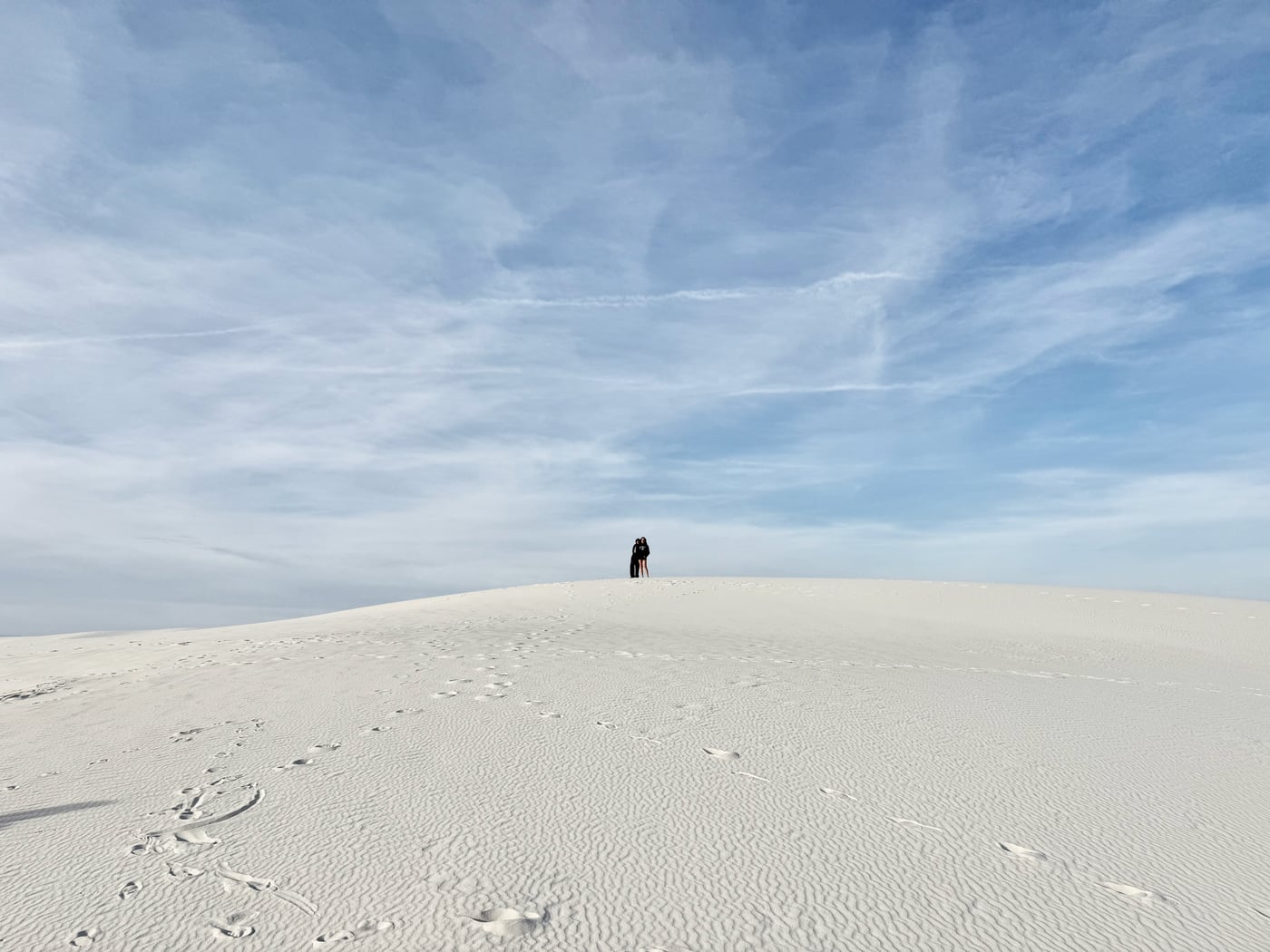
Sunset on the White Sands
So grateful we happened to get to the visitor center to grab Junior Ranger books. Then we waited in the impressive line to get into the park for the sunset watch, which seems like it is definitely an evening outing idea for locals. We were able to spend hours with rest and restoration on the brilliant white gypsum sands.
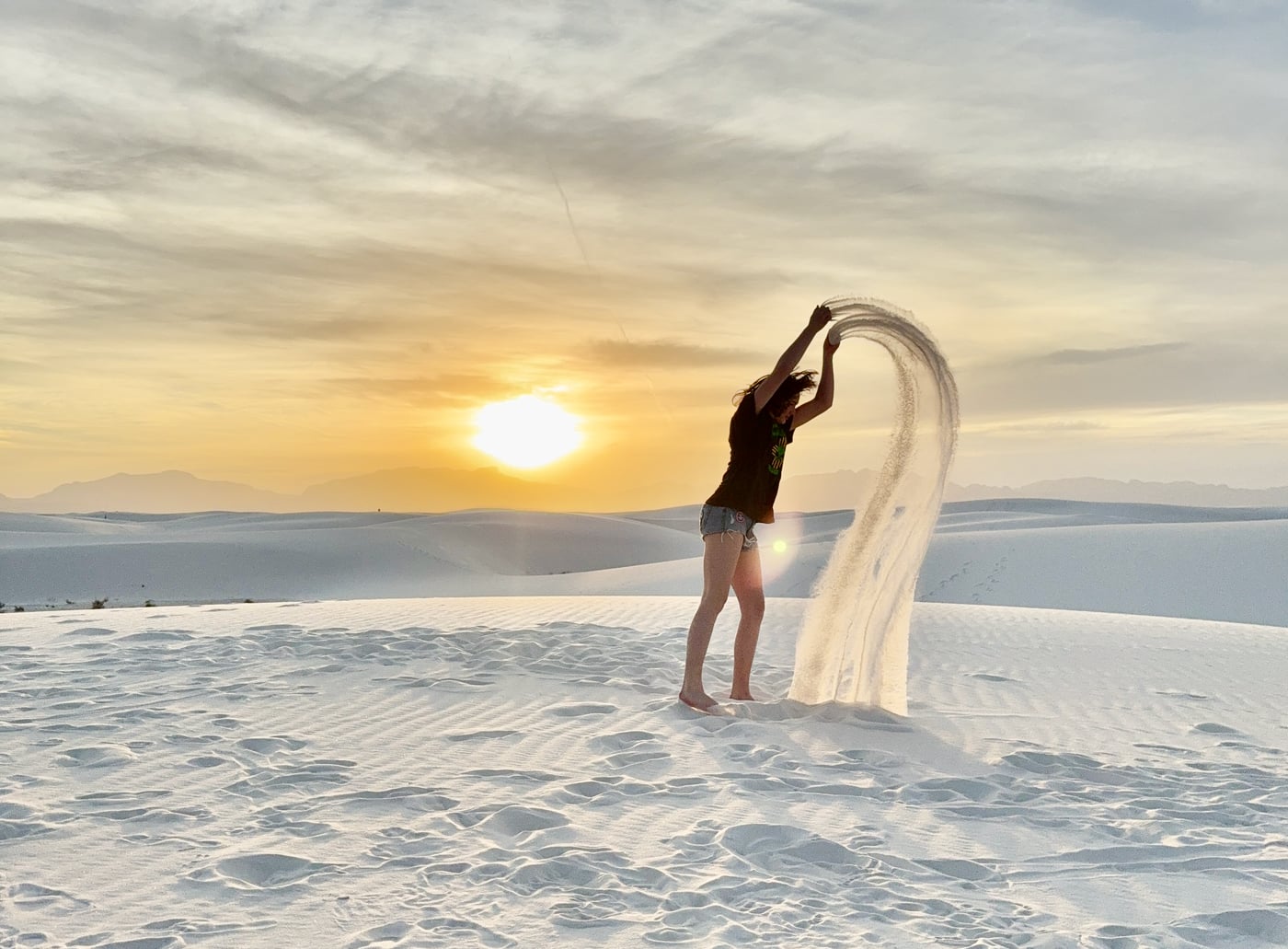
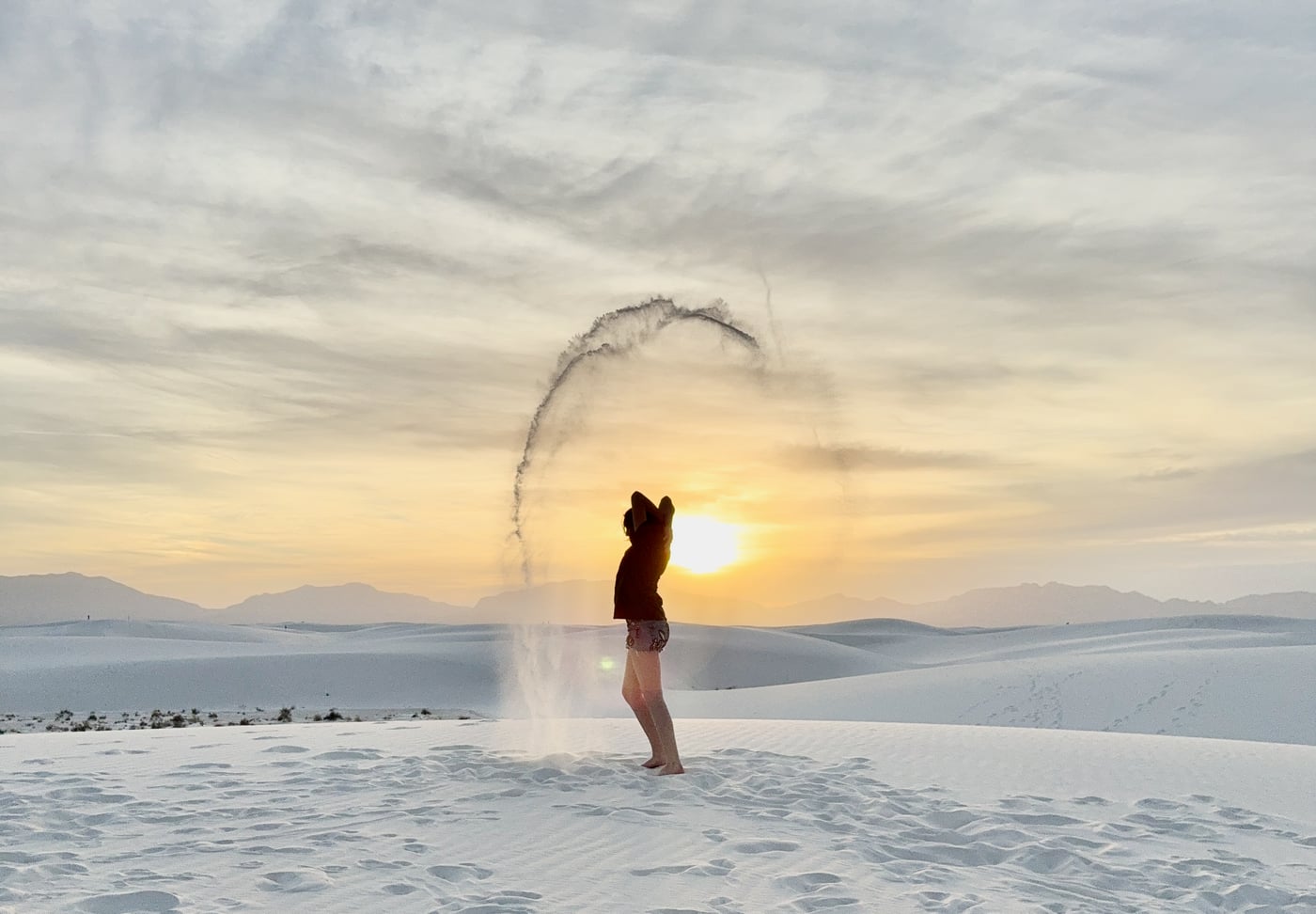
Sunsets at White Sands are not like other desert sunsets. The gypsum catches and holds the last light uniquely, the dunes shift from white to pale gold, to deep amber rose, then to twilight, as the mountains hold the outline of the whole thing like a frame. There were families spread across the dunes in every direction, locals with sleds and blankets and the unhurried ease of people who know a good thing and return to it. We felt it too, and would come back over and over again if we were in the region at the perfect time—dusk, no matter the season or the heat—because it is just too beautiful to see it only once.
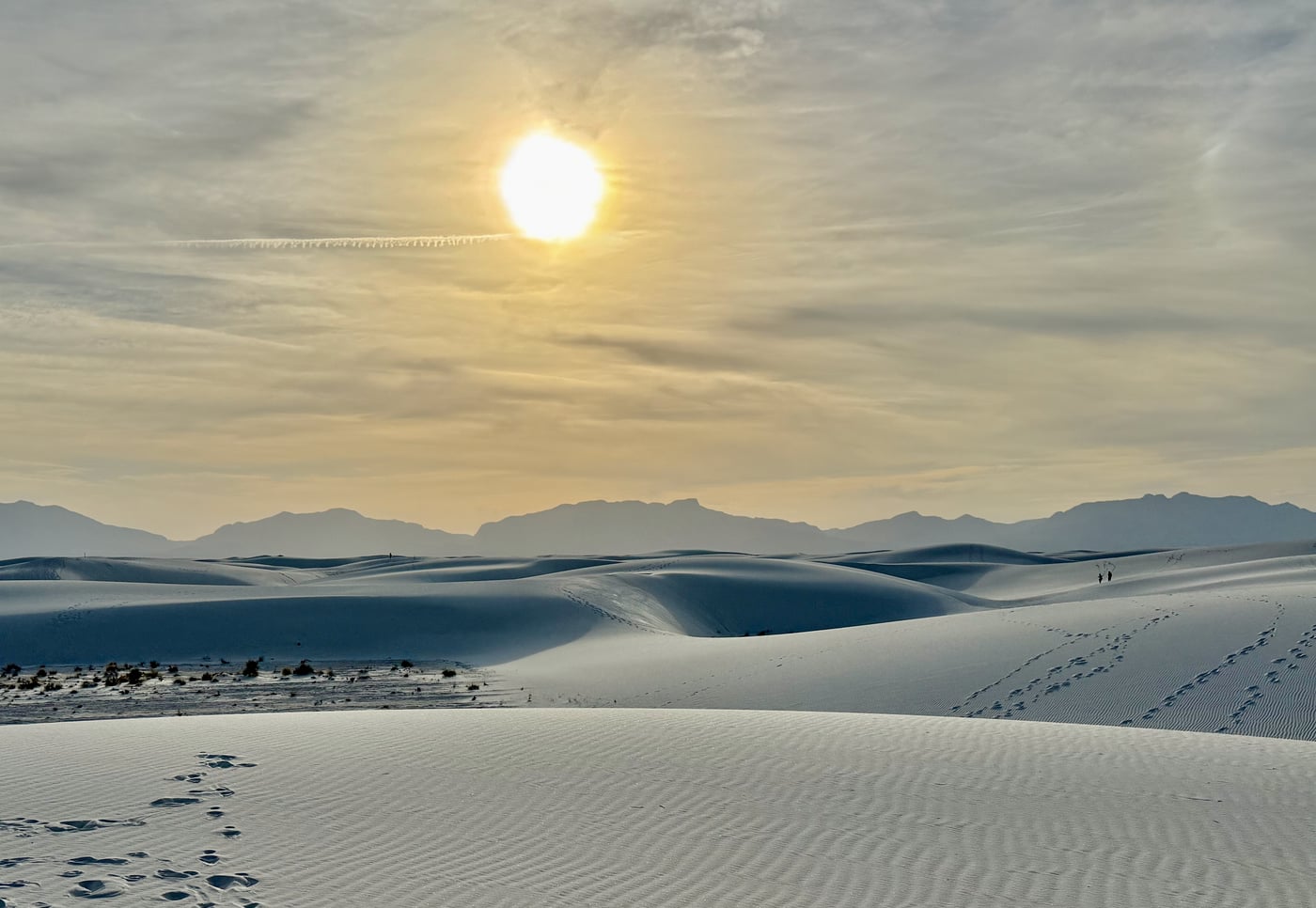
The Junior Dunes Ranger Activity Book
We learned many other things from the White Sands National Park Junior Ranger book other than that pressing question of where did all the gypsum sand come from. Always a win, for science and curiosity, we refreshed the topics of food chains and pyramids and how rock was transformed into sand and dunes from the San Andres mountains. We imagined what animals would have walked the earth here 20,000 years ago: camels, lions, giant ground sloths, and mammoths. To reinforce other American Southwest explorations, we reviewed uses of the yucca plant, its bayonet sharp and swordlike leaves and its versatility in survival. The variety at White Sands, the soaptree Yucca. A quick review of the water cycle: precipitation, collection, evaporation and condensation with some fun pictures. There you have it, the fantastic history, science and imagination all tied into knowledge of this beautiful natural feature in New Mexico.
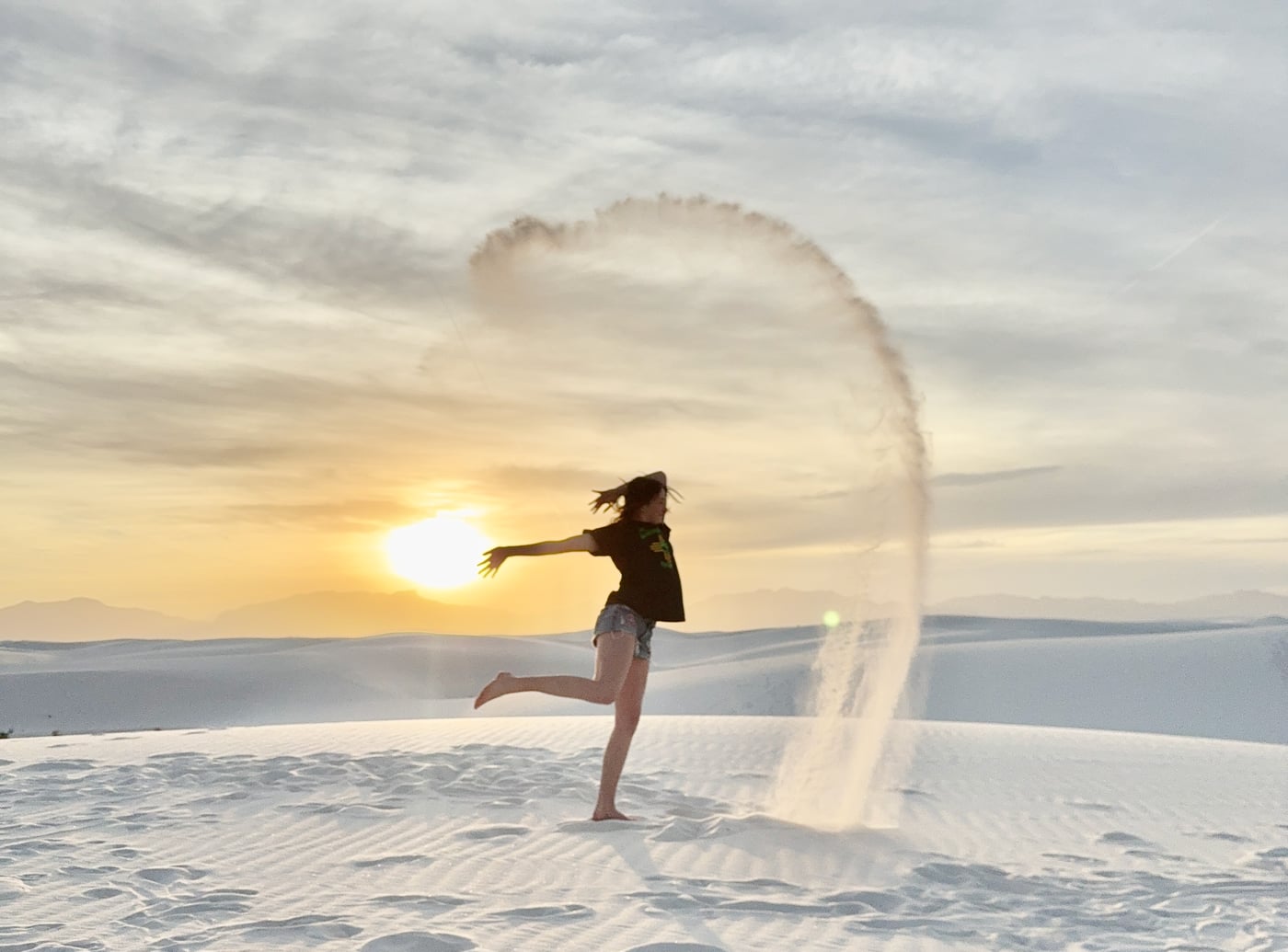
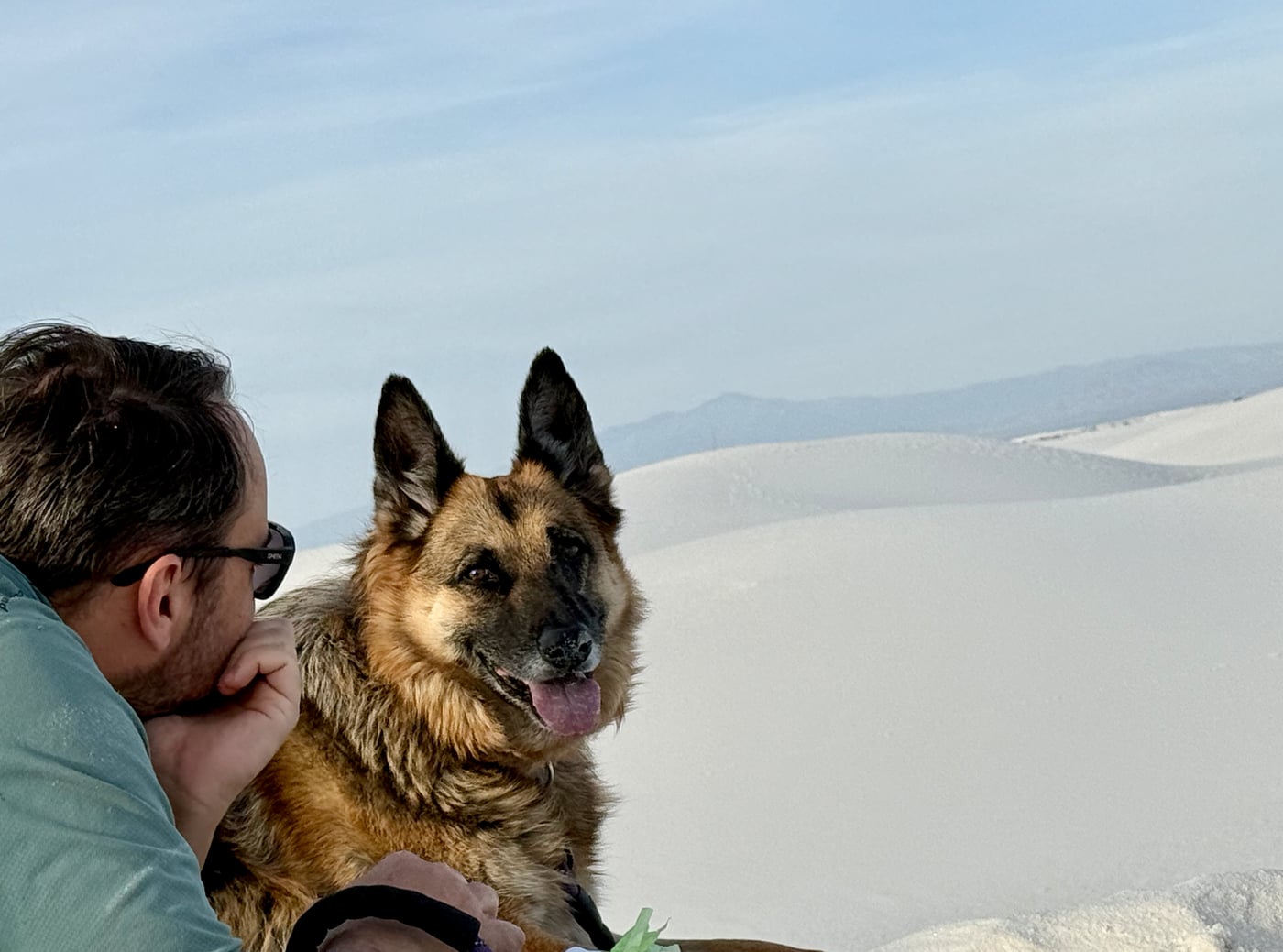
Oh, and the best part, dogs allowed!
Van Life Tips for White Sands
Where to camp: The Sacramento Mountains just east of Alamogordo are worth the drive up Highway 82 — Cloudcroft sits at 8,600 feet in a pine forest that feels like a different planet from the white basin below. A mountain night after a dune afternoon is a particular kind of contrast that van life loves. Oliver Lee Memorial State Park, about 25 minutes south of the park entrance on US-54, offers full hookups with dramatic escarpment views. And if you want to sleep inside the park itself, White Sands offers backcountry camping by permit — waking up on those dunes at first light is genuinely unforgettable. Book ahead.
Know about missile range closures: White Sands National Park shares its land with White Sands Missile Range, and the park does close — sometimes for several hours — when tests are scheduled. This is the practical detail that travel blogs quietly leave out. Check for closures before you plan your entry window at the NPS site or call ahead. We arrived just before 5 and made it in; having that buffer in your day matters here.
Best time to visit: March was ideal. The summer crowds had not yet arrived, temperatures on the dunes were comfortable, and the light at golden hour was extraordinary — the kind of light that turns white sand warm amber and makes every photograph feel like it was painted. Spring and fall are the sweet spots for this park. Summer is brutal heat reflected off the gypsum from every direction, though the dunes themselves do not absorb heat the way beach sand does.
What to bring: Rent sleds at the visitor center gift shop — the dunes are made for sledding and the girls spent an hour completely absorbed in it. Bring more water than you think you need; the desert is deceptive and the white sand reflects sun at you from below. Sunscreen on legs and the backs of hands, because the gypsum reflection is relentless. And bring the dog. Dogs are allowed on the Interdune Boardwalk and the Alkali Flat Trail — Chandra was in full bliss.
Entry: $25 per vehicle, or free with an America the Beautiful Annual Pass. Dunes Drive is 8 miles one-way and paved, with pullouts at major dune areas for parking and exploring. Allow at least two to three hours at minimum. Rushing White Sands is a mistake.
Where We Headed Next
From White Sands we drove east toward Carlsbad, the desert road unfolding simply on the way to the Guadalupe Mountains — the same ancient limestone reef that holds Carlsbad Caverns underground in its depths. There is something about moving through a landscape that has been shaping and reshaping itself for 250 million years that puts a single family van trip into its right proportion.
White Sands had given us the gift of time suspended. Those dunes don't look like the rest of America. They don't look like the rest of the earth, really. And to let the girls run across them, throw the sand to the sky, watch Chandra lie down and surrender completely to the strange white ground — that is what van life gives you. Not just places. Moments that don't have a name until later, when you realize they have become part of who you are.
Carlsbad Caverns was waiting. We were ready to go underground. Some landscapes give themselves to you slowly. White Sands gives itself all at once — and you carry it with you after, that impossible white, long after the desert is behind you.
Continuing west through Texas? Read our Fort Davis National Historic Site guide — Buffalo Soldiers, reveille on the hour, and the most overlooked historic park in West Texas.
Parks Mentioned in This Post
Earn Junior Ranger badges at these parks — track your progress on our badge tracker
Continue the Journey
More in National Parks & Places
Jul 14, 2026
Jul 4, 2026