
 New
Olympic National Park with Kids: Junior Ranger Guide
Olympic National Park protects three worlds in one: a wild Pacific coastline, a temperate rain forest that drinks 12 to 14 feet of rain every year, and white, glacier-capped mountains rising out of the middle of the peninsula. It is a UNESCO World Heritage Site since 1981, and a rich green fern dreamland where you can almost sense fairies and magical ancient mythic creatures alongside you in another dimension.
For children, it is a gateway of wonder. Almost a prism held up to expanded realities alongside this one. Our girls were young when we brought the van here, and the forest met them exactly at that age.
A Rich Green Fern Dreamland
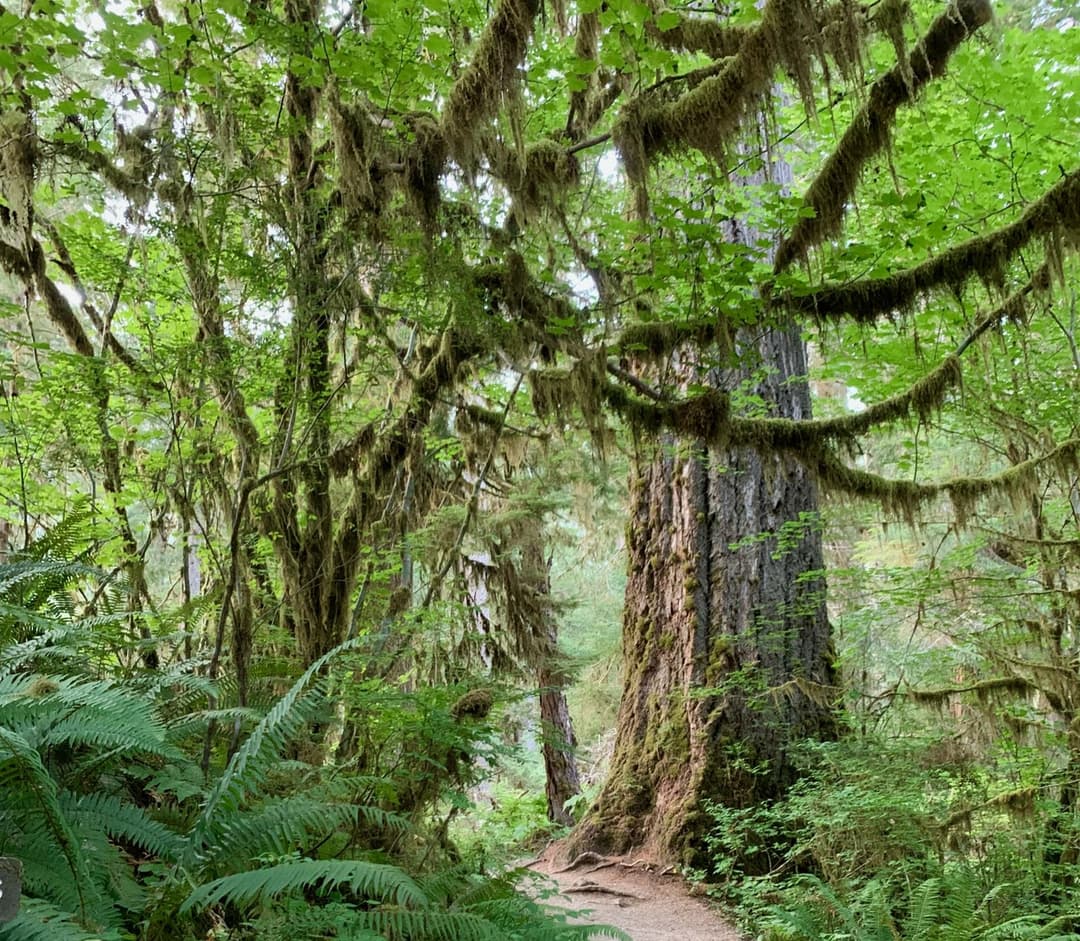
The part our girls loved the most was the temperate rain forest. Ferns, mosses, and lichens in every subtle lime to rich deep green caught the eye and reminded us that there are a million different hues and shades of each color. Moss hangs from the branches in long soft beards. Ferns grow from the forks of trees. Even the bark wears a coat of green.
There is a reason it looks this way. The rain forests sit in the western valleys of the Quinault, Queets, Hoh, and Bogachiel rivers, which face the Pacific and catch its storms first. The Park Service calls the plants that grow on other plants epiphytes, and here they cover nearly everything. The forest floor is so crowded with life that many seedlings cannot find room in the soil at all, so they sprout on fallen, decaying trees instead. These are nurse logs. In time the young tree's roots reach down around the log to the ground, the log rots away, and the tree is left standing on stilts, still holding the shape of the giant that raised it.
I love that. A forest where the old ones feed the young, even after they fall.
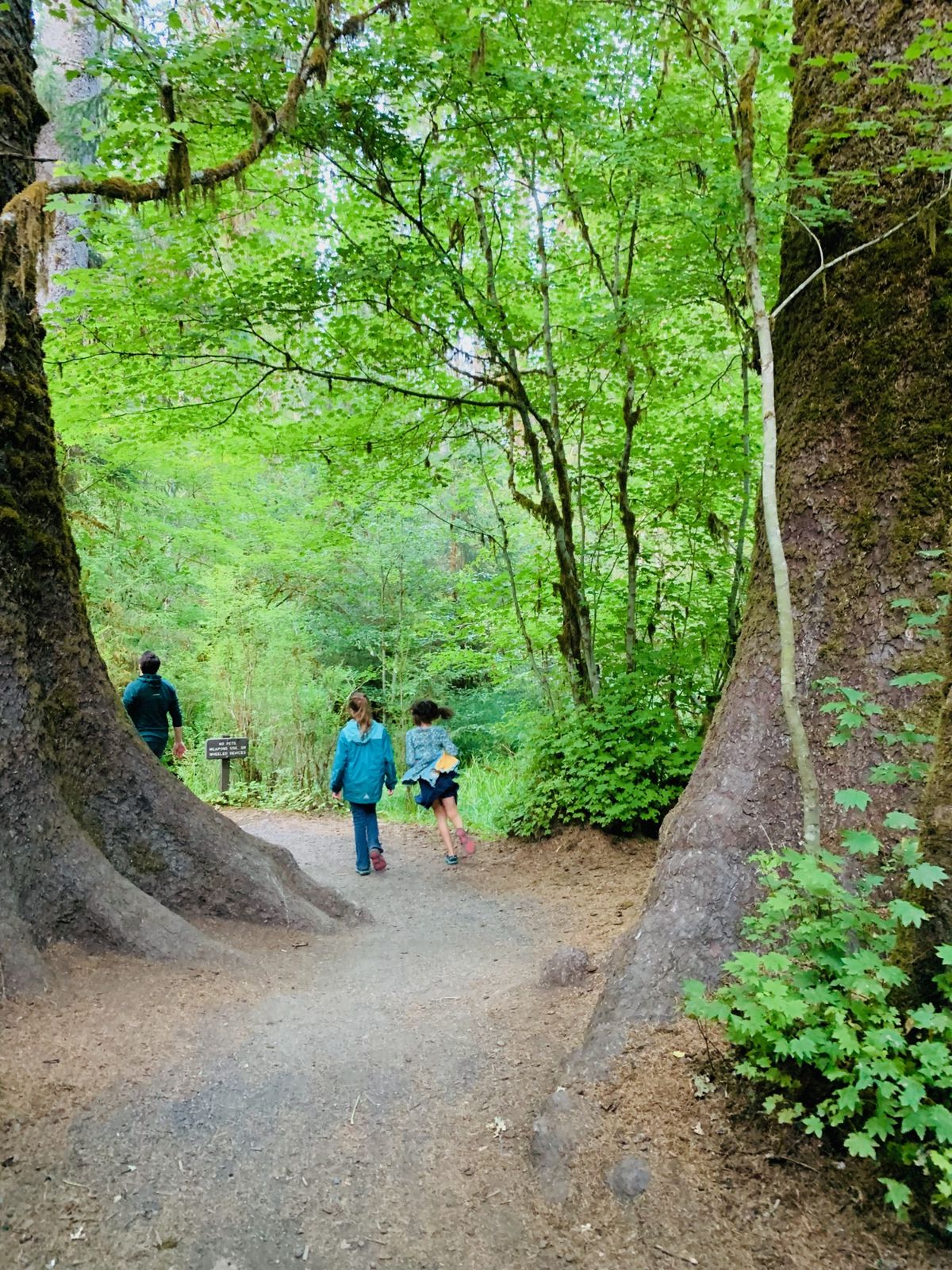 Walking between the pillars
The mist surrounding the ancient, still Sitka spruce and western hemlock seemed to echo stories of thousands of years of footsteps and the march of time. The neck could nearly not stretch back enough to catch the very tops of these wooden pillars in the sky. The trunks were so wide that it seemed almost unbelievable, and the trees almost seemed immortal.
It was to play and prance among giants. And the girls did exactly that. They walked fallen logs like balance beams and crossed over a pool of water so clear and green it looked lit from underneath.
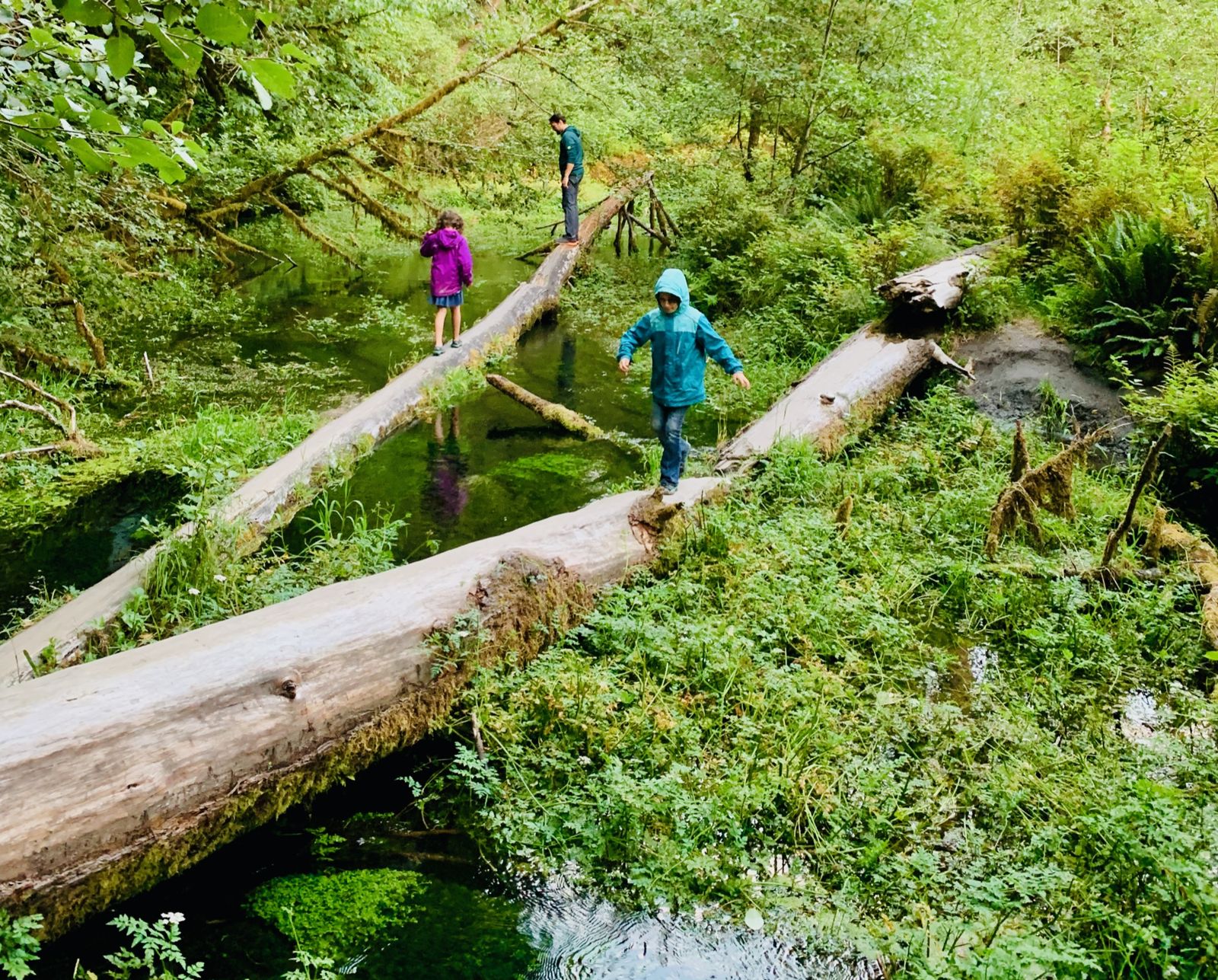 Balance beams, rain forest style
One of the old cedars had a hollow at its base big enough for both girls to step inside and look out at us from the heart of the tree. Another had fallen long ago, and its tangled, twisting trunk rose above them like a sculpture while they walked its length.
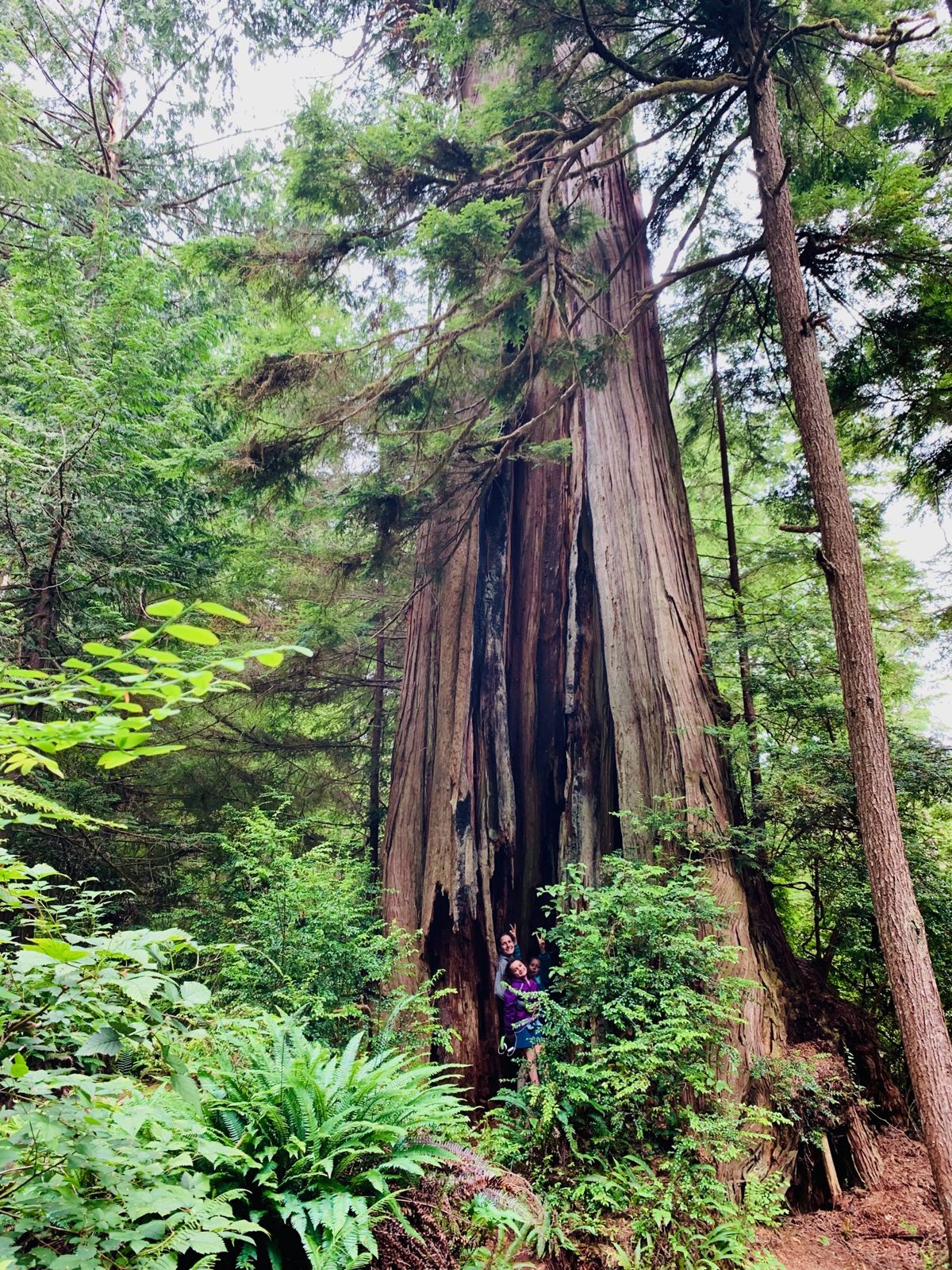 Inside the heart of a giant
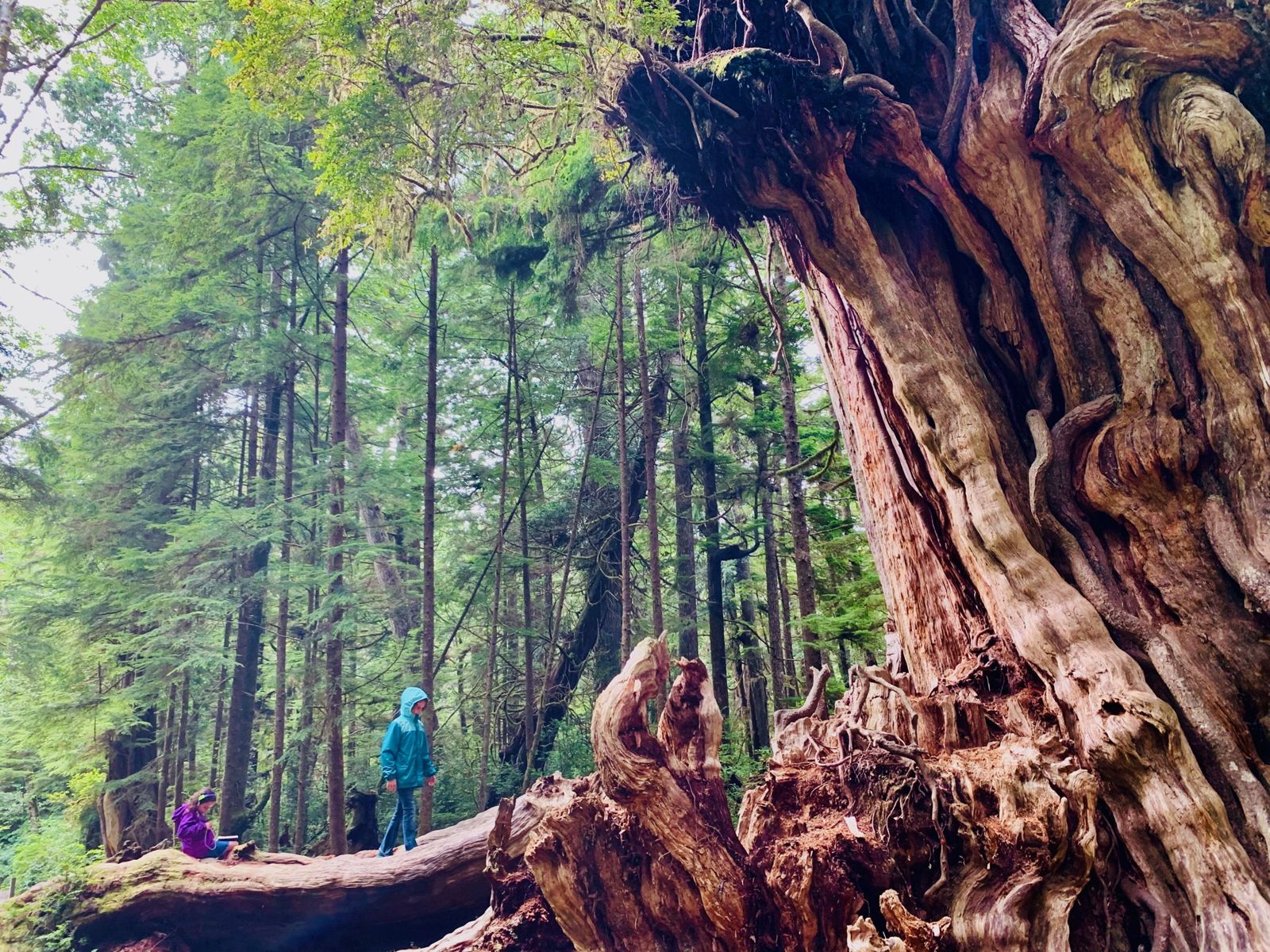 Small explorers, ancient trees
The clearest way into the Universe is through a forest wilderness. (John Muir)
The Giants of Lake Quinault
On the south shore of Lake Quinault, a short walk off the road, stands a Sitka spruce the sign calls the World's Largest Spruce Tree: 58 feet 11 inches around, 191 feet tall, and about 1,000 years old. Record-keepers still argue over which giant spruce truly holds the title, and honestly, standing at the base of this one, it did not matter at all.
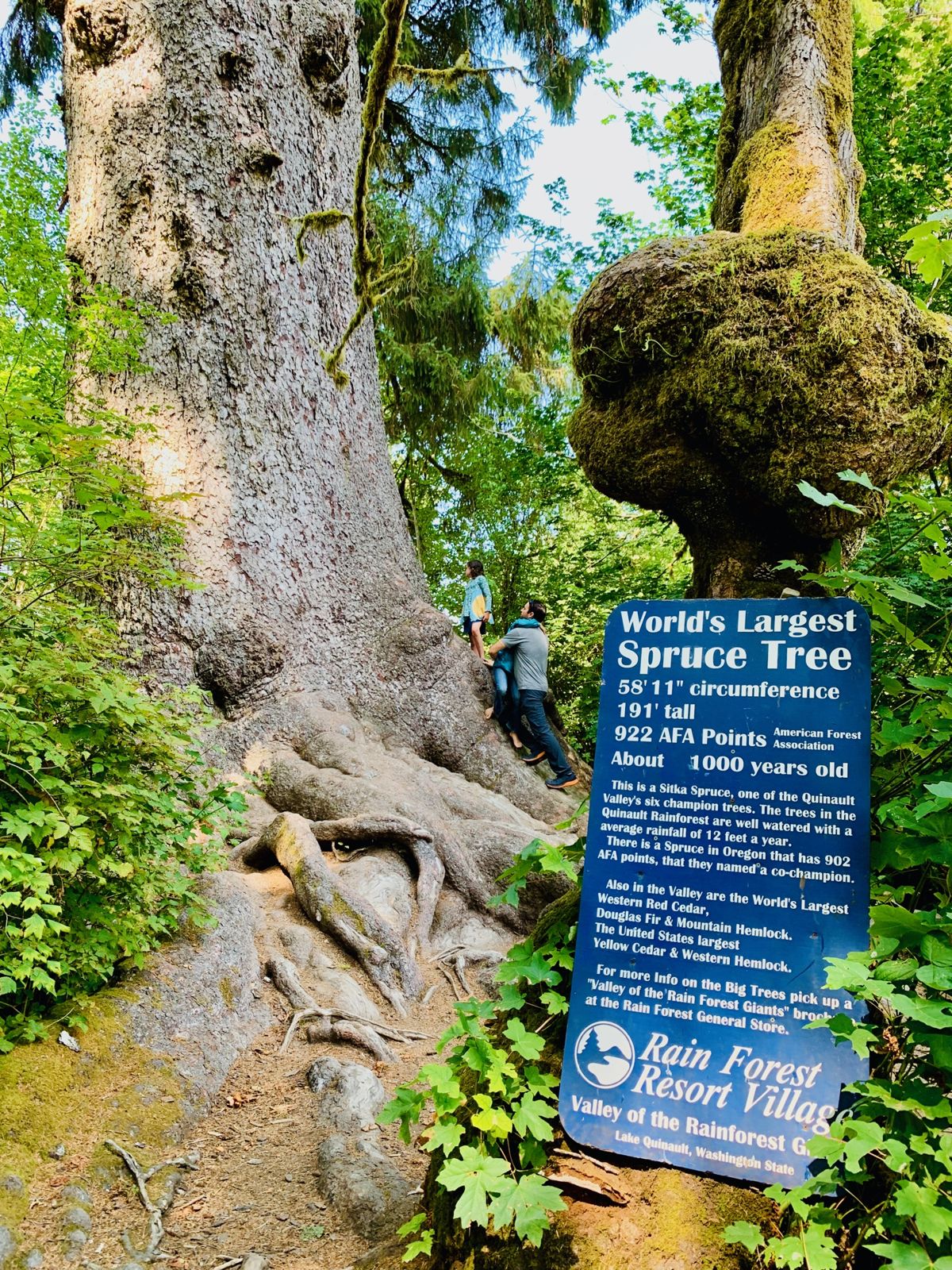 About 1,000 years old, and still growing
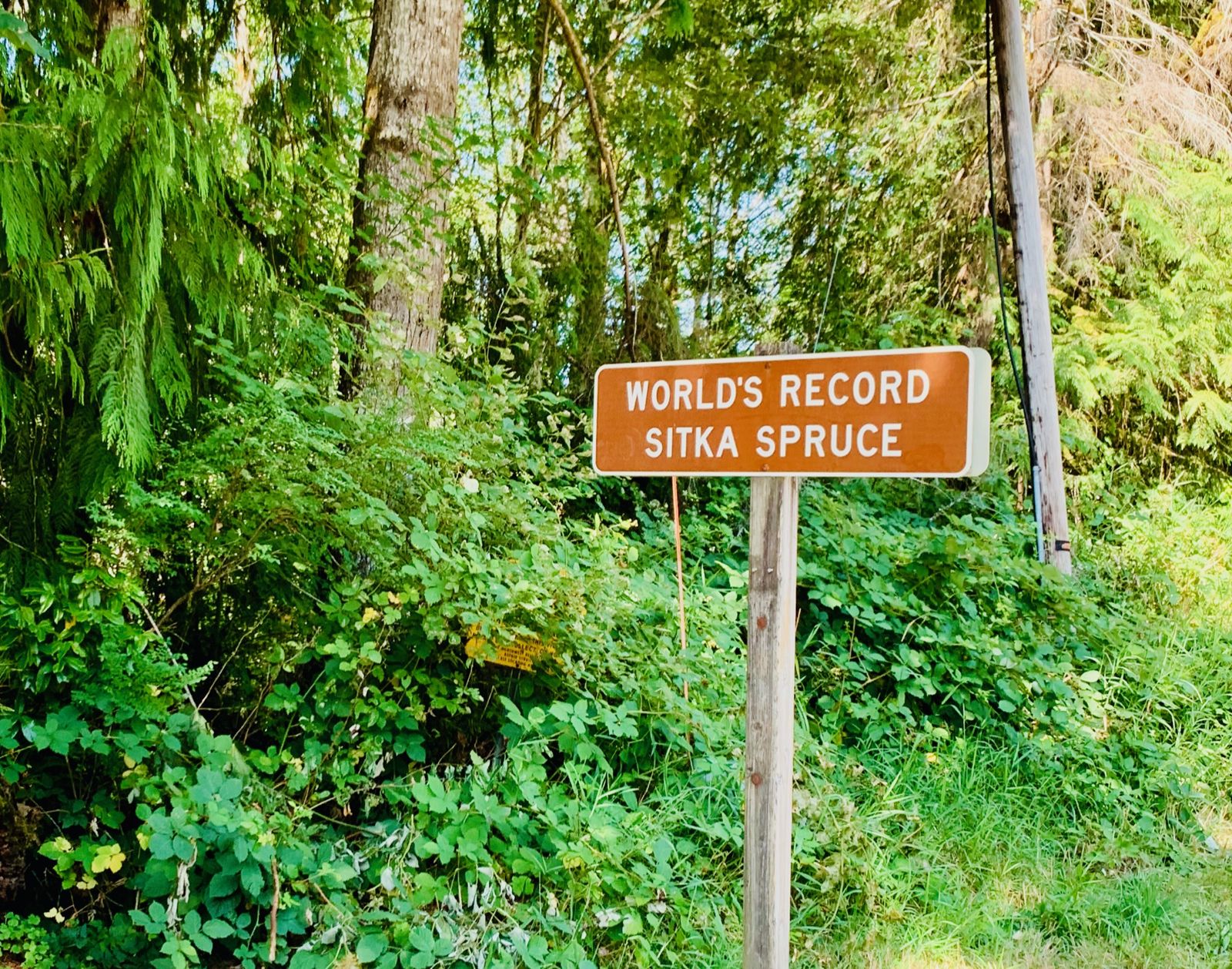 The sign that pointed the way
We stood among the roots, each root as thick as a person, and looked up at a tree that was already old when the people of this valley were telling their stories around the fire a thousand years ago.
The Wild Pacific Coast
Olympic's coastline is rocky, rugged, wild, and free, far more than the gentle, inviting sand beaches found elsewhere. Sea stacks stand offshore. Driftwood lies scattered and strewn across the shore, whole trees tossed there by stormy, riotous events no visitor ever saw. It is the Pacific Northwest exactly as you imagine it, gray sky and silver water and that wild salt wind.
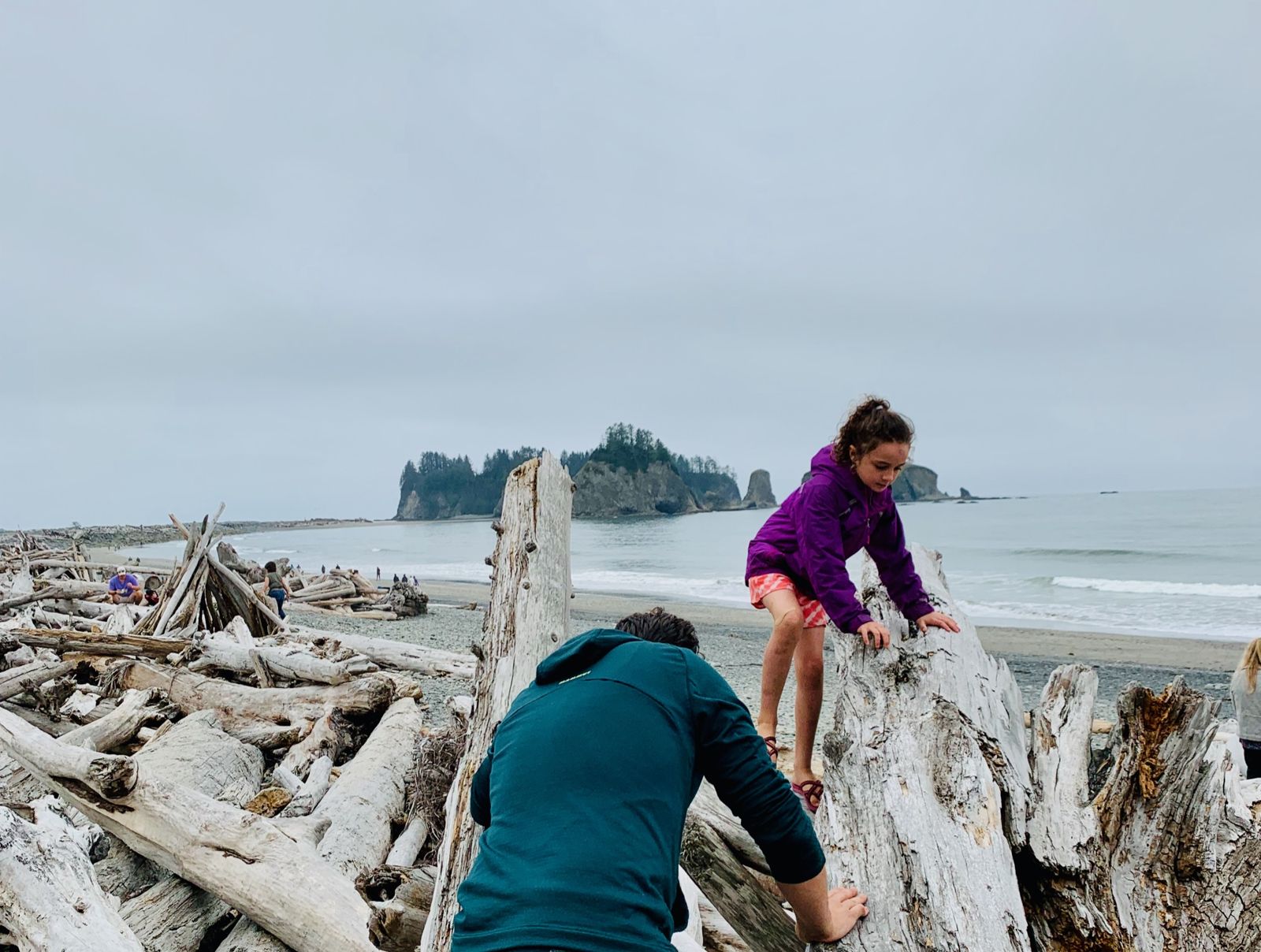 Climbing what the storms left behind
The girls climbed the driftwood. Then they walked out to the edge of the surf and stood there, small against all that ocean, watching the waves roll in around the sea stacks.
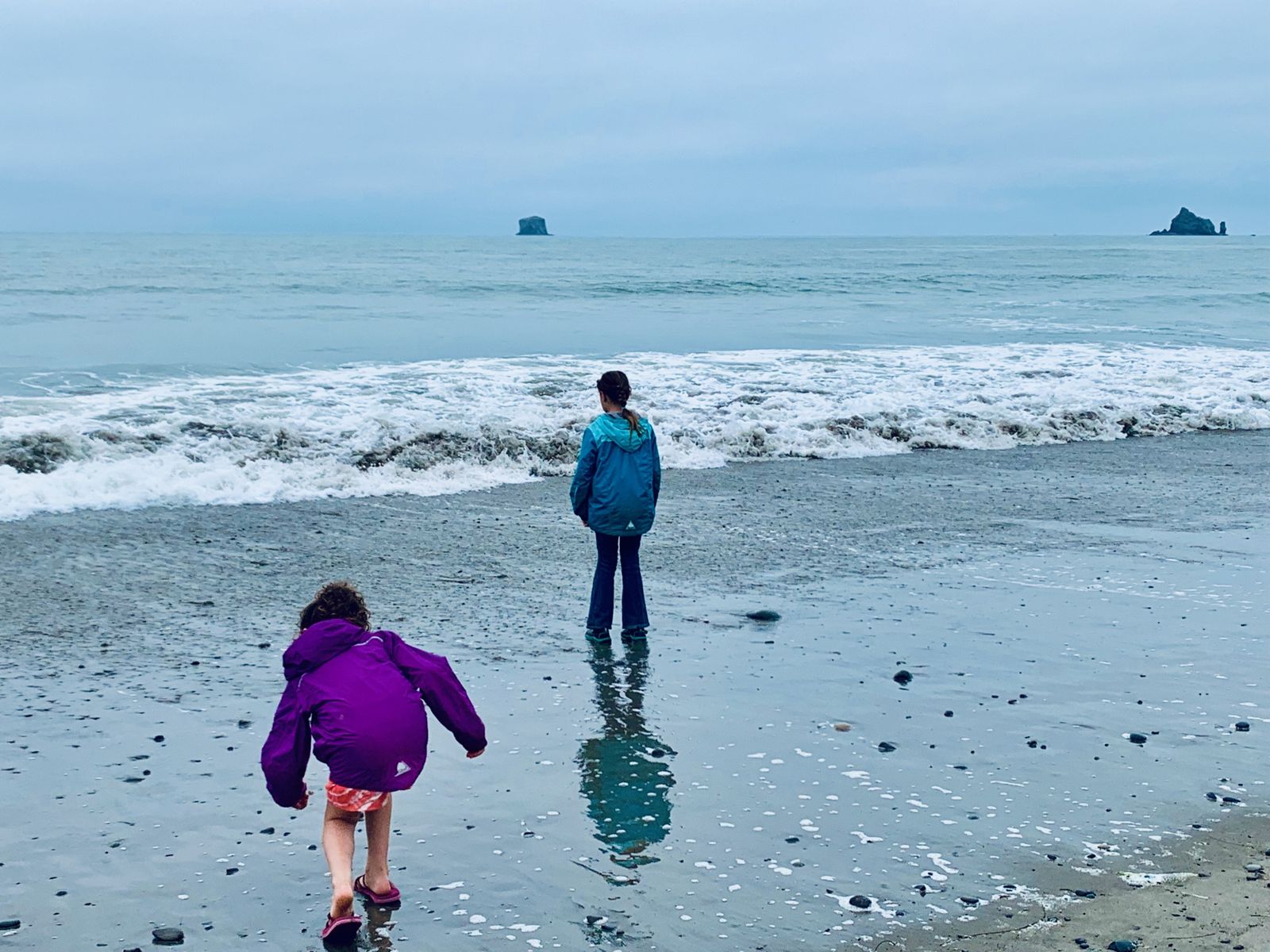 Small against all that ocean
Inland, the rivers run cold from the mountains. Small stone cairns stood in the shallows, and the light turned the whole river to glitter around them.
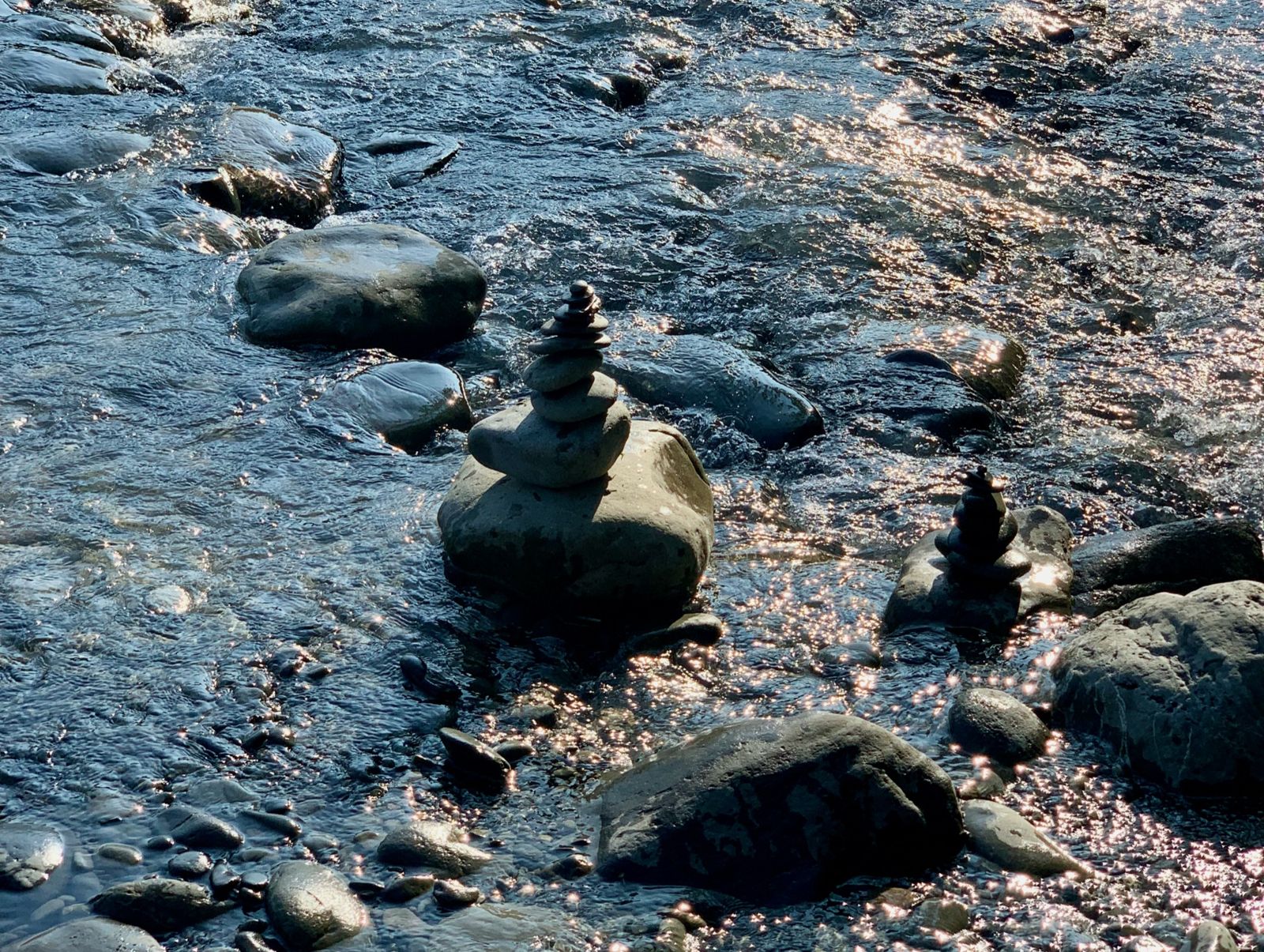 Stone and light and moving water
Above it all rise the white, forever-winter, glacier-colored peaks of the Olympic Mountains. Olympic's UNESCO recognition covers that spectacular combination of rain forest, glaciated mountains, old-growth forest, and wilderness coastline. Olympic stands in good company. Yellowstone, Grand Canyon, Yosemite, Everglades, and Redwood National and State Parks are World Heritage Sites too, preserved for all of humanity. You can see the full list on the Park Service's map of World Heritage Sites in the United States.
The People of This Peninsula
Long before it was a park, this was home. Eight tribes still recognize a living relationship with these lands and waters: the Lower Elwha Klallam, Jamestown S'Klallam, Port Gamble S'Klallam, Skokomish, Quinault, Hoh, Quileute, and Makah. Their ancestors lived throughout the peninsula, from the rivers to the outer coast, and ceded those lands to the federal government in the treaties of 1855 and 1856. Today the tribes live on reservations along the shores, and many still paddle these waters each summer in the Tribal Journeys canoe gatherings.
The most remarkable window into that older life came from the coast itself. Several hundred years ago, a mudslide buried part of the Makah village at Ozette, and the mud sealed the houses so completely that even wood and basketry survived. When storm erosion exposed the site in 1970, the Makah and archaeologists from Washington State University spent 11 years excavating together and recovered more than 55,000 artifacts: baskets, cradles, clothing, sleeping mats, fishhooks, and whaling gear. The Makah chose to keep the collection home, and it is shown today at the Makah Cultural and Research Center in Neah Bay.
I imagined those families in their cedar longhouses, the same rain on the roof, the same ocean at the door. The forest we were wandering through as a wonderland was, for them, the pantry, the pharmacy, the canoe, and the home. It made me want to walk a little more gently.
A Refuge for the Elk
Olympic also has a Roosevelt story, one more thread connecting it to his namesake badlands in North Dakota. In 1909, Theodore Roosevelt set aside this land as Mount Olympus National Monument, mainly as a refuge for the elk that now carry his name. In 1938, the monument became the park we know today.
The wildlife here makes itself known when it chooses. We did not see the Roosevelt elk on our visit, though they were the reason the land was first protected. But the Douglas squirrels and chipmunks made their appearance along the trail, chirping greetings and curiosity at the visitors passing through their home.
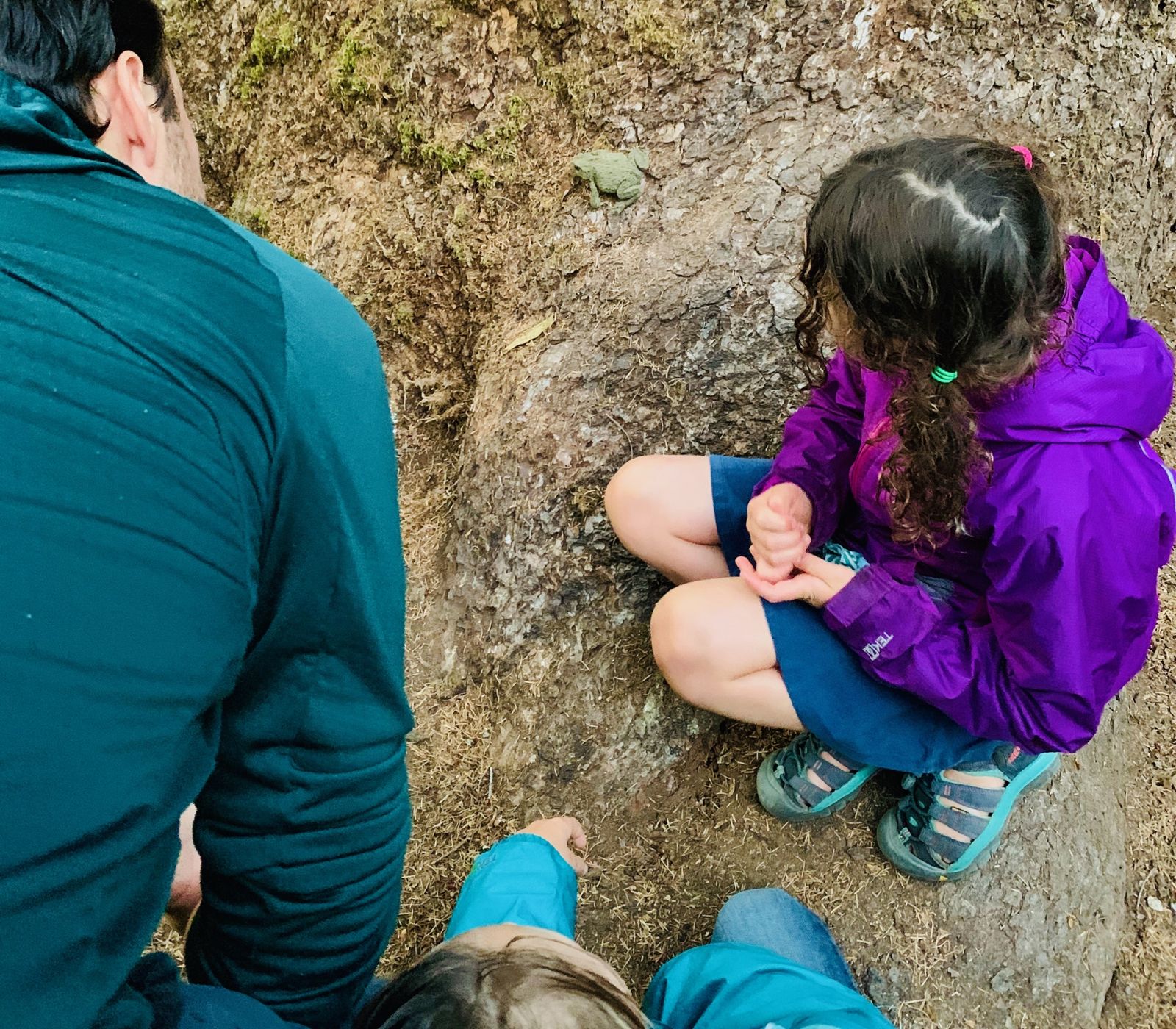 The smallest resident we met
And then there was the smallest neighbor of all: a little green tree frog sitting on a rock, so perfectly the color of the moss that we almost missed it. We gathered around the rock to look at something no bigger than a thumb.
Not every neighbor wanted company. On one trail a bright yellow sign warned of a wasp nest ahead. The girls, naturally, had to pose beside it. Then we kept going and finished the trail. No turning back for a few wasps.
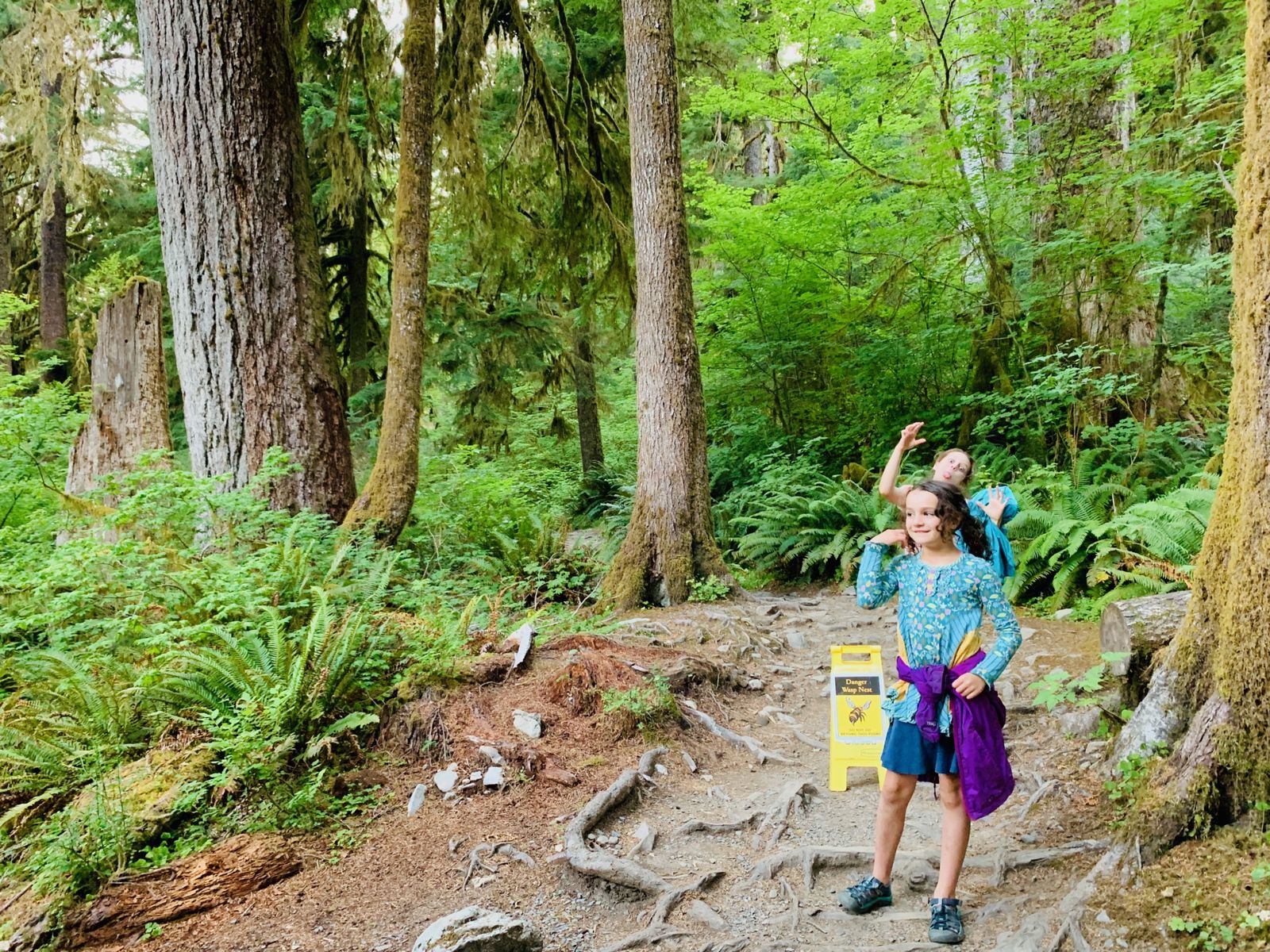 Respecting the locals, then finishing the trail anyway
The Junior Ranger Badge
Olympic is a park our girls earned, both the Junior Ranger badge and the patch. A park this big asks a lot of a young ranger, because it is really three parks in one, and the coast, the rain forest, and the mountains each have their own story to learn.
Van Life Tips for Olympic
Pack rain gear, in any season. Look at our photos: rain jackets in every single one. This is a rain forest, and even in summer the mist and drizzle come and go. Waterproof layers make the difference between a soggy day and a magical one.
Best time to visit: Most of the rain falls between November and April, and July and August are the busiest, mildest months. Rain is always a possibility, and fog can hang on the coast even when the valleys are sunny.
Plan for the loop. No road crosses the middle of the park. The mountains sit at the center, and US 101 wraps around them, so you reach the rain forest valleys, the coast, and the lakes from separate entrances. Give yourself several days and drive it like a circle.
Know the pet rules before you go. Our van crew traveled with us: Chandra, our German Shepherd girl, and our two beloved cats, Vata and Pitta. Leashed pets are welcome in drive-in campgrounds, picnic areas, and on park roads, but only on a handful of trails and beaches. The list includes Rialto Beach from the parking lot to Ellen Creek, the beaches around Kalaloch, the Spruce Railroad Trail at Lake Crescent, Madison Falls in the Elwha, Peabody Creek at the Port Angeles Visitor Center, and the July Creek Loop at Lake Quinault. Check the Park Service pet page before you plan your hikes.
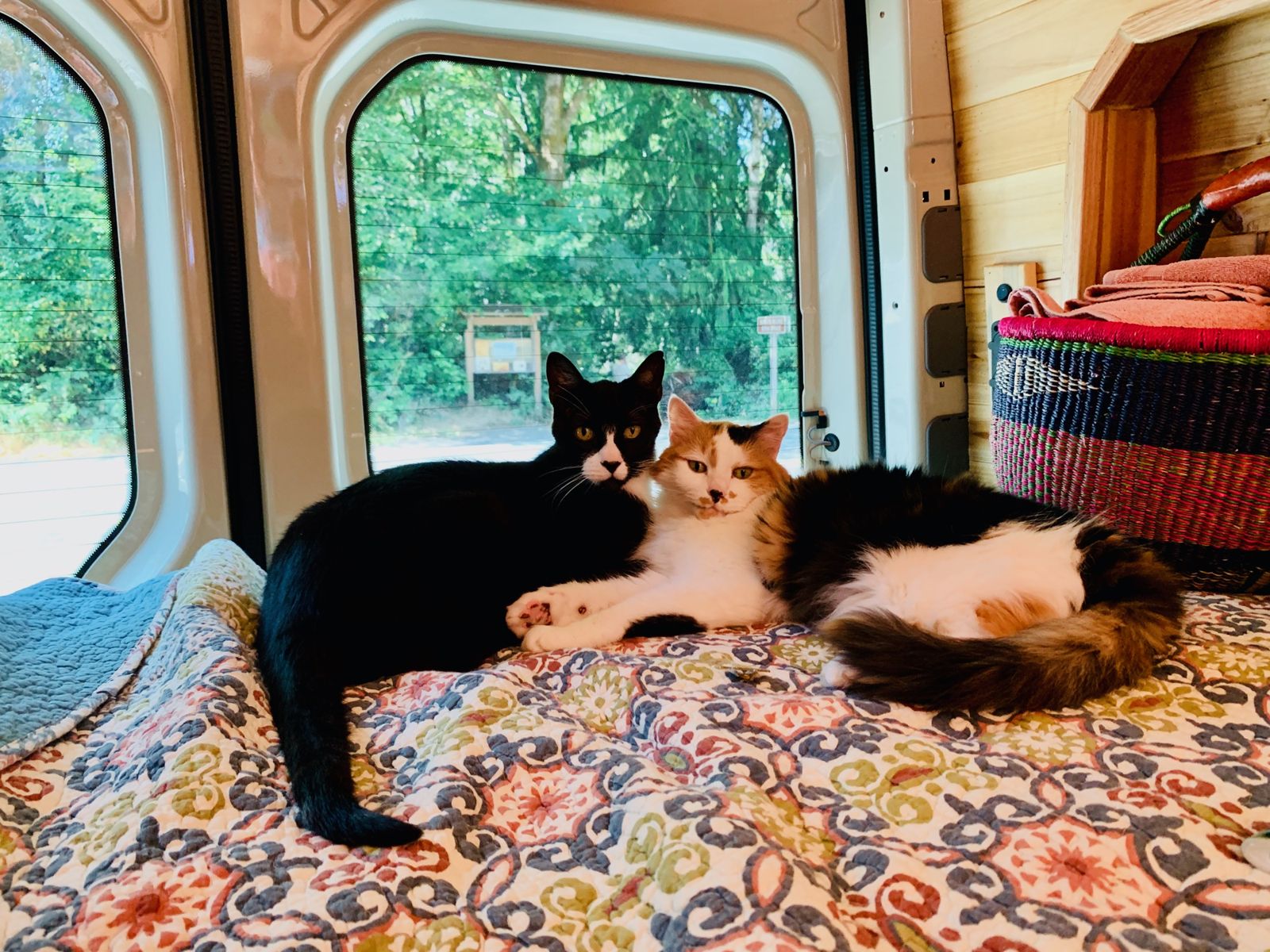 The best van cats ever, waiting at the trailhead
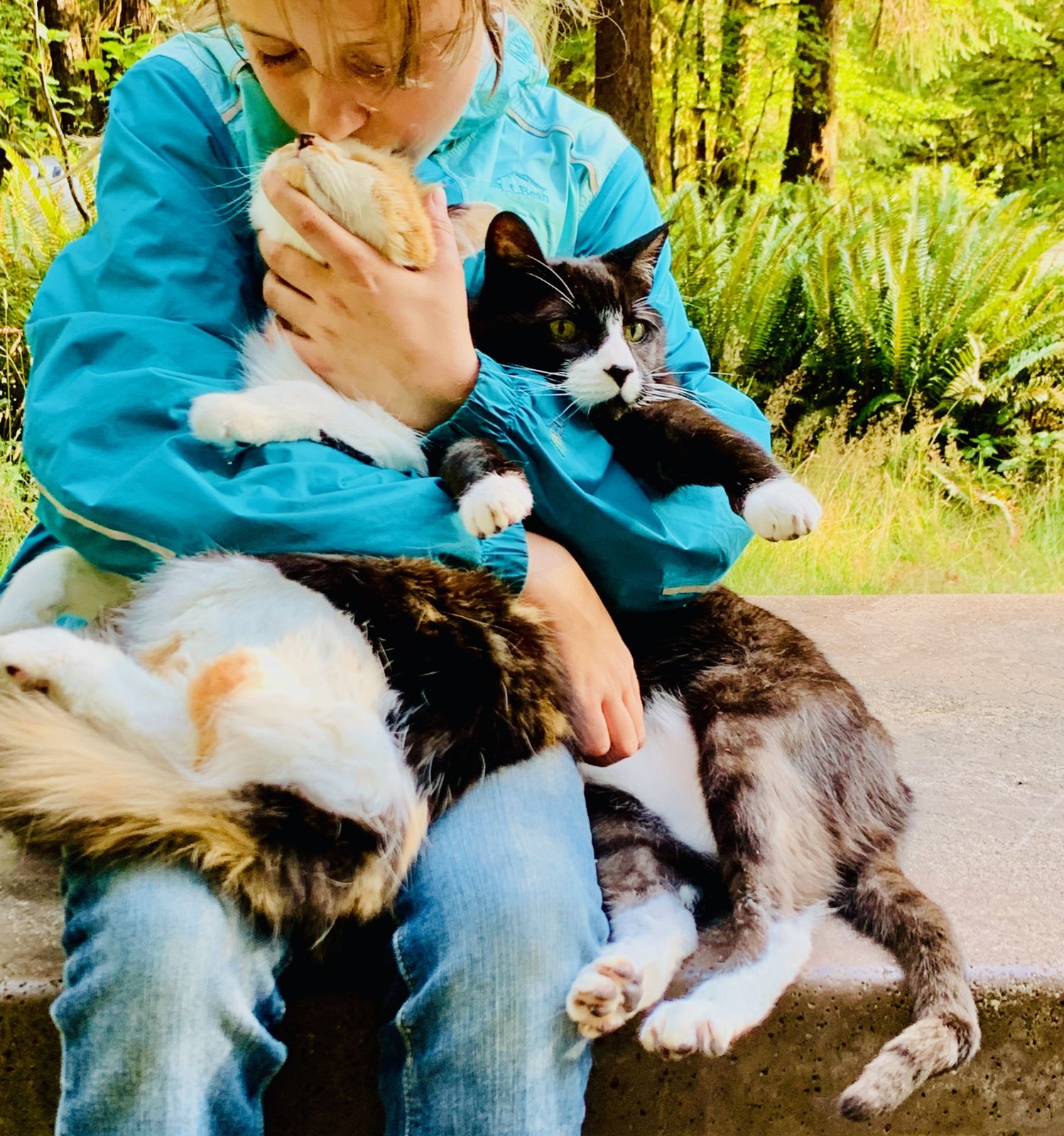 Our beloved Pitta and Vata, rain forest travelers
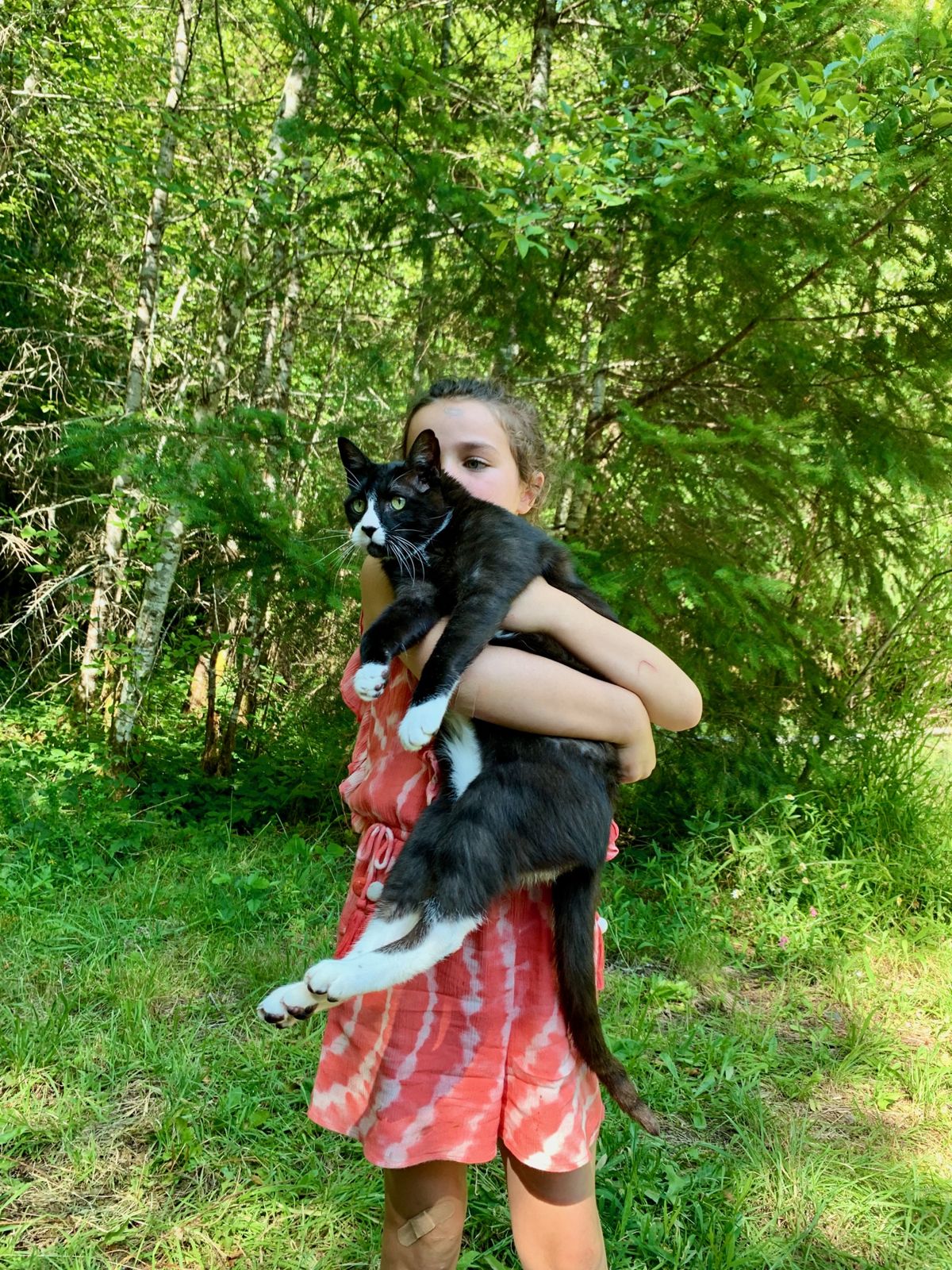 Vata, dressed in his finest tuxedo
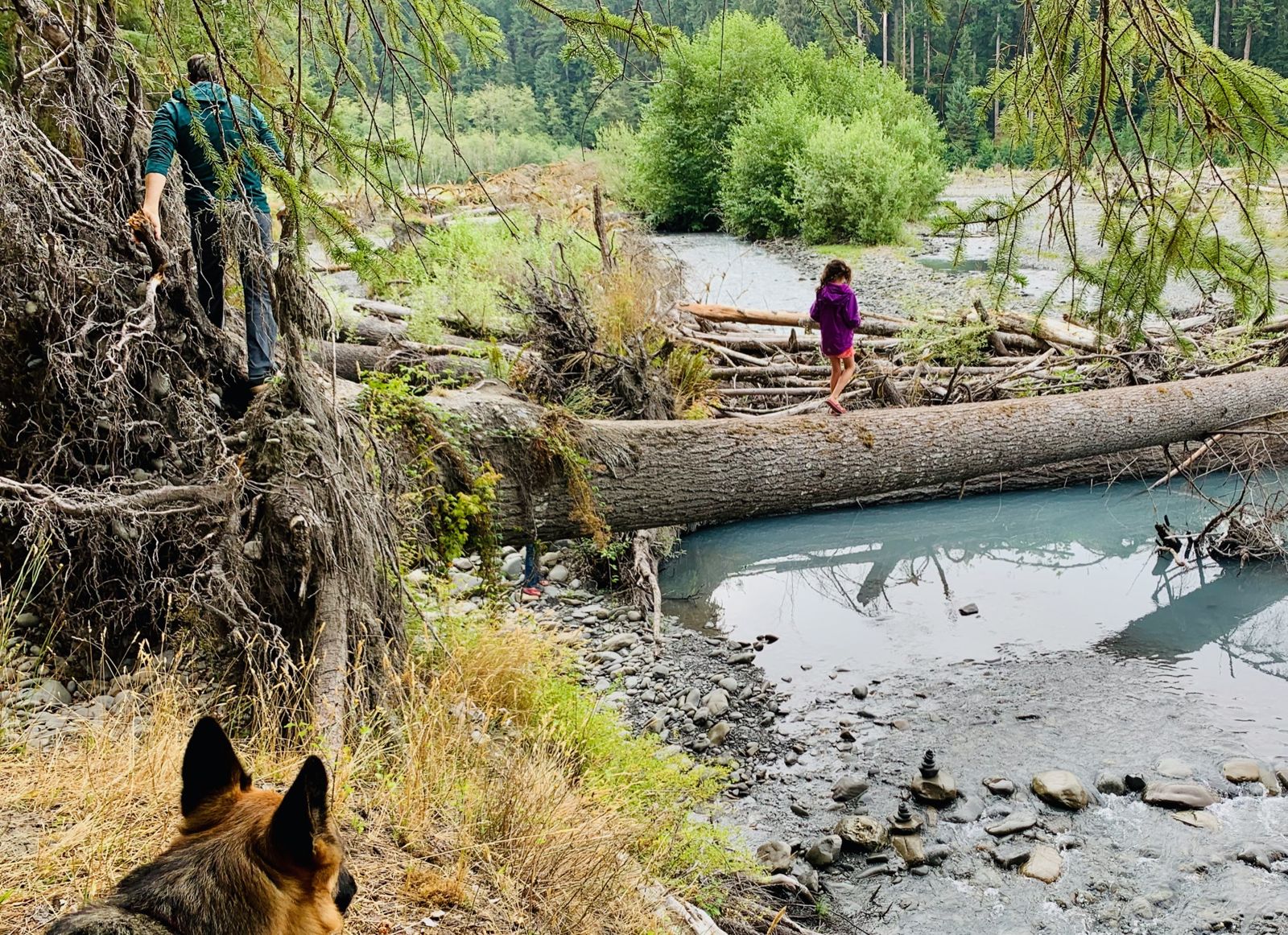 Chandra, keeping watch from the bank
Let the kids set the pace. The best moments we had were not on any itinerary. A frog on a rock. A hollow tree big enough to stand inside. A log over clear water. In a place this alive, the slow way is the right way.
Where We Headed Next
Olympic was one stop on our longer Pacific Northwest van journey, the trip we wrote about in Magic in the National Parks: The Prolific Green Pacific Northwest. It is the place in that whole adventure that felt most like stepping into another dimension.
Our girls are teenagers now. Places like this are gifts entrusted to us, protected by people who came before us so that our children could walk among giants. Now it is our turn to keep them wild for those who come after us. Invoked or uninvoked, gods are present, and in the rain forest of Olympic, you can almost hear them in the mist.
Wondering how we make these trips happen with the whole family? Read Affordable, Easy and Fun Family Vacations at our National Parks.
Parks Mentioned in This Post
Earn Junior Ranger badges at these parks — track your progress on our badge tracker
Continue the Journey
Magic in the National Parks: The Prolific Green Pacific Northwest
Olympic National Park protects the largest temperate rainforest in the contiguous U.S., where 12+ feet of annual rain creates ancient moss-draped forests found nowhere else in America. Here's the full magic of the Pacific Northwest.
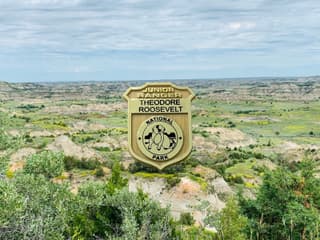
Theodore Roosevelt with Kids: Junior Ranger Guide
Theodore Roosevelt National Park is the only national park in the United States named for a single person — and the wild North Dakota badlands it protects are the very country that shaped him...
More in National Parks & Places
Jul 14, 2026
Jul 4, 2026