
Wind Cave with Kids: Junior Ranger Guide
Wind Cave National Park is a cave that breathes — air moving in or out through its single natural entrance, basically a hole that can be viewed as you walk toward the much larger man-made entry. It is the literal reason Wind Cave has its name, and the reason the Lakota, Dakota, and Nakota Nations have called it something older and truer for centuries: Maka Oniye, the breathing earth.
Located in the Black Hills, Pahá Sápa, Wind Cave is just another sacred space within the grandness of these granite and dark pine hills that rise out of the Great Plains. This is sacred ground, and at Wind Cave, that one small hole in a canyon floor is, to a whole people, the door they came through into this world. It is the Emergence Story of the Lakota, Dakota, and Nakota Nations. Where the People climbed into this world – similar to Spider Rock to the Navajo at Canyon de Chelly National Monument or Sipapu Bridge to the Hopi at Natural Bridges National Monument. All places of Emergence.
The Cave That Breathes
The fun fact is the breathing as if the cave is alive. Air constantly flows in or out of the natural entrance as the outside pressure changes. In 1881 two brothers, Tom and Jesse Bingham, were riding through a canyon when they heard a strange whistling and followed it to a hole in the ground. A gust came up out of the opening and blew his hat clean off his head. They came back to show their friends the trick, and this time the wind had reversed — the cave inhaled, and pulled the hat down into the dark instead. We stood at that small entrance and felt the cool exhale for ourselves on the way to the man-made entrance.
Underground, the geology is just as singular. Wind Cave holds about 95% of the world's known boxwork — which means there is no better place on the planet to see it. Thin blades of calcite intersect into a honeycomb of fragile boxes, the rock fretted into something that looks woven rather than carved. It is one cave among hundreds in the Black Hills, but only two are run by the Park Service — Wind Cave and Jewel Cave. Here, the passageways run for over 150 miles into the dark. Where do they all go? Nobody fully knows.
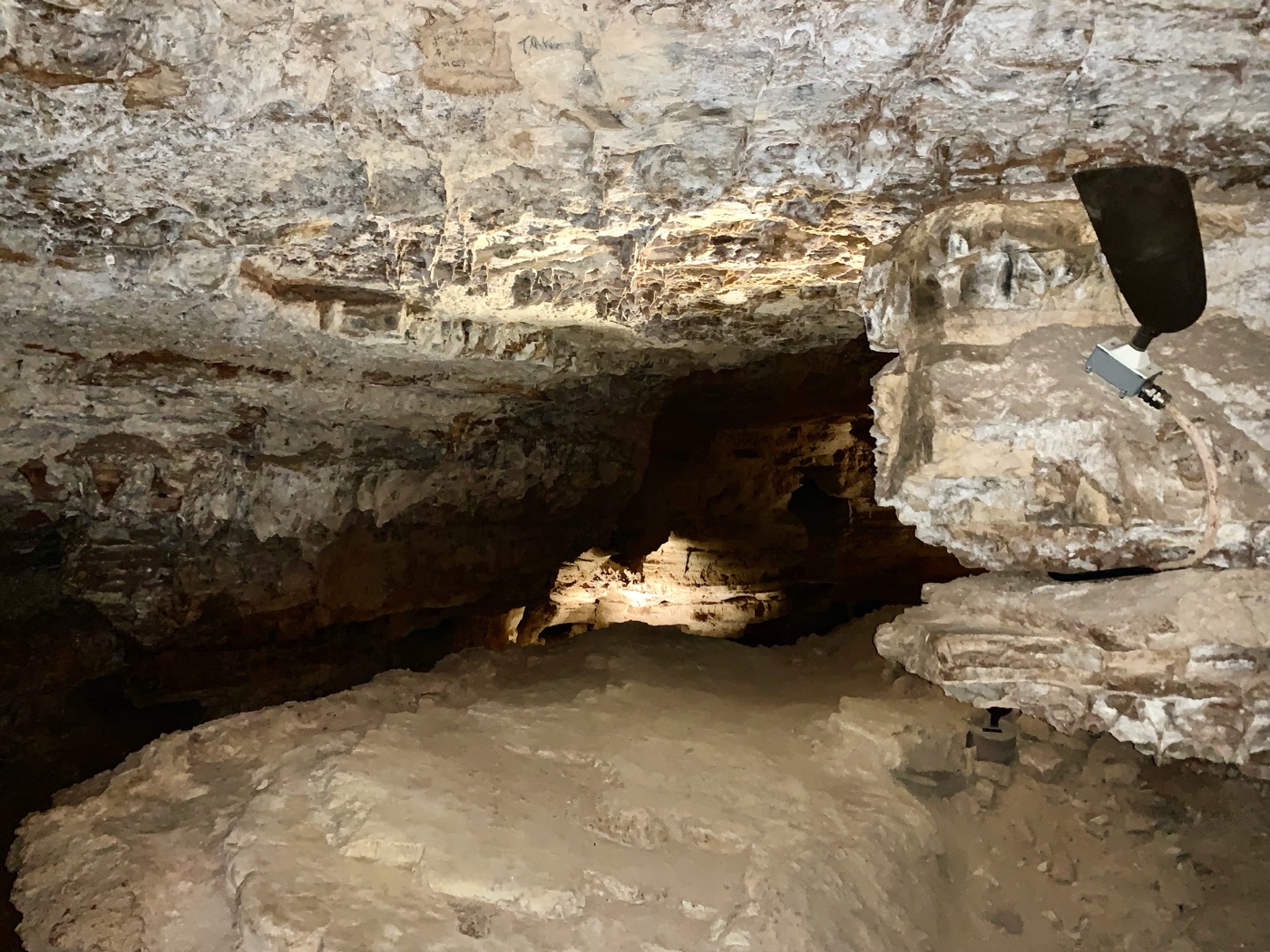 Inside the breathing earth — cool, dim, and mostly unmapped
Maka Oniye — Breathing Earth
The visitor center is where this park stops being only about geology. The Black Hills are the heart of the Oceti Sakowin, the Seven Council Fires — the Lakota, Dakota, and Nakota nations. In the version preserved at the park, told by Lakota elder and historian Wilmer Mesteth, the cave was a passageway down to the Tunkan Tipi, the Lodge of the Ancients, where the people lived and waited until the Earth above was ready for them. But two banished spirits — Iktomi the trickster and Anog-Ite, the Double Face Woman — played a trick that lured a small group up to the surface too early. As punishment for that disobedience, the Creator turned them into the first bison herd. Later a second wave of people emerged from the cave, led by Tokahe, "the first one," and they were told to follow the bison. Those people became the Oceti Sakowin. The bison on the prairie and the people who hunted them were, from the beginning, the same family, born from the same dark mouth in the ground.
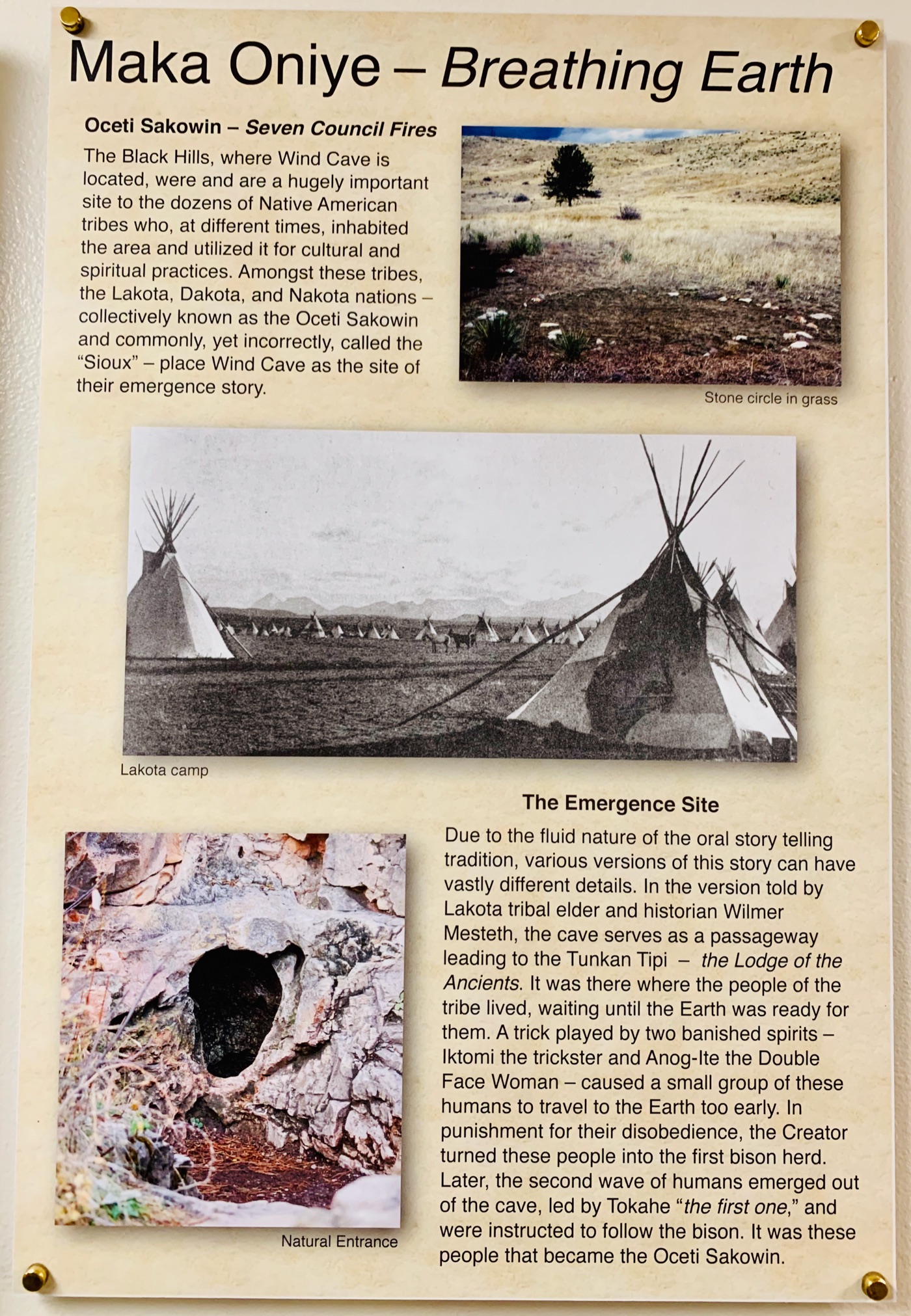 Maka Oniye — the emergence story, kept and told at the cave itself
There is a painted buffalo hide in the visitor center that tells the whole story in pictures, and a circular winter count that tells it again as the Lakota understand time, not a line but a wheel. People live on the Earth, the first group turns into bison, the Lakota hunt the bison, the Inipi ceremony, South Dakota through time, around and around. The first thing and the last thing touching in an eternal cycle.
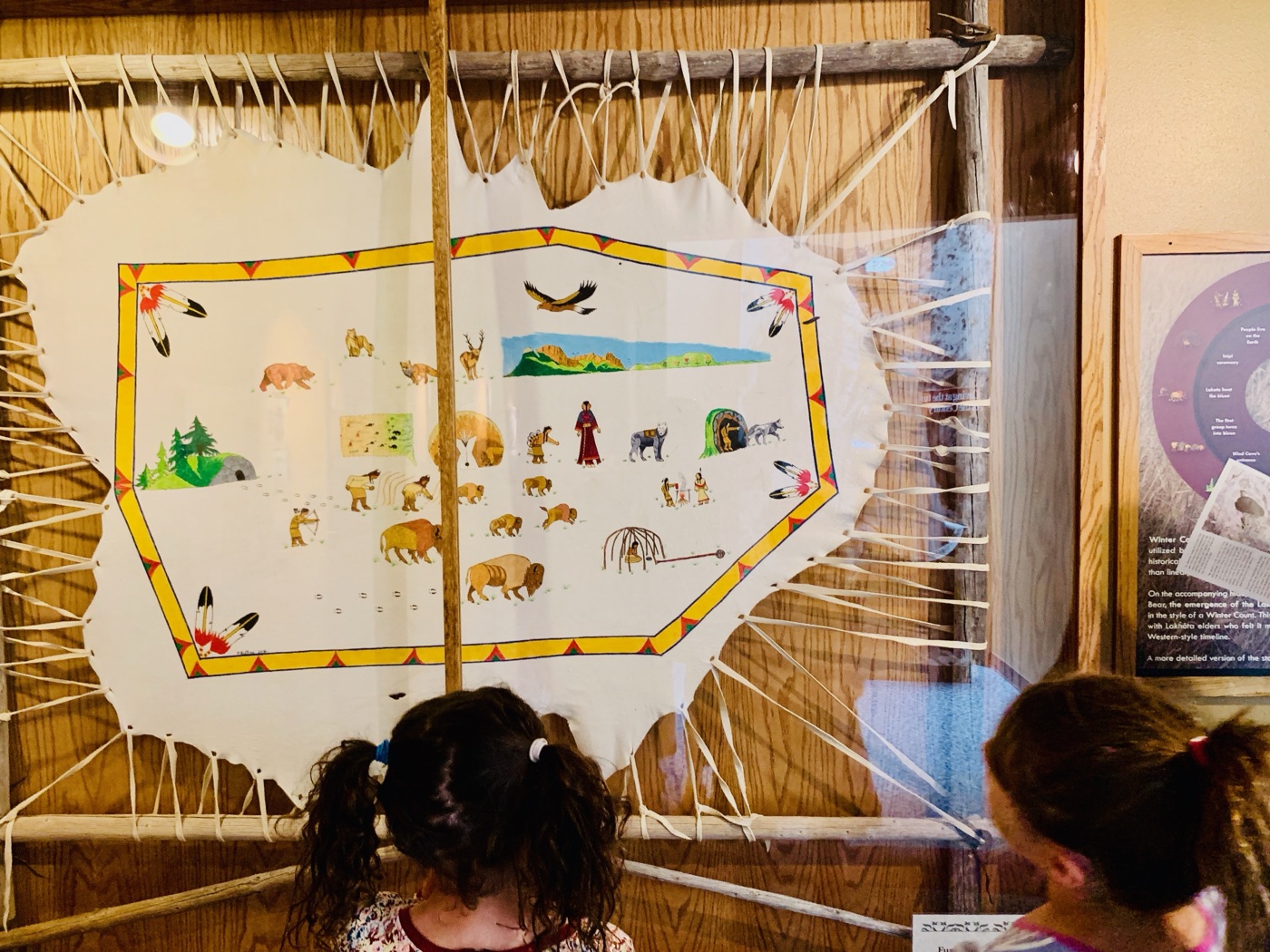 The emergence story on painted hide — the girls tracing the figures
Everything the Power of the World does is done in a circle. — Black Elk
It is a strange and humbling thing, to teach your children the science of a cave in the same hour they learn it is somebody's sacred place of creation. And the Junior Ranger book does the same honest thing the park does: it teaches the geology and the emergence story side by side, the calcite and the Creator, and trusts a kid to carry both.
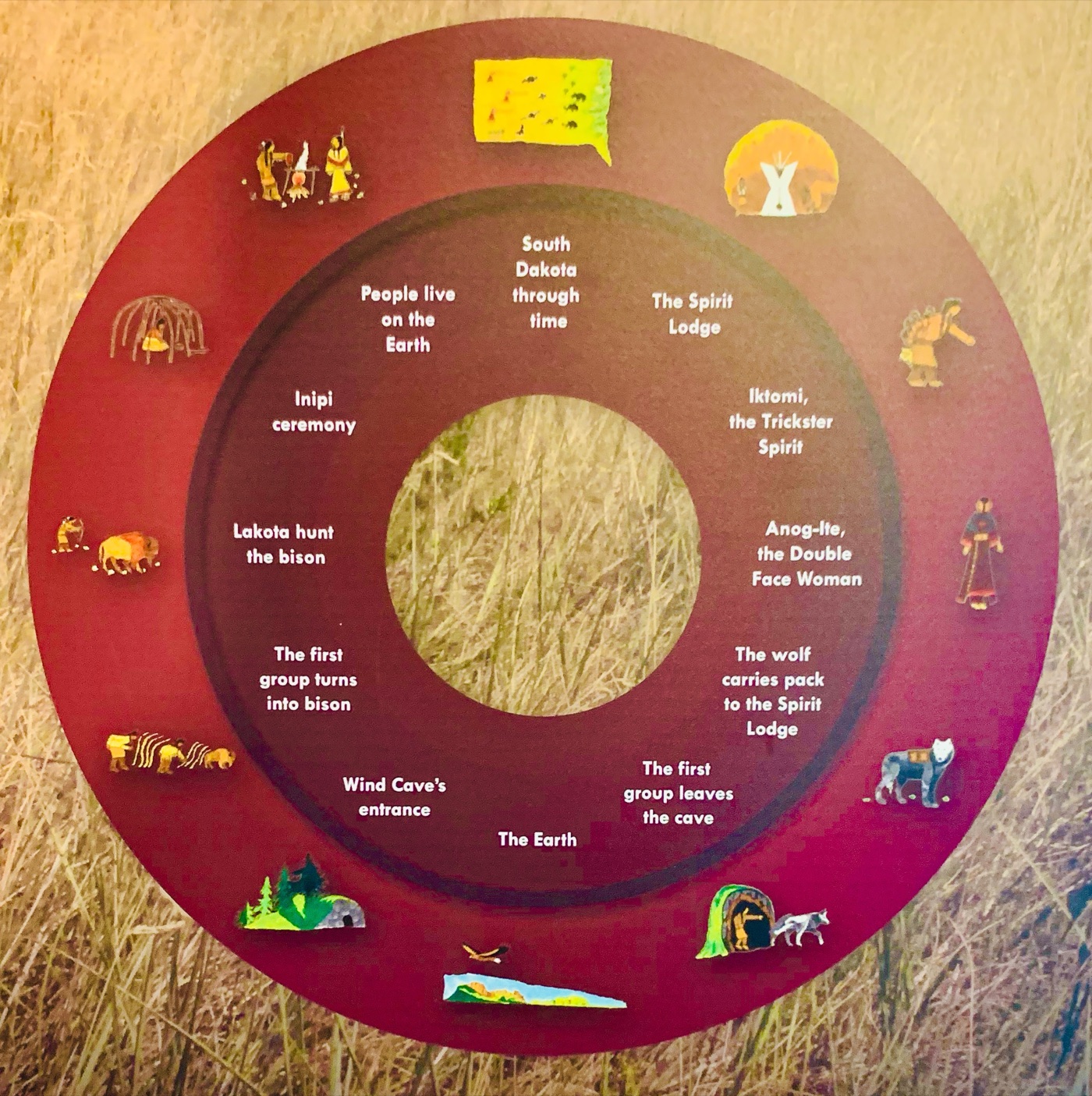 The emergence told as a winter count — round, like time itself
The Junior Ranger Badge
The Junior Ranger badge work sent them through the exhibits, to the breathing entrance, to the boxwork, to the buffalo hide and the winter count and the long word Maka Oniye until they could say it. What they took away was that a place can be a wonder of science and a place of prayer in the very same breath.
Van Life Tips for Wind Cave
Pair it with Jewel Cave. The Black Hills hold hundreds of caves, but only Wind Cave and Jewel Cave are run by the Park Service — and they sit close enough to do in one swing. Two of the longest caves in the world, two badges, one tank of fuel.
Stay on the prairie above the cave. Wind Cave's Elk Mountain Campground is first-come, first-served, set up on the mixed-grass prairie rather than down in a tourist strip — quiet, dark, and honest. Above the cave is one of the few genetically pure bison herds left in the country, so drive the park roads slowly and at dawn.
Best time to visit: Late spring through early fall for the surface prairie, but remember the cave itself runs a steady cool year-round — bring a layer for underground even when it's blazing on top. That temperature gap is half the reason the cave breathes at all.
What to bring: Real shoes for the cave stairs, a layer for the constant underground chill, and patience for the visitor center. Don't rush the exhibits to get to the tour. For this park, the visitor center is half the park.
Where We Headed Next
Wind Cave was one stop in a longer pilgrimage through Pahá Sápa — the granite faces and broken treaties of the monuments, the glittering passageways of Jewel Cave, the whole tangle of beauty and grief that the Black Hills hold at once. We told that fuller story in Lost in the Black Hills: South Dakota's Caves, Monuments, and Sacred Lands, and we first fell for this strange breathing place years earlier, written up in Magic in the National Parks: Upper Midwest.
We drove out the way the story runs — the cave behind us, the bison out on the grass ahead, the two of them never really separate. A people who came up out of the dark and were told to follow the herd. A winter count that bends time into a circle so the end and the beginning touch. The Black Hills do not let you keep your wonder and your reverence in separate rooms, and after a while you stop wanting to.
Wondering how we make these trips happen with the whole family? Read Affordable, Easy and Fun Family Vacations at our National Parks.
Parks Mentioned in This Post
Earn Junior Ranger badges at these parks — track your progress on our badge tracker
Continue the Journey
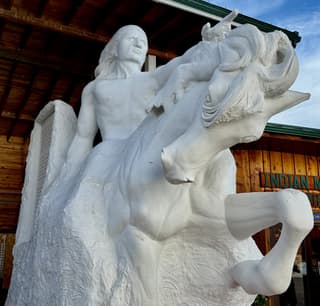
Lost in the Black Hills (Pahá Sápa): South Dakota's Caves, Monuments, and Sacred Lands
Jewel Cave is the third-longest cave in the world with 200+ miles of passageways — and less than 5% mapped. Here's our family journey through South Dakota's caves, monuments, and the sacred Black Hills of the Lakota.
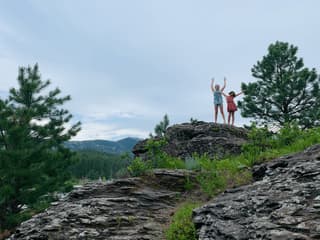
Magic in the National Parks: Living Legends of the Charming Upper Midwest
Pipestone National Monument is the only place in the U.S. where catlinite — the sacred red stone of Indigenous ceremonial pipes — is still quarried, a right reserved exclusively for Native people. Here's our journey through the Upper Midwest's living legends.
More in National Parks & Places
Jul 14, 2026
Jul 4, 2026