
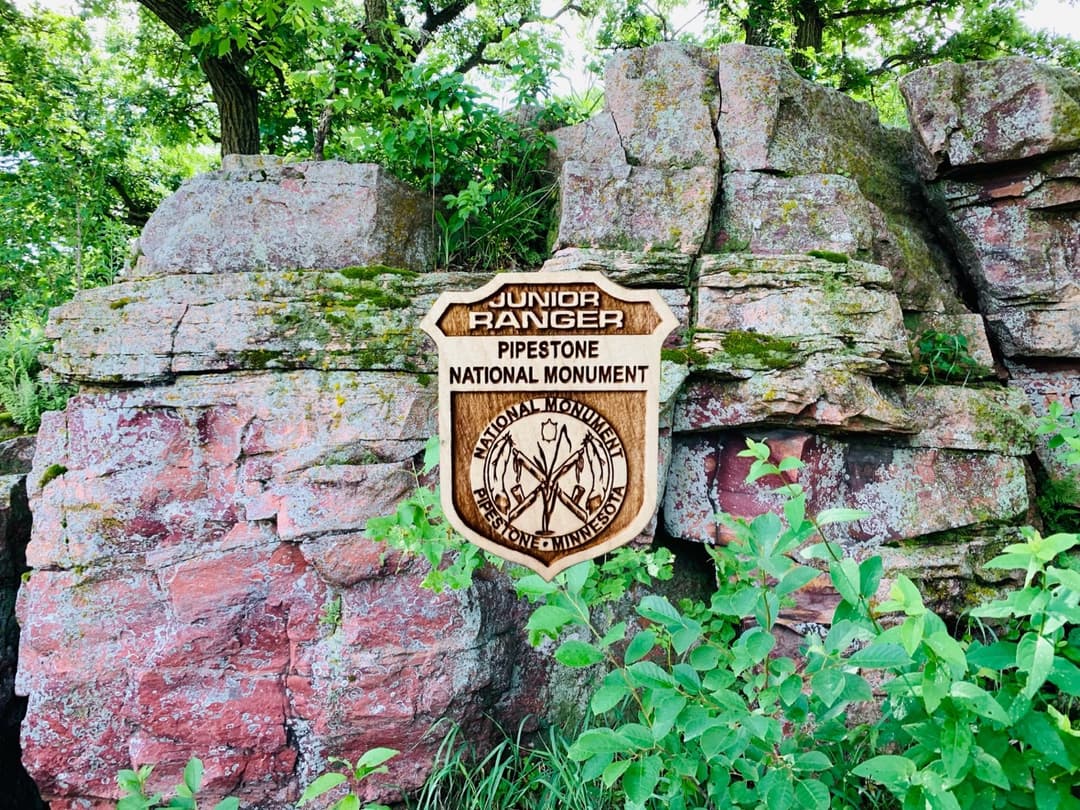
Pipestone with Kids: Junior Ranger Guide
Pipestone National Monument protects a soft red stone that Plains nations have quarried by hand for centuries to carve the bowls of their sacred pipes. It is the only place in the country where that quarrying has never stopped. The stone is called catlinite, but most importantly, it is pipestone, and it is the body of the Earth itself.
We came to it across the tallgrass prairie of southwestern Minnesota, a familiar country so flat and green that the red rock rising out of it feels like a mythic placeholder. There is no mountain here, no canyon, no famous overlook. There is a quarter-mile ledge of quartzite that protects the soft pipestone, a creek cascading into a gentle waterfall, and a quiet that tells you before any sign does that you have walked into a holy place.
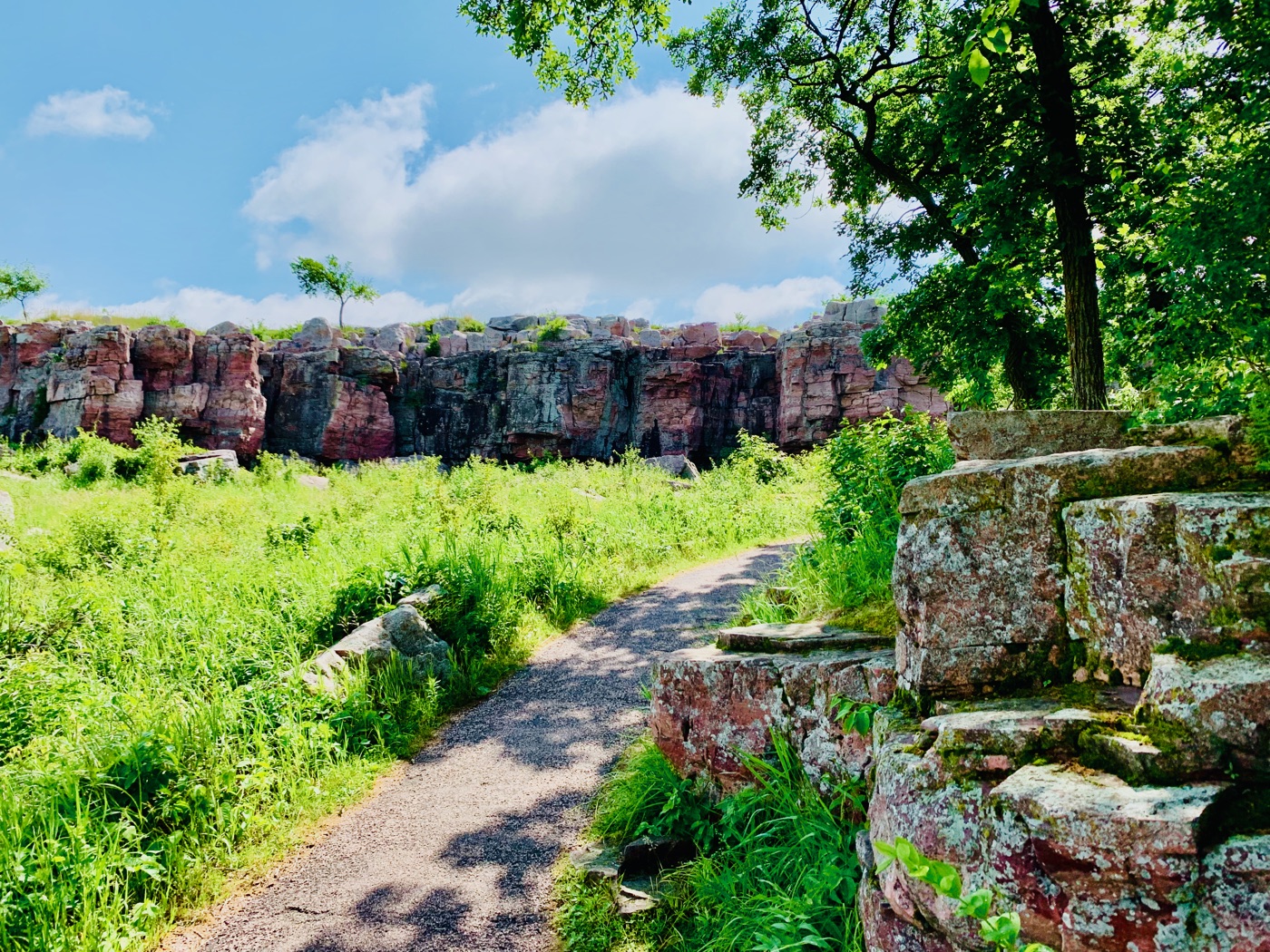 The Circle Trail — prairie, quartzite, and the red stone beneath it
The Sacred Red Stone
The geology and the sacredness are the same story here, which is rare. The hard pink rock you see is Sioux quartzite, some of the oldest exposed stone in the Midwest. Beneath it runs a thin, softer layer of red catlinite, the pipestone. To reach it, quarriers have to break through the tough quartzite cap by hand and lift out the pipestone in careful slabs, exactly as it has been done for generations. Only Native Americans may quarry here, by permit, and the work is slow and prayerful. This is the one place on Earth where that unbroken line has held.
Historically this was neutral ground. Nations that were otherwise at war laid down their weapons to come and quarry the red stone in peace, because the pipe carved from it was too important to be tangled up in conflict. The stone carries prayers, and war has no place in the sacred refuges The Great Spirit has set apart.
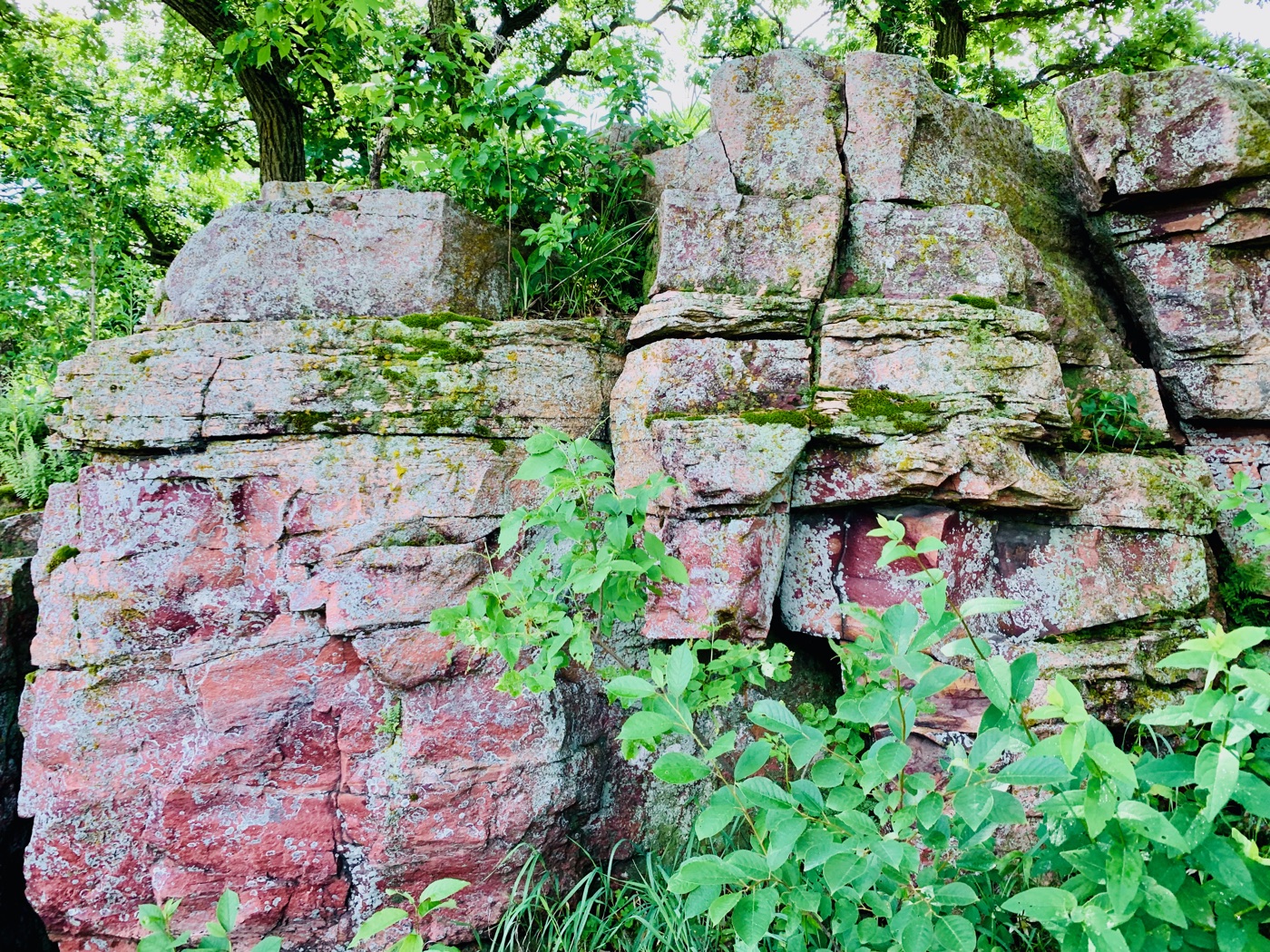 Catlinite — soft, red, and carved into the bowls of sacred pipes
In the visitor center you can watch artisans carve the pipes by hand, witness the peace pipe taking shape out of a rough block. There is something about watching a sacred object actually being made, not on a screen, but right there. By someone whose grandparents made them. It is a living connection to shared and timeless humanity.
White Buffalo Woman and the Gift of the Pipe
The reason the pipe is sacred is a story, and the story begins here. In the Lakota tradition, the sacred pipe was brought to the people by White Buffalo Calf Woman — Pte San Win. She came to a starving people in a hard time, taught them to live in prayer and harmony with all things, and gave them the chanunpa, the res stone sacred pipe. When her teaching was finished, she left the way she came, and as she went she again transformed into a white buffalo calf, promising to remain present in spirit and to return in the people's time of need.
With this sacred pipe you will walk upon the Earth; for the Earth is your Grandmother and Mother, and She is sacred. Every step that is taken upon Her should be as a prayer. The bowl of this pipe is of red stone; it is the Earth. — White Buffalo Calf Woman, as recorded in Lakota tradition
That is the whole theology of the place in a beautiful legend. The stone is the Earth, the Earth is Grandmother, and every step is meant to be a prayer. It reframes life as a reverence for every moment of existence.
 The Legend of the White Buffalo Woman — she brought the pipe, then departed as a white calf
Walking the Circle Trail
The Circle Trail is short, under a mile, paved, easy — but it holds more wonder in each step than many trails one hundred times longer. It follows the quartzite ledge past one named feature after another, and the girls turned it into a treasure hunt, climbing and running ahead to find the next carved sign.
The prize is Winnewissa Falls, where Pipestone Creek pours off the red rock in a white rush and disappears into the quartzite below. In early summer it runs full and loud, framed in green, and it is the kind of place you simply sit beside for a while without needing to say anything about it.
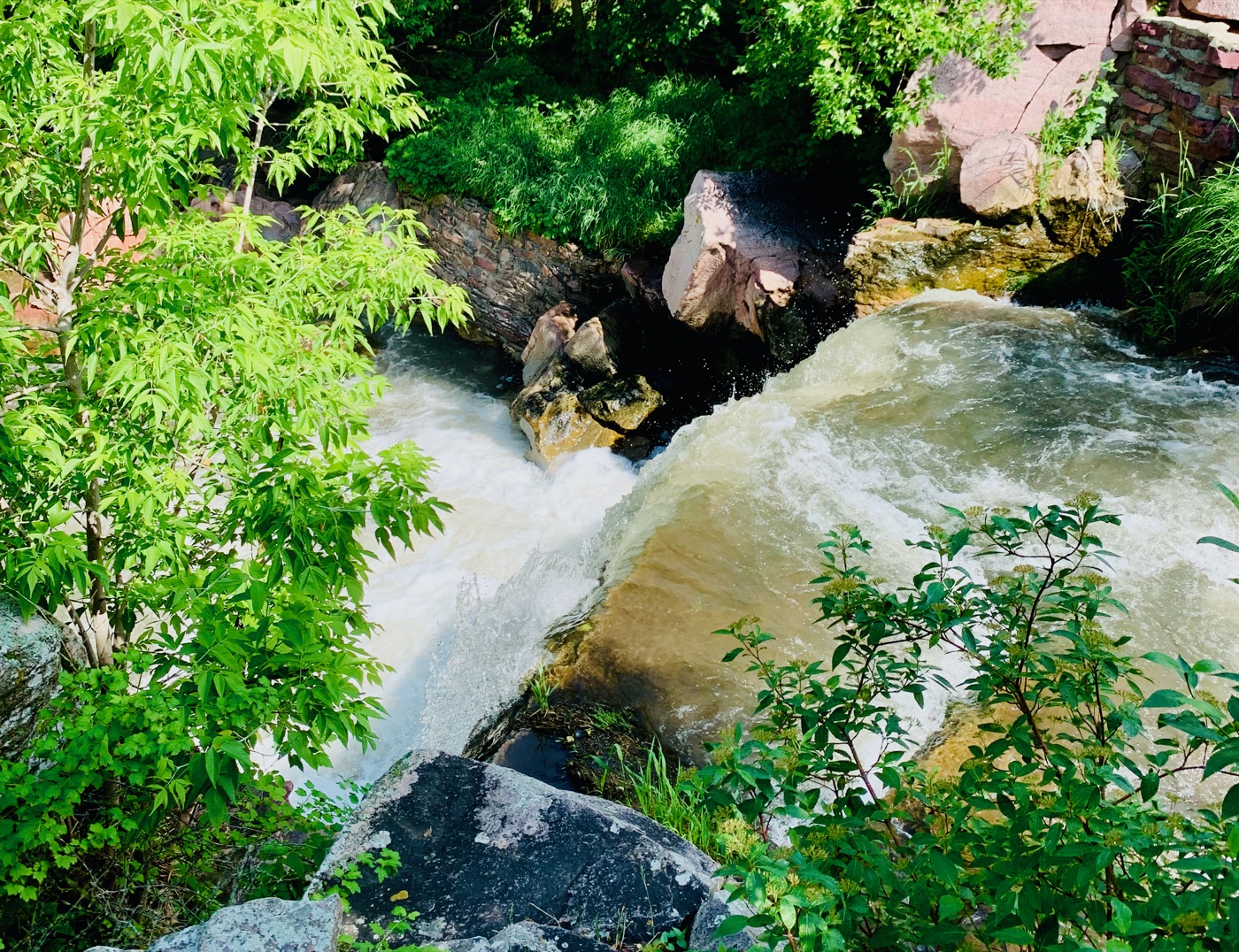 Winnewissa Falls, running full through the red rock
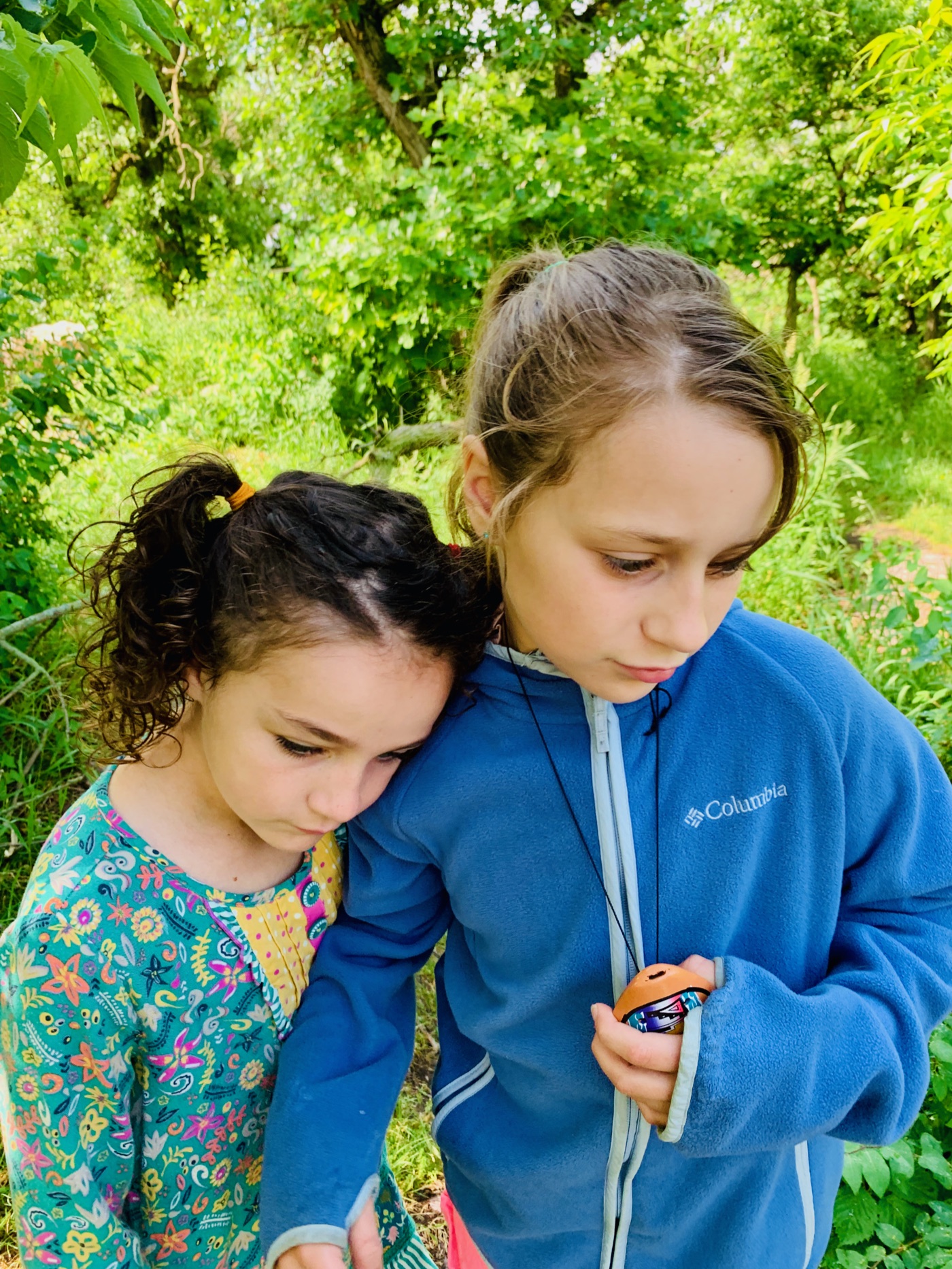 Heads together on the trail — sisters at Pipestone
Then there is the Oracle. A sign at the base reads 11 Steps, Climb to See the Oracle. At the top, set into the quartzite, is a sacred rock profile looking out across the prairie. A face in stone, holding the wisdom of the ancients, is a timeless symbol — the mountain speaks. I imagined the people long ago coming to the Oracle with prayers. A face in a cliff, patient and unbothered, gives an answer that comes from within ones own knowing. And standing there it feels like there might be a truth coming from beyond.
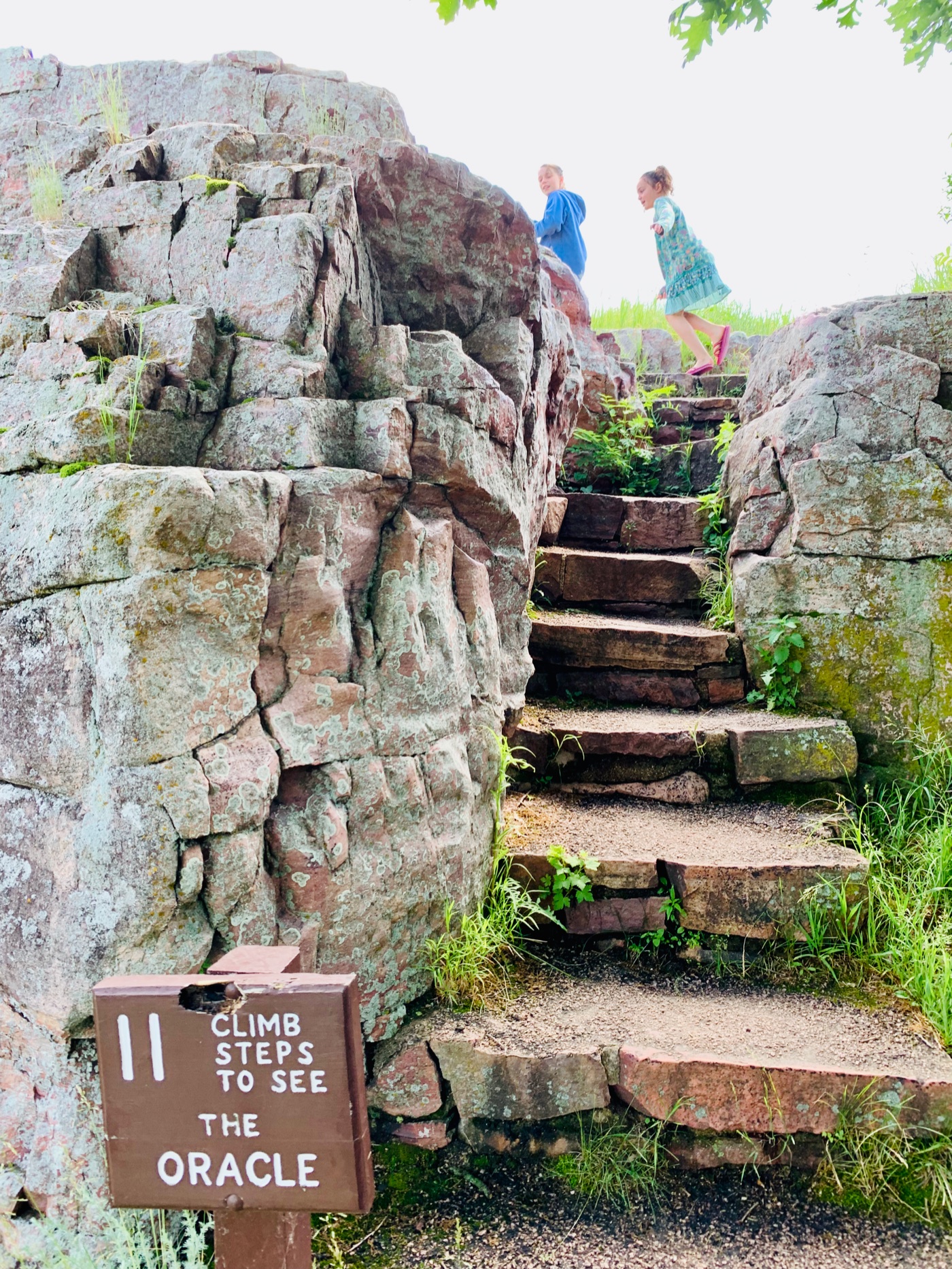 "11 steps, climb to see the Oracle" — and they counted every one
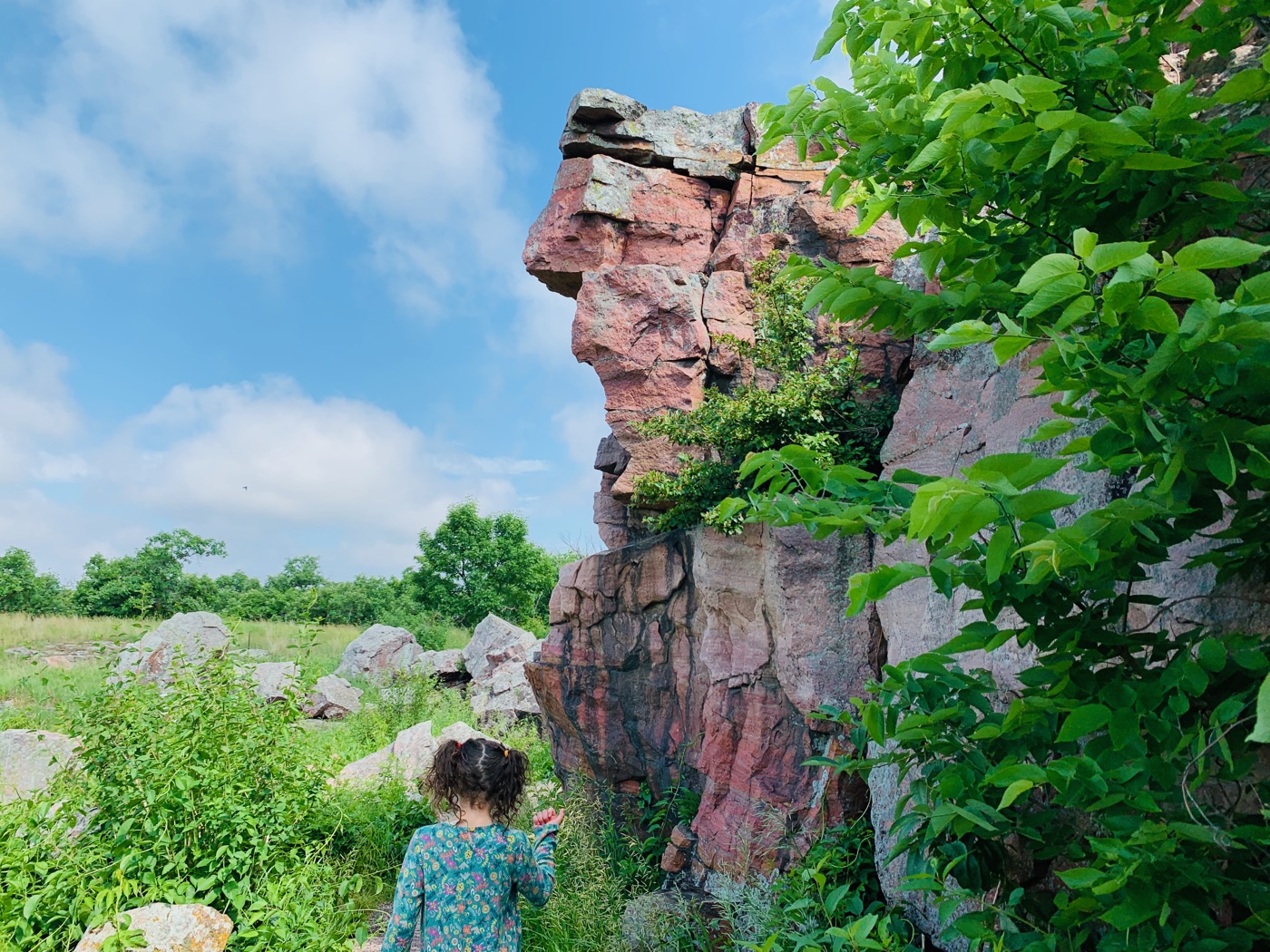 The Old Stone Face — a profile the rock made on its own
The whole ledge invites this kind of looking. There is a cleft the park calls Nature's Forces, where water and frost have split the rock over unimaginable time.
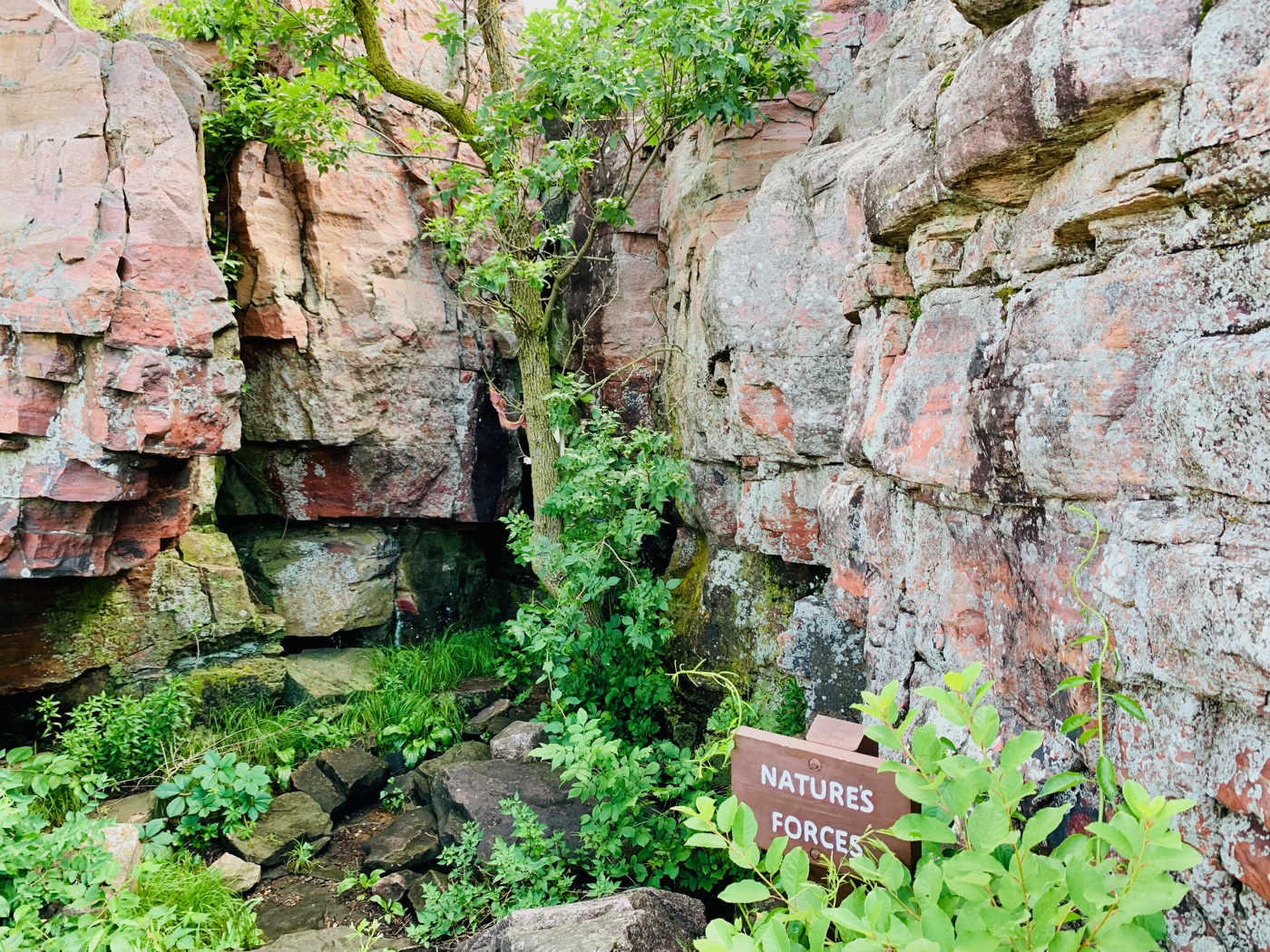 Nature's Forces — water, frost, and time working the rock apart
There are faces and figures everywhere if you let your eye find them, and the girls found plenty, pointing up at the walls and arguing cheerfully about what each one was.
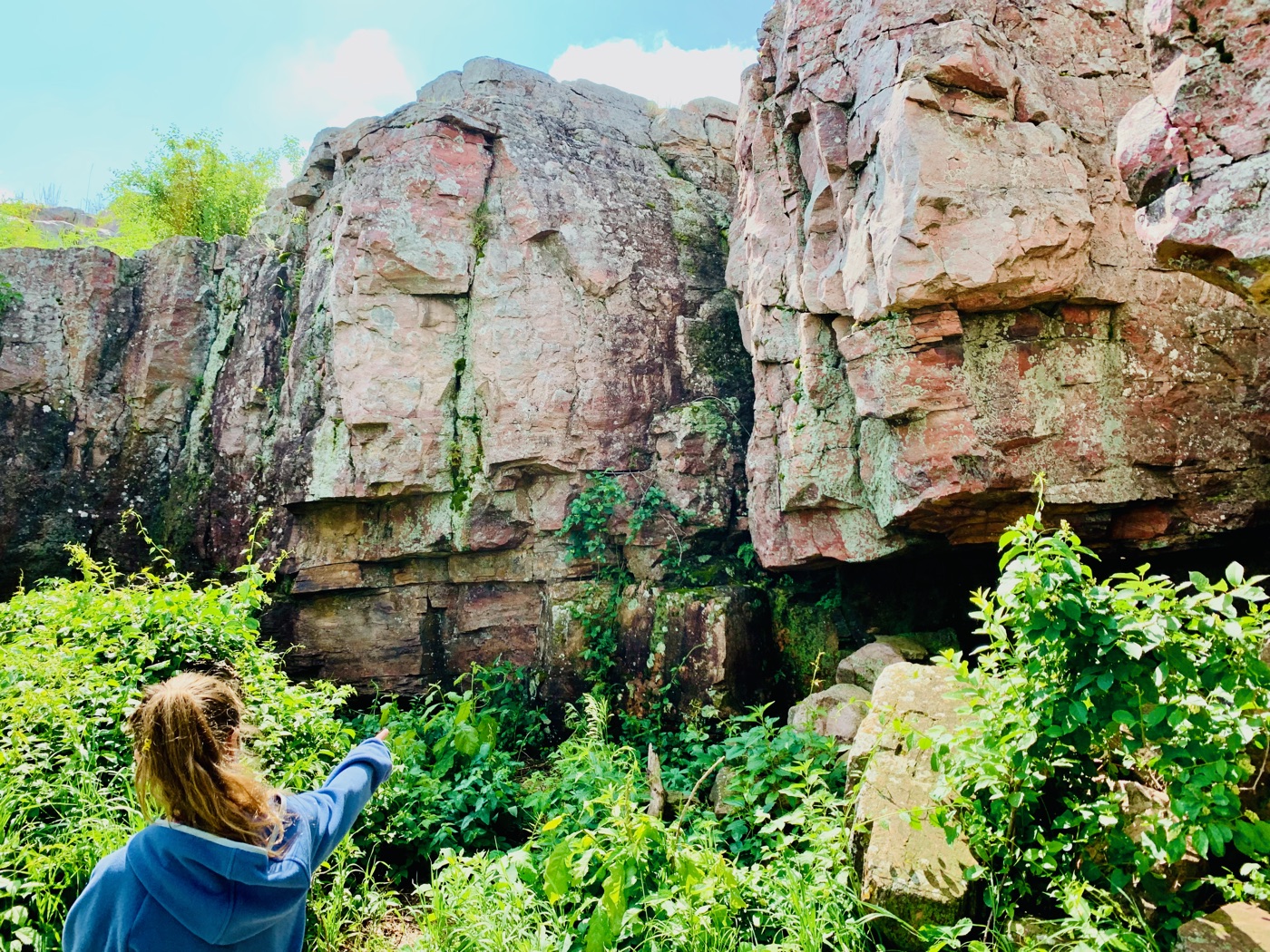 Finding the mysteries in the rock — everyone sees something different
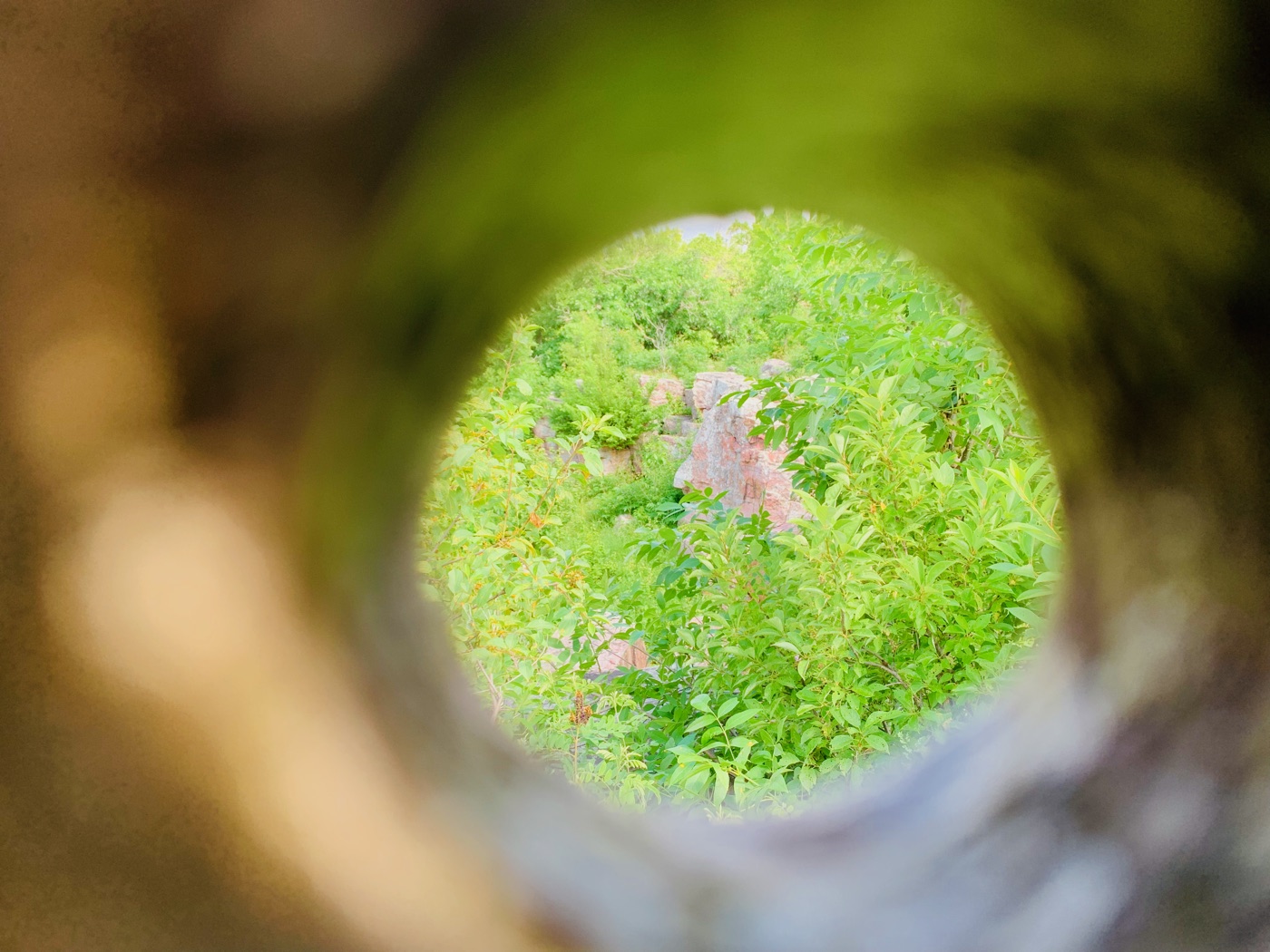 Looking through the Oracle at the red rock beyond
And then, always, the prairie brings you back down to the small and the living. A pearl crescent butterfly on a leaf. Big bluestem grass going to seed. The restored tallgrass here is its own kind of monument. A memory of a long-gone inland sea that left behind rich soils for the new sea of grass to thrive.
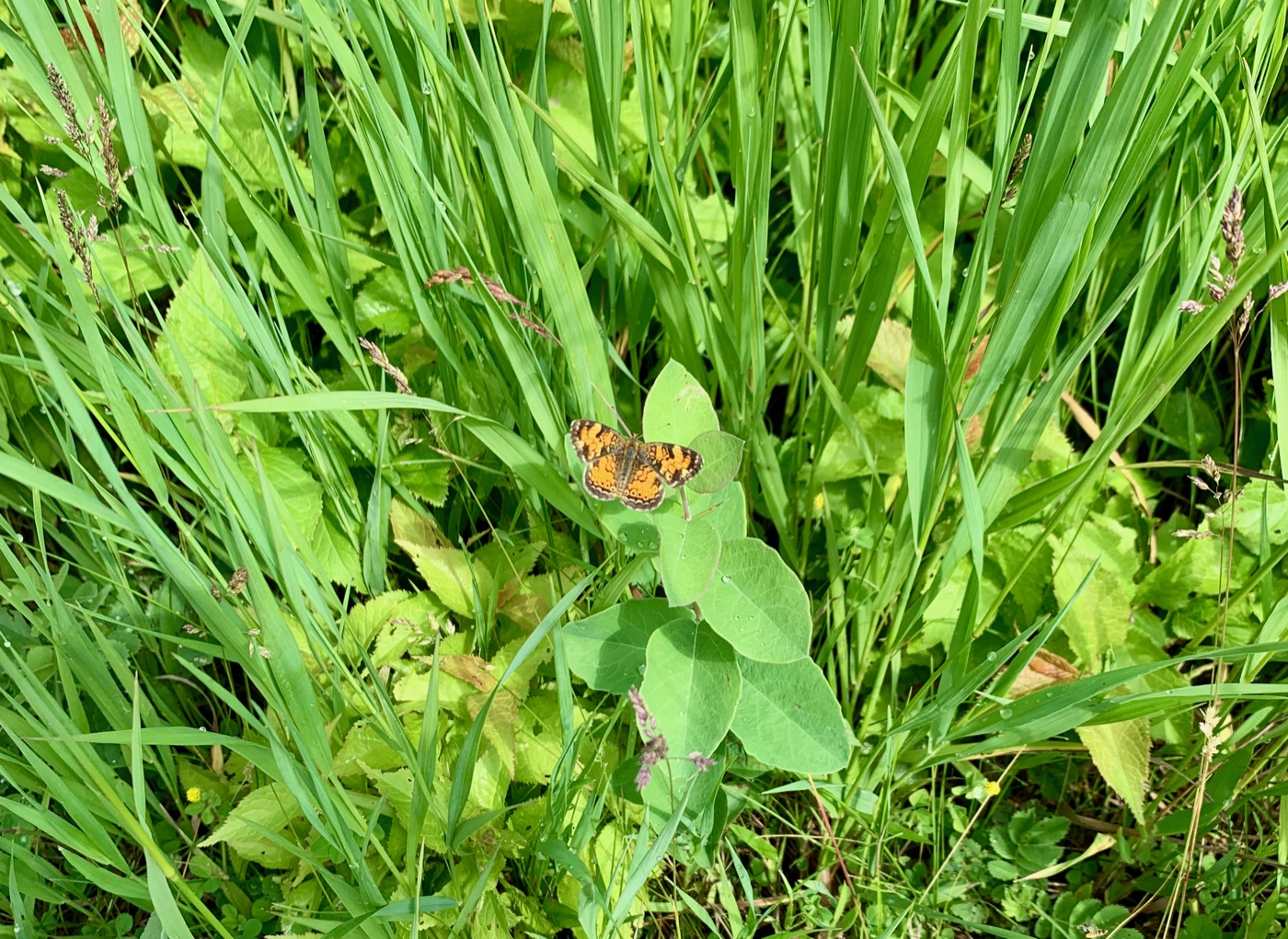 A butterfly in the tallgrass — the small sacred beside the large
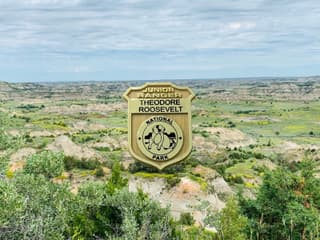
The Junior Ranger Badge
The Junior Ranger booklet at Pipestone is simple, with just enough facts to retain memory without overwhelm. The activities teach geology – the rock layers. What it takes to quarry. The types of peace pipes, why they are sacred, and what sacred plants were smoked in ceremonies: a mix of white sage, leadplant, prairie rose hips, smooth sumac and red osier dogwood. Exploration on the Circle Trail, guiding forward intentionally into the tallgrass prairie.
But what stayed was the understanding that this is sacred ground. That the red dust swirling from a pipe maker's block, held by a artisian carrying the knoweldge of the ancestors, is part of prayers that have not stopped since the White Buffalo Woman came to teach the People to live in prayer and harmony with all things. It is exactly what a Junior Ranger badge is for.
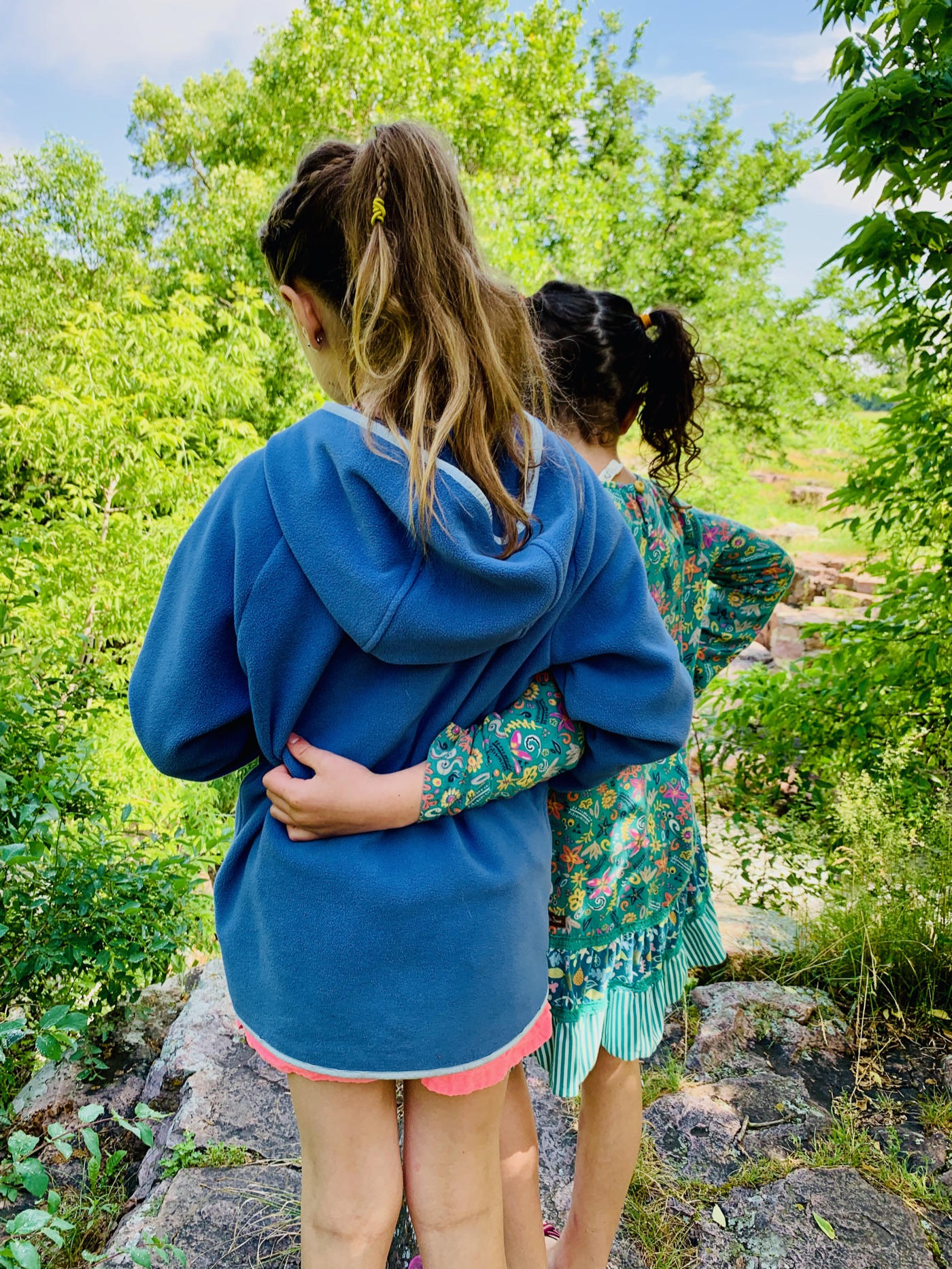 Looking out over the quarries, together
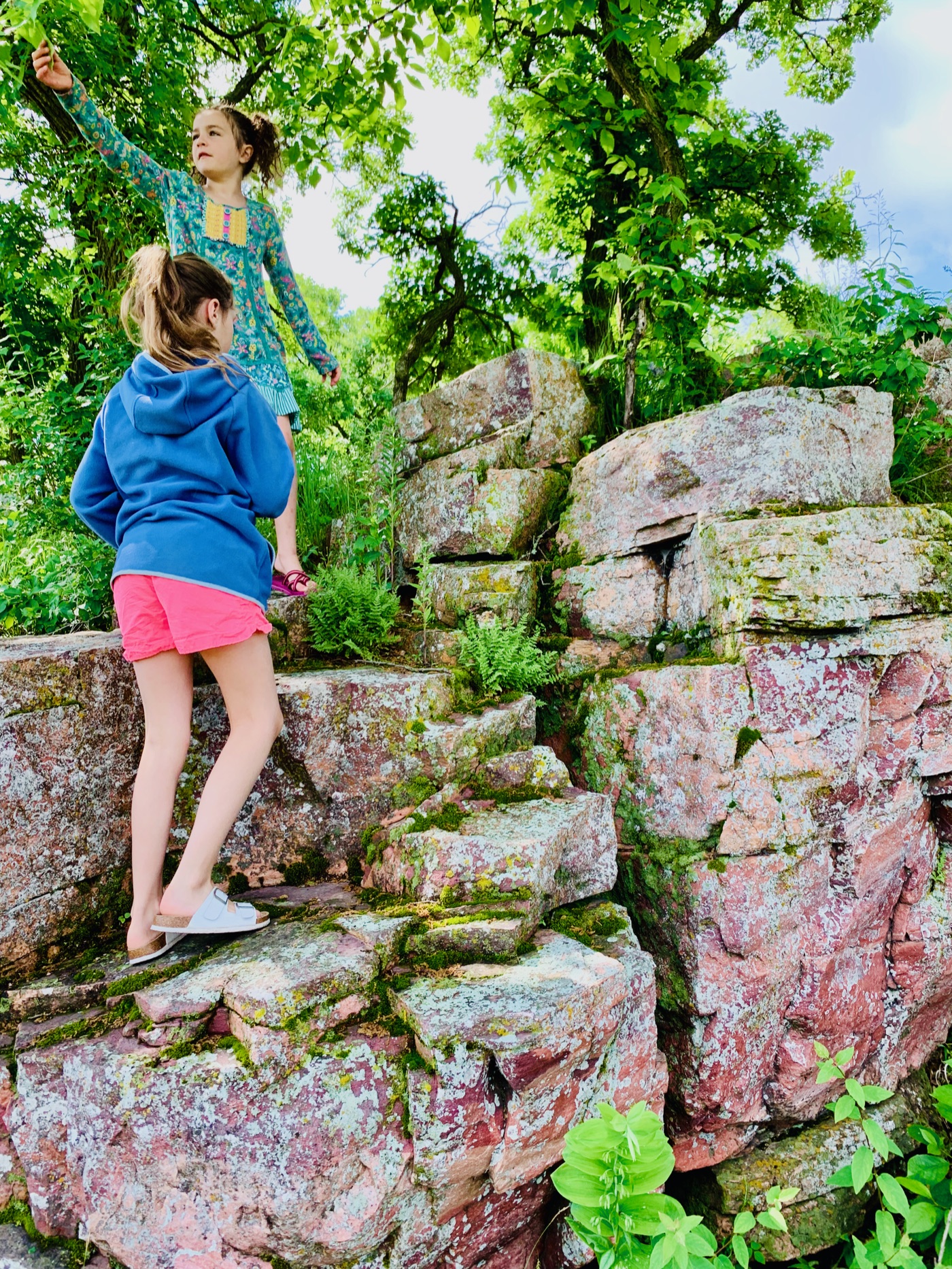 Up the red rock — the trail is short, the wonder is not
Van Life Tips for Pipestone
It is a half-day, and worth the detour. The Circle Trail is under a mile and paved, and the visitor center carving demonstrations are the heart of the visit. You can see Pipestone well in a morning — but do not rush the carving or the exhibits. For this park, that is the park.
There is no camping inside the monument. Plan to stay just outside. Split Rock Creek State Park sits about seven miles south with a lake and a quiet campground, and the town of Pipestone has full-hookup options if you need them. The prairie nights out here are dark and enormous.
Best time to visit: Late spring through summer, when the tallgrass is high and green and Winnewissa Falls is actually running. By late summer the creek can drop, so June is a sweet spot — full falls, wildflowers, butterflies.
What to bring: Sun protection — the prairie is wide open with little shade on the loop — a water bottle, and time. Bring more time than you think a short trail needs.
Where We Headed Next
Pipestone belongs to a whole region of sacred Plains country, and the threads keep tying back to one another. The red stone and the White Buffalo Woman here are the same tradition we met at the breathing cave a little farther west — we wrote that one up in Wind Cave with Kids: Junior Ranger Guide, where the Lakota emergence story is set. And Pipestone was one bright stop in a longer swing through the parks of the region, gathered together in Magic in the National Parks: Upper Midwest.
We drove out over the same flat green prairie we came in on, quieter than we arrived. A place does that to you — takes a little ledge of red rock in the middle of the grasslands and turns it, by the time you leave, into somewhere you will always think of as holy ground. Every step upon Her as a prayer. We are still trying to walk that way.
Wondering how we make these trips happen with the whole family? Read Affordable, Easy and Fun Family Vacations at our National Parks.
Parks Mentioned in This Post
Earn Junior Ranger badges at these parks — track your progress on our badge tracker
Continue the Journey
Wind Cave with Kids: Junior Ranger Guide
Wind Cave National Park holds about 95% of the world's known boxwork — and it is a cave that breathes, exhaling and inhaling through its one natural entrance as the pressure changes. To the Lakota it is Maka Oniye, the breathing earth, the door their people came through...
Magic in the National Parks: Living Legends of the Charming Upper Midwest
Pipestone National Monument is the only place in the U.S. where catlinite — the sacred red stone of Indigenous ceremonial pipes — is still quarried, a right reserved exclusively for Native people. Here's our journey through the Upper Midwest's living legends.
More in National Parks & Places
Jul 14, 2026
Jun 28, 2026