
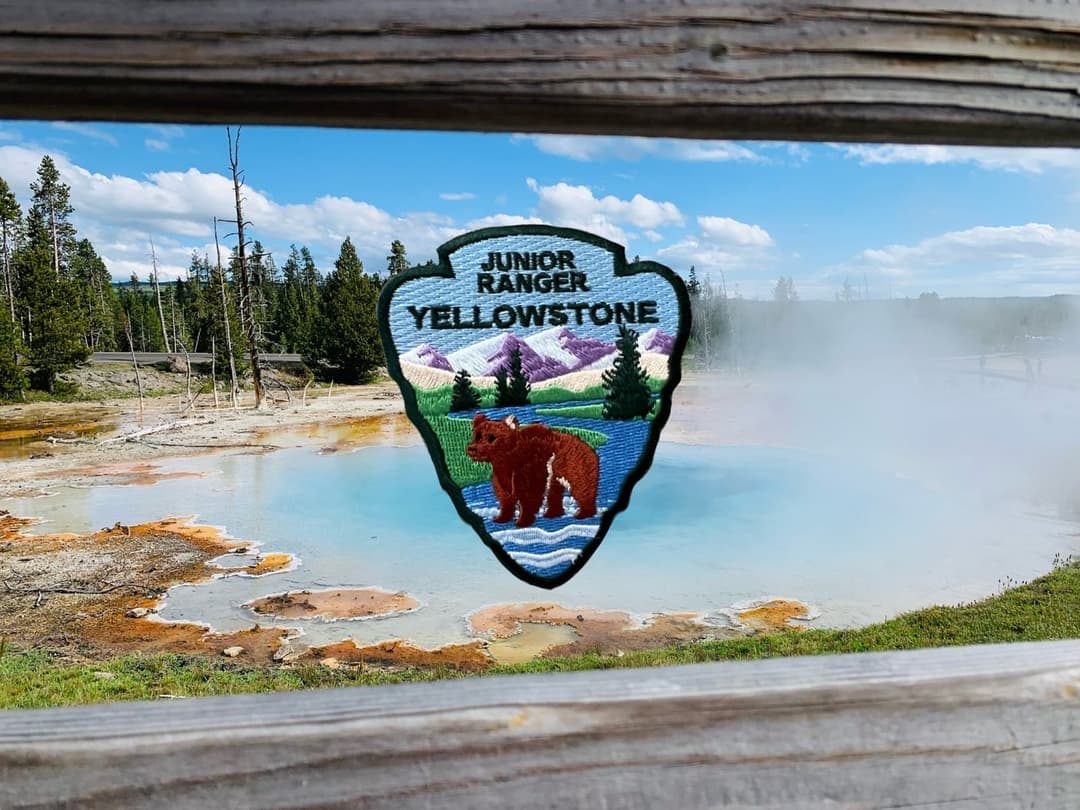
Yellowstone with Kids: Junior Ranger Guide
Yellowstone National Park sits atop one of the largest active volcanoes on planet Earth — a supervolcano whose last great eruption, 640,000 years ago, collapsed the ground into a caldera 45 miles wide. Inside this giant bowl we call Yellowstone, 10,000 hydrothermal features still hiss and steam and breathe. The Junior Ranger book opens right there, with the real truth of the place.
There is something honest about a park that begins by telling you it is alive and unfinished. Most of the country pretends the ground is a settled thing, the Visitor Center instantly reminds you it is not.
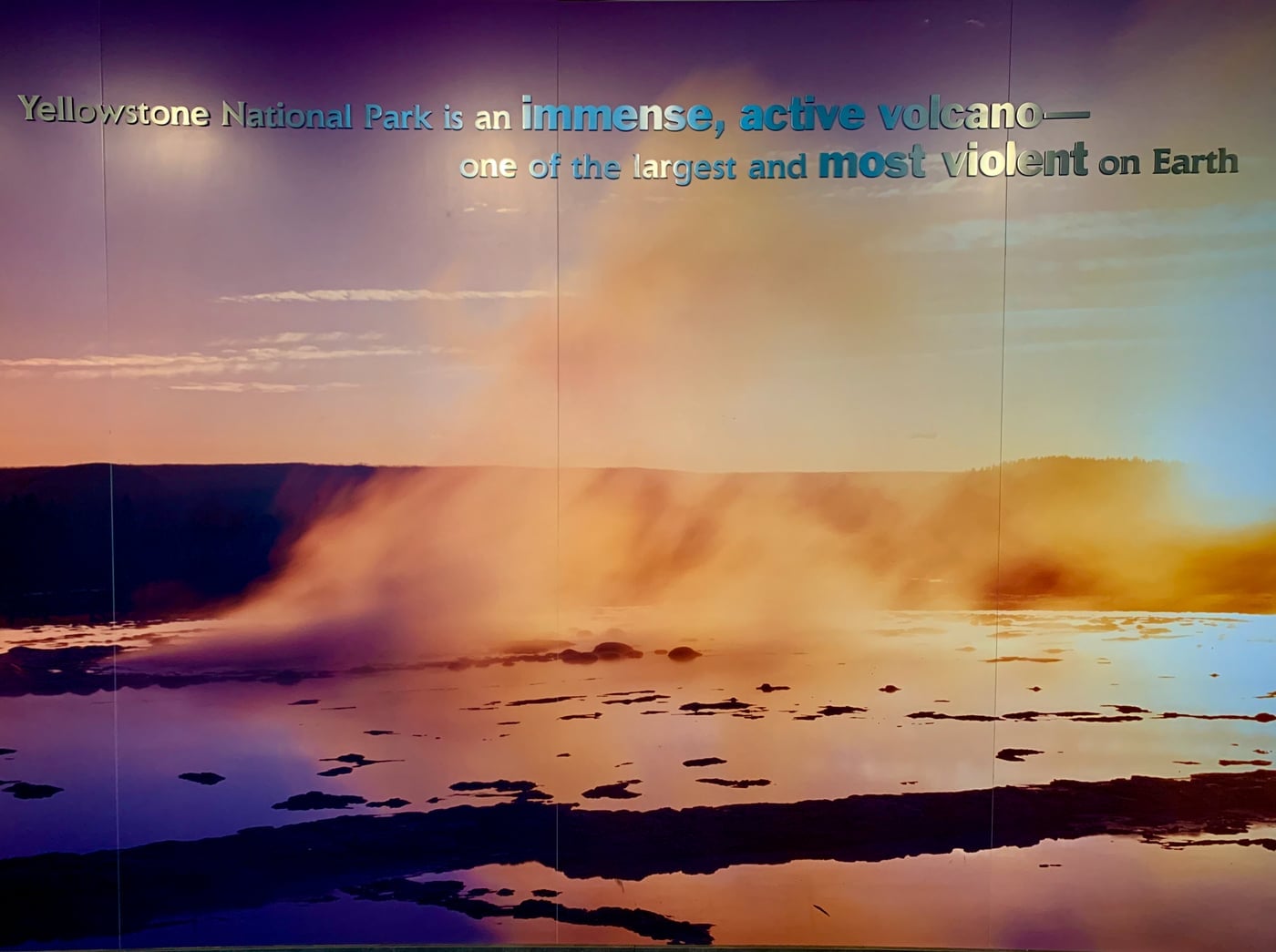 Immense, active, the largest on Earth — Yellowstone
The Junior Ranger Book: A Land That Is Still Being Made
The Junior Ranger book teaches the geology plainly: water falls from the sky, seeps down into the ground, and there the heat from the magma below pushes it back up through the cracks of a geyser's plumbing. That is the whole machine. Rain, rock, fire, and time. Old Faithful is the famous one because it is predictable — an average of 90 minutes, which makes it an easy and generous first geyser for kids, a wild thing that performs on a regular schedule a small attention span can wait out.
The girls learned the words for what they were seeing: hot spring, geyser, fumarole, mudpot. Then it becomes a scavenger hunt across the basins. The ground out there does not look like Earth. Yellow and brown and bone-white mineral crusts, pools the color of nothing you have a name for, steam drifting sideways off water that is magnetic blue.
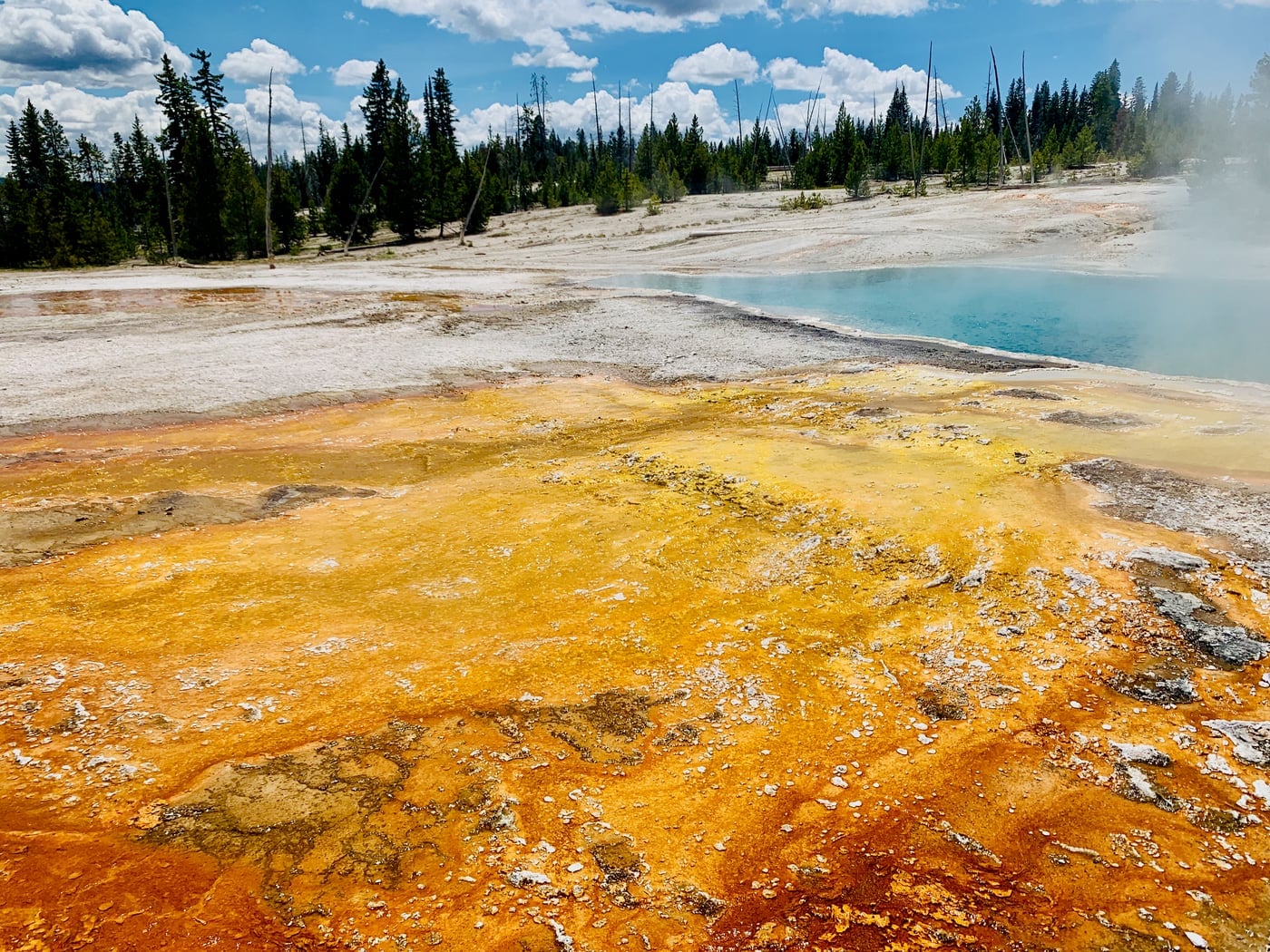 The hydrothermal crust — an alien country, here at home
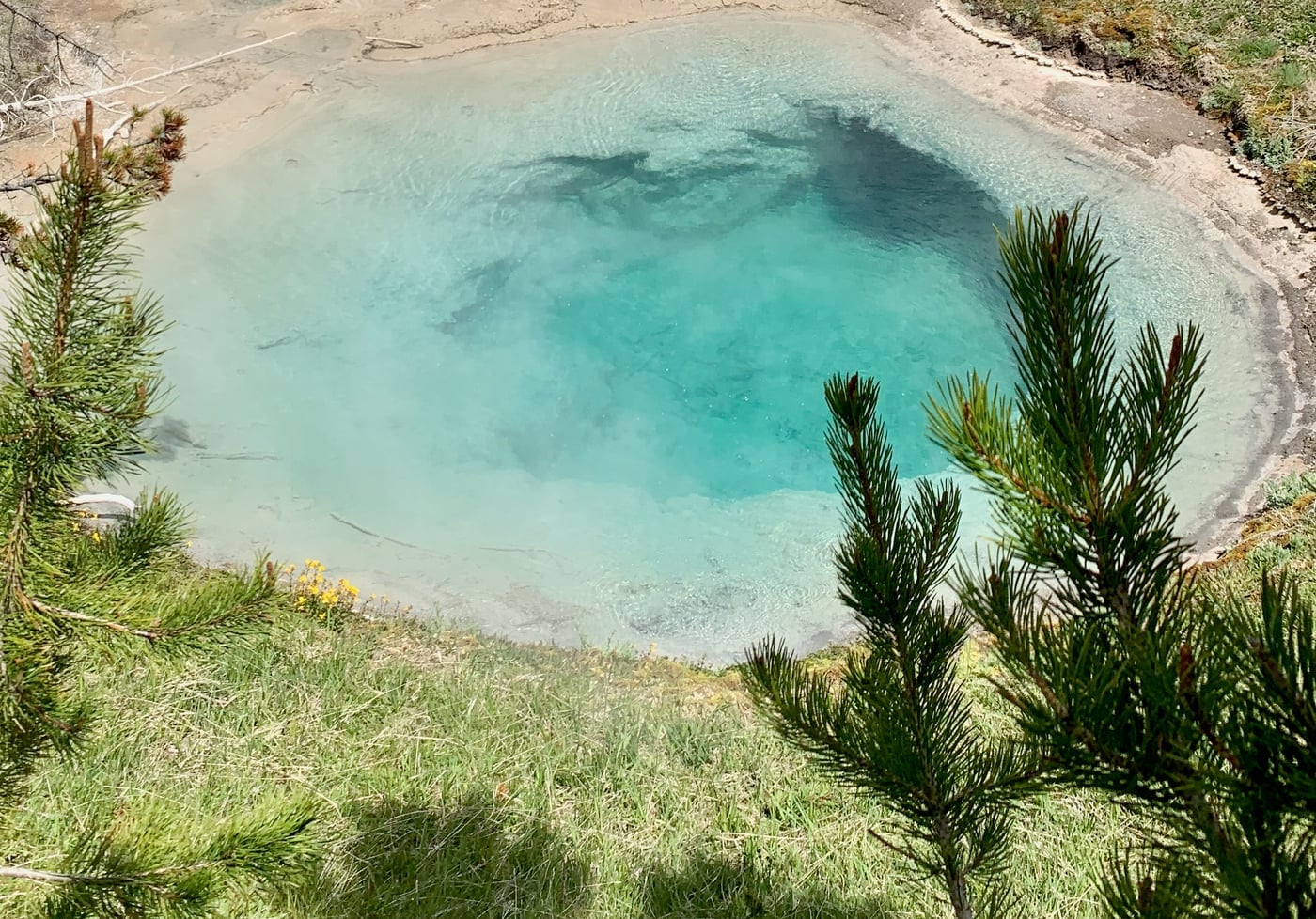 Blue beyond naming, held in a circle of firs
The Junior Ranger Book: Wild Things and Their Homes
The book lists the habitats — grassland, forest, mountain slope, wetland, aquatic — and then asks the question children actually want answered: what lives in each one? The list is long and the girls read it like a roll call. Bison, elk, moose, bighorn sheep, pronghorn, mule deer. Black bear, red fox. Coyote, gray wolf, mountain lion. The prolific yellow-bellied marmots that own the rocks out west, and the smallest citizens too — pikas, squirrels, chipmunks. Then the winged ones: the bald eagle and the great gray owl, the sandhill crane, and the nutcrackers and magpies that follow you around like they are in on something.
Then, at the top of the chain: the grizzly bear—the apex predator. There are around 1,030 grizzly bears in the Greater Yellowstone Ecosystem, moving through a vast wilderness surrounding the park, making it one of the most densely populated and best-known places in the continental United States to encounter wild grizzlies. In landscapes where grizzlies still roam, every step in the wild feels different—you move more cautiously through their world.
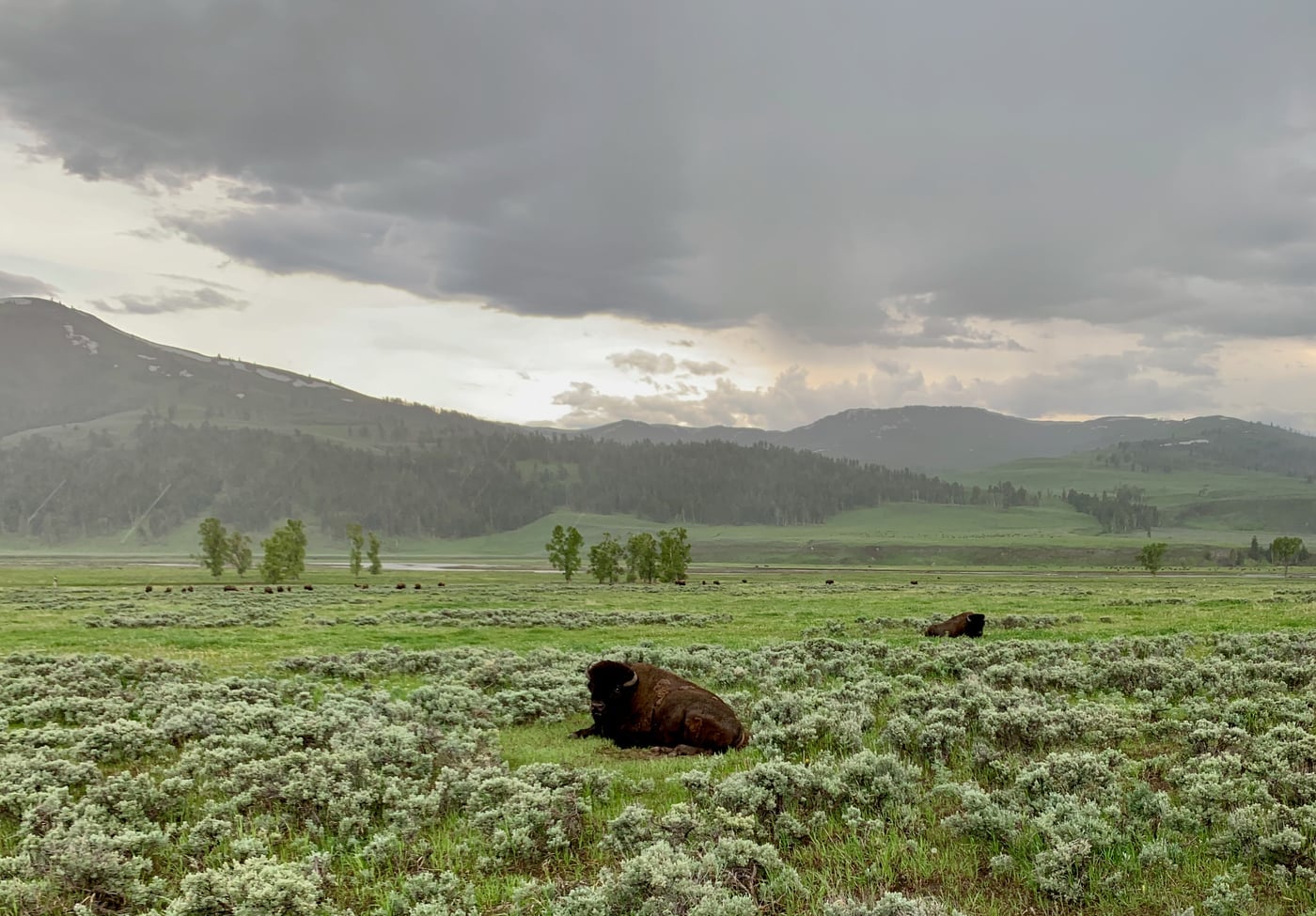 Bison and sagebrush under a June storm sky
The Junior Ranger Book: Learning to Read the Water
The page that stayed with me was the one where the children color the temperatures of the water. Blue is extremely hot — 198°F. Yellow, orange, and brown are the middle range. Green, at the cooler edges, is the safest, and even that word is doing a lot of work. The book does not hide what these numbers mean. Around 120°F burns after prolonged contact. At 140°F a severe burn happens in seconds. At 160°F there is immediate tissue destruction. Past that, the language runs out, and the truth underneath it does not.
That is why the park asks you to stay on the boardwalks and the marked trails, and why bringing small children out among the geyser basins is a quietly anxious thing to do. You count heads more than you would anywhere else. But the danger here is rarer than the fear of it — 22 visitors have died in the scalding water since the park was established in 1872. It is sobering that this is still more than the deaths from bears and bison combined. More people have come to harm through human error than through any wild animal — and most of those animal encounters, if we are honest, were human error too: people who would not give a wild thing the room it was owed.
The girls understood the boardwalk rule better after the coloring page than they would have after any lecture. The book had already shown them, in crayon, where the line was.
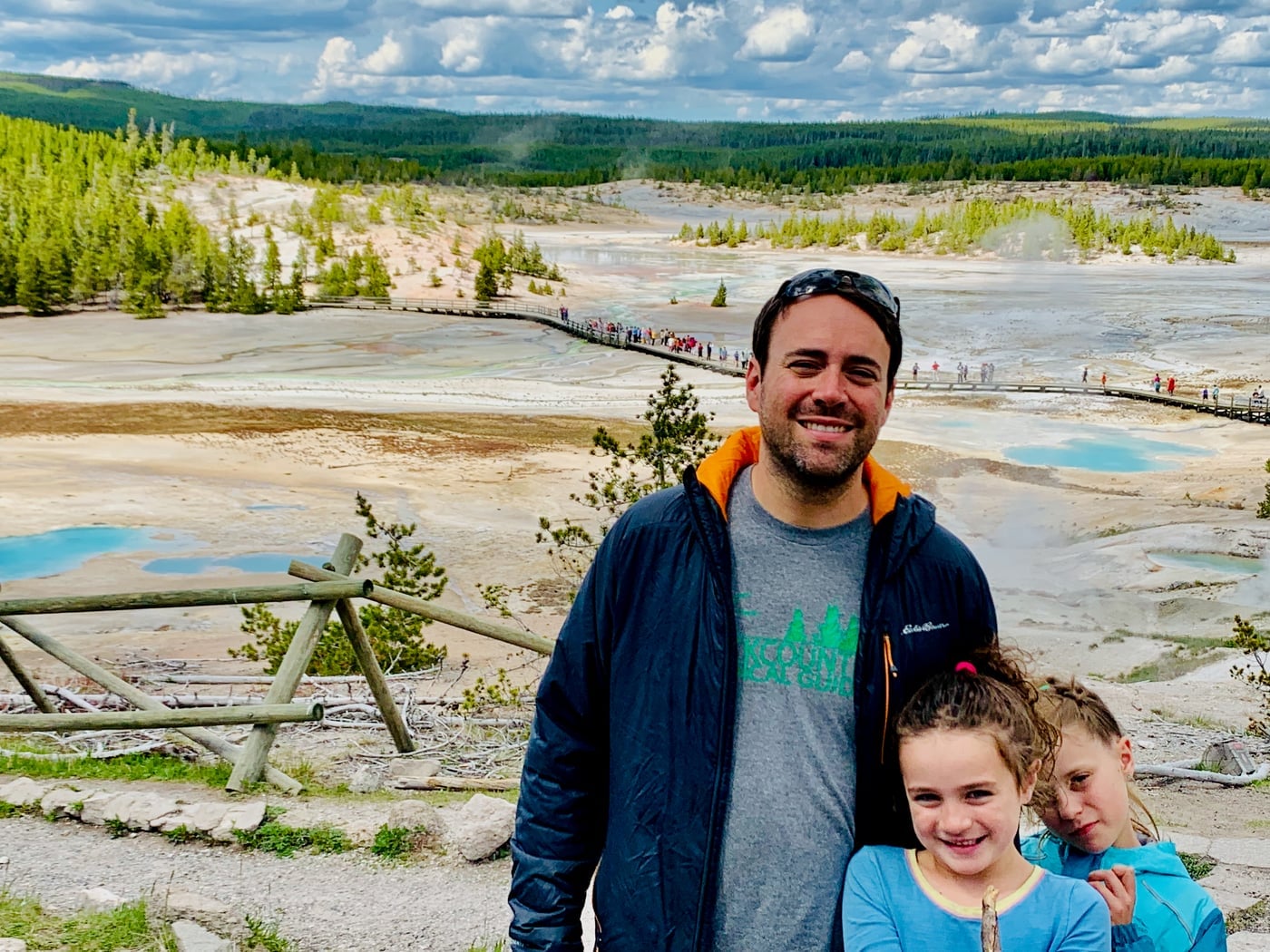 Sprinterdad and the girls, above the steam
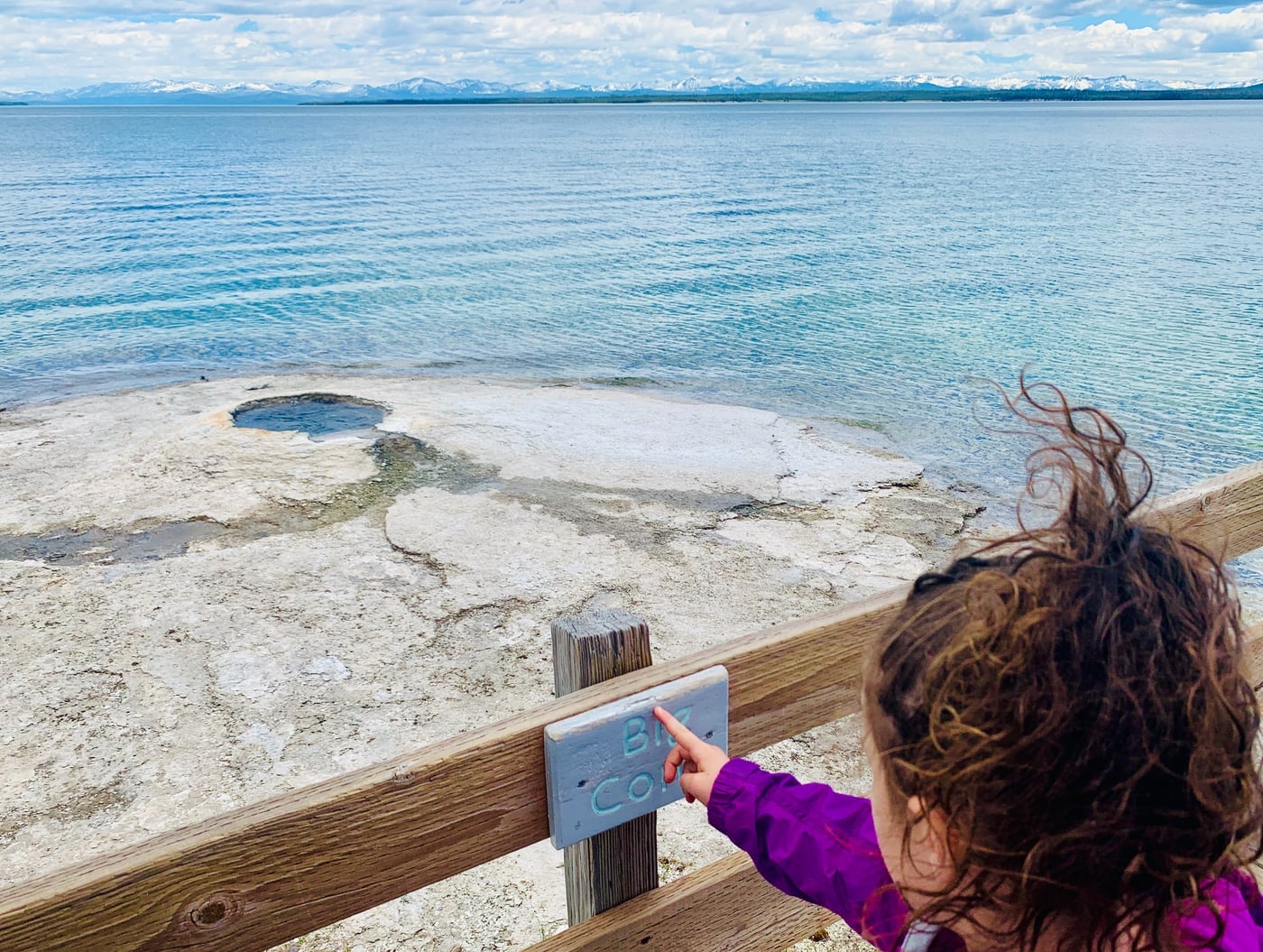 Finding the Big Cone, where the lake meets the boiling ground
The Lake, the Bison, and the Quiet Watching
In every walk with nature one receives far more than he seeks. — John Muir
Yellowstone Lake does not look volcanic until you remember everything here is. It sits there enormous and blue-green against the Absaroka Range, calm on the surface and full of fire underneath — the whole park in one view, if you stand still long enough to see it. Right at the shoreline the boiling ground keeps its own counsel, a few feet from water cold enough to kill you a different way.
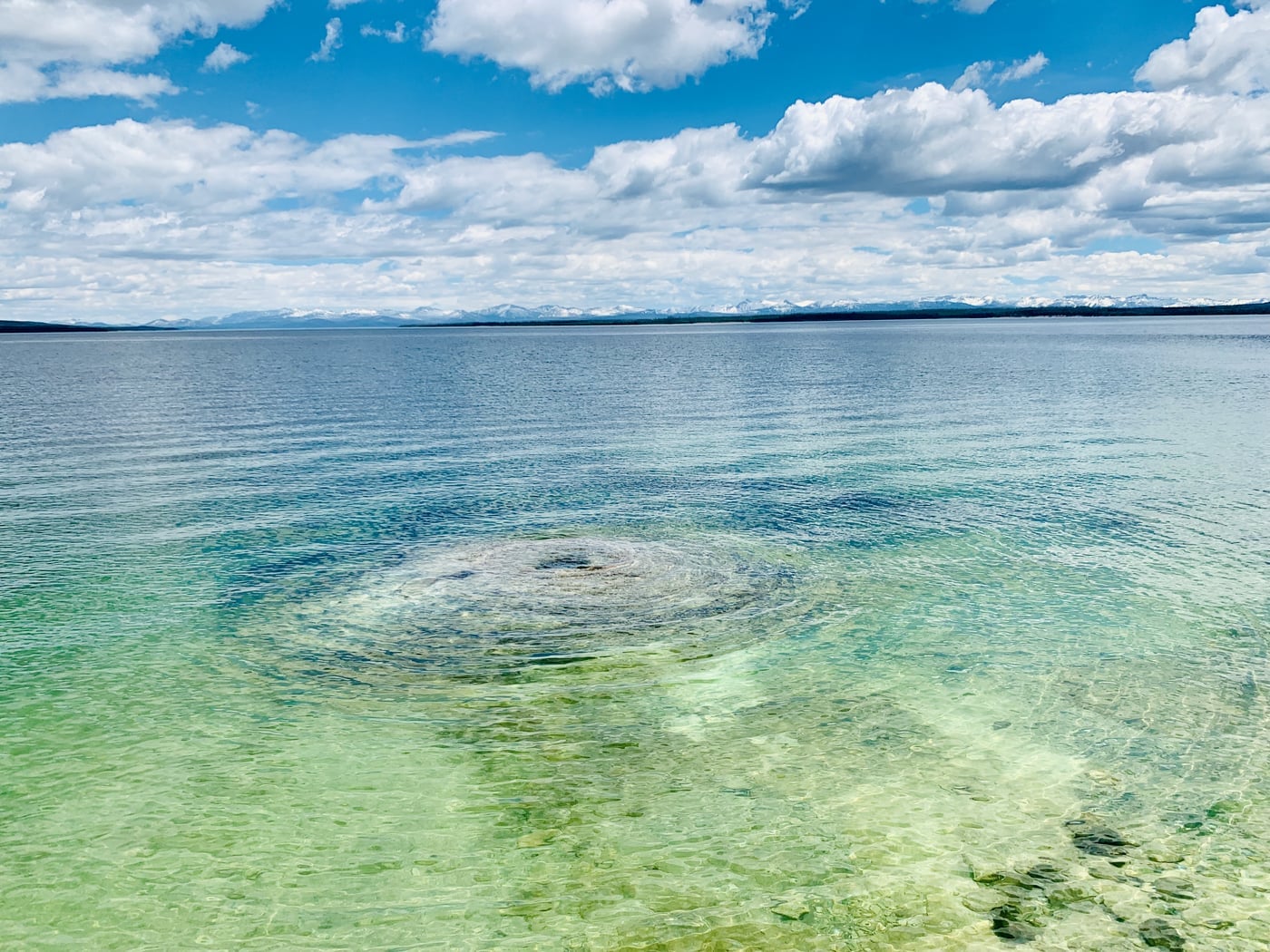 Yellowstone Lake and the Absaroka Range
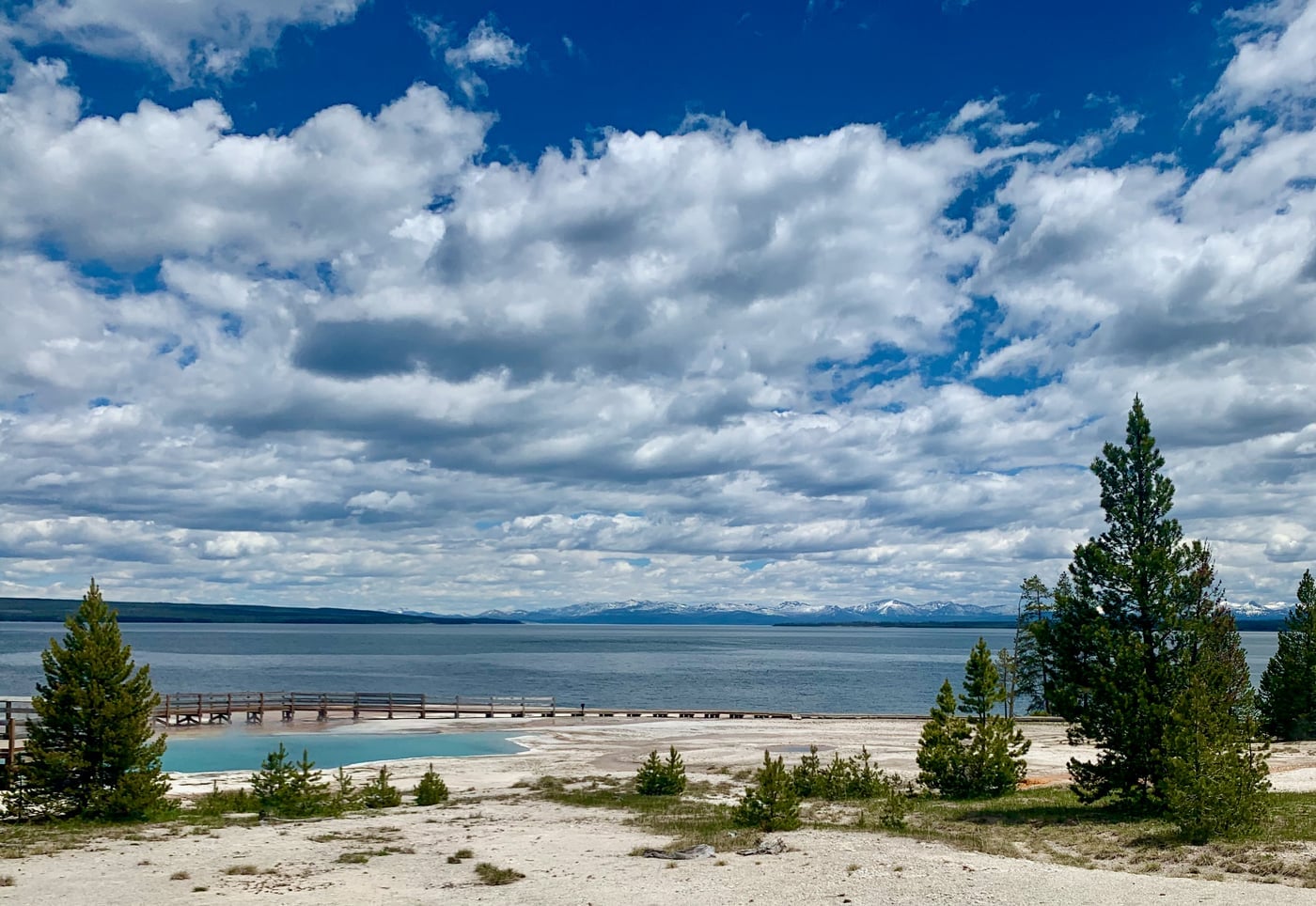 Still water, restless ground
For the wildlife, the book is clear about manners: bison in Lamar or Hayden Valley, and give them plenty of space — that is the whole instruction, and it is the right one. Some of the best of the trip was not the big set pieces at all but the slow looking. Crouching to investigate a flower the girls had never seen. Following a bird with our eyes until it landed. The kind of attention a place like this teaches you almost against your will.
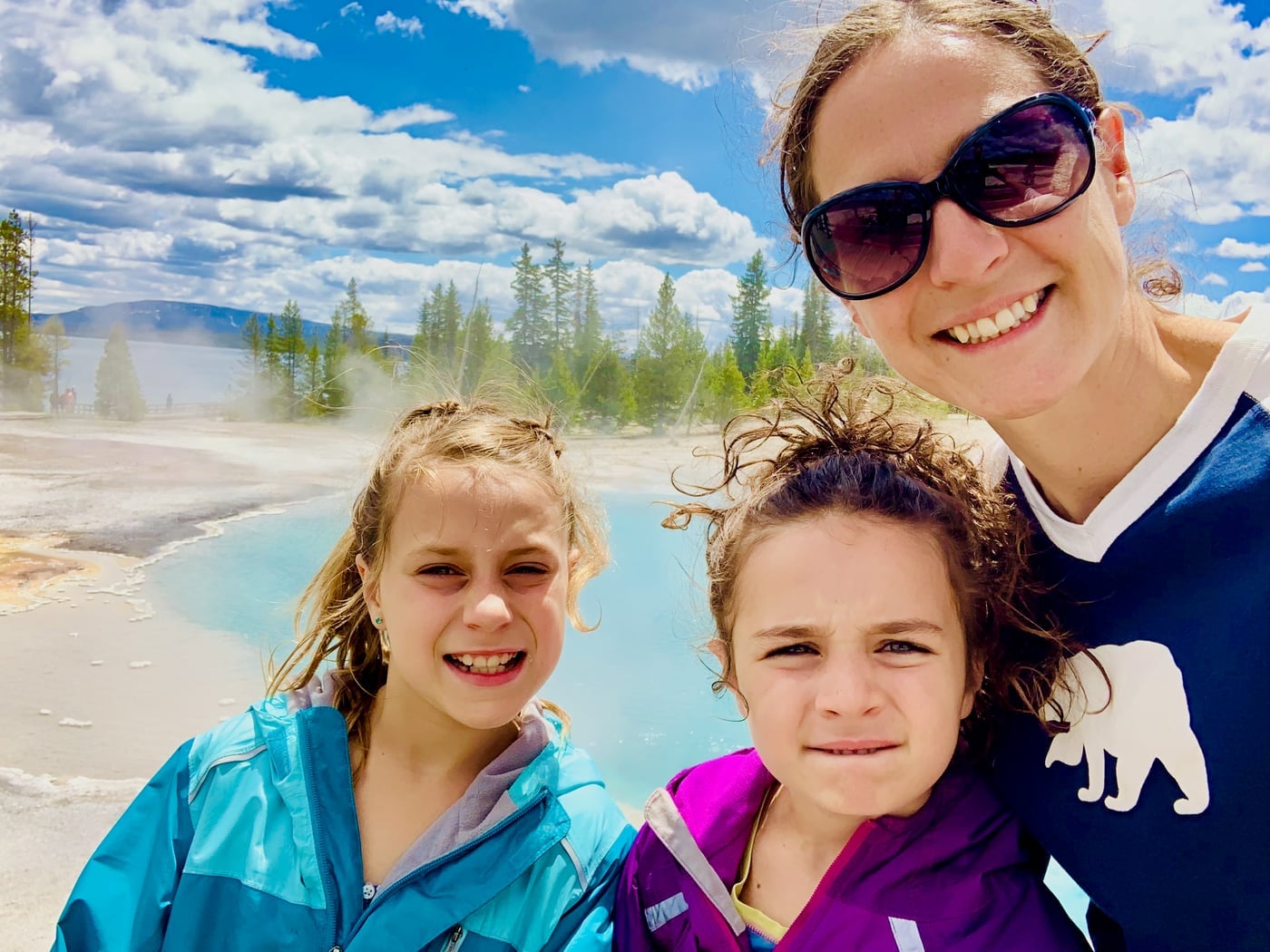 Layered up and out in it — adventure mom and her crew
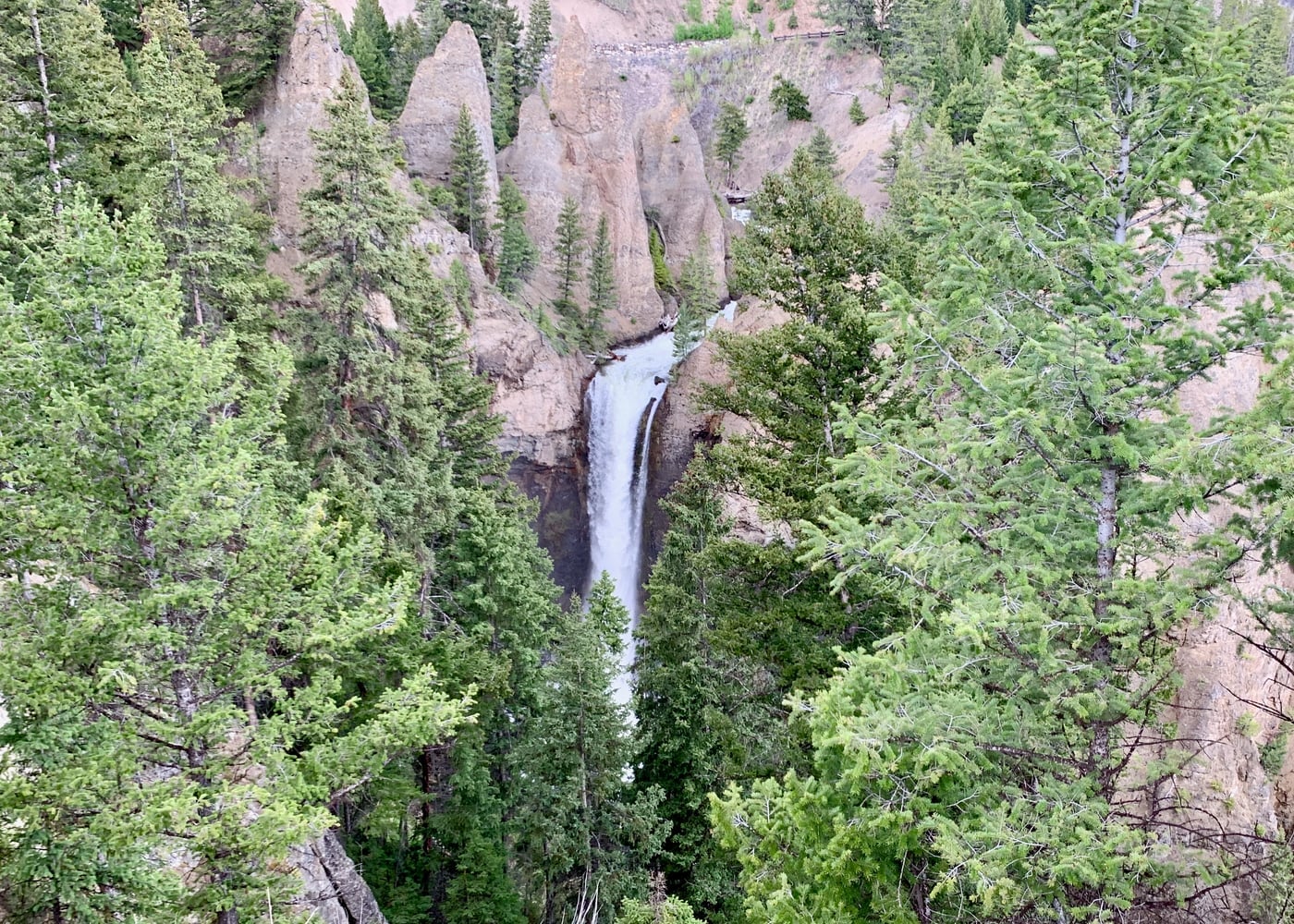 Falling water in a green gorge
June Still Has Snow Up High
Here is the practical truth nobody from anywhere warm expects: Yellowstone in June can still have snowpack on the ground. We did not have the Mountain West in our bones yet — nothing in our history would have led us to believe that June, real summer June, could still mean 10 foot walls of snow at 11,000 foot elevation. The girls thought it was a miracle. There is a photograph of one of them eating a fistful of the almost melted snowpack off the Yellowstone plateau averaging 8,000 foot elevation like it was the most reasonable thing in the world, which, to her, it was.
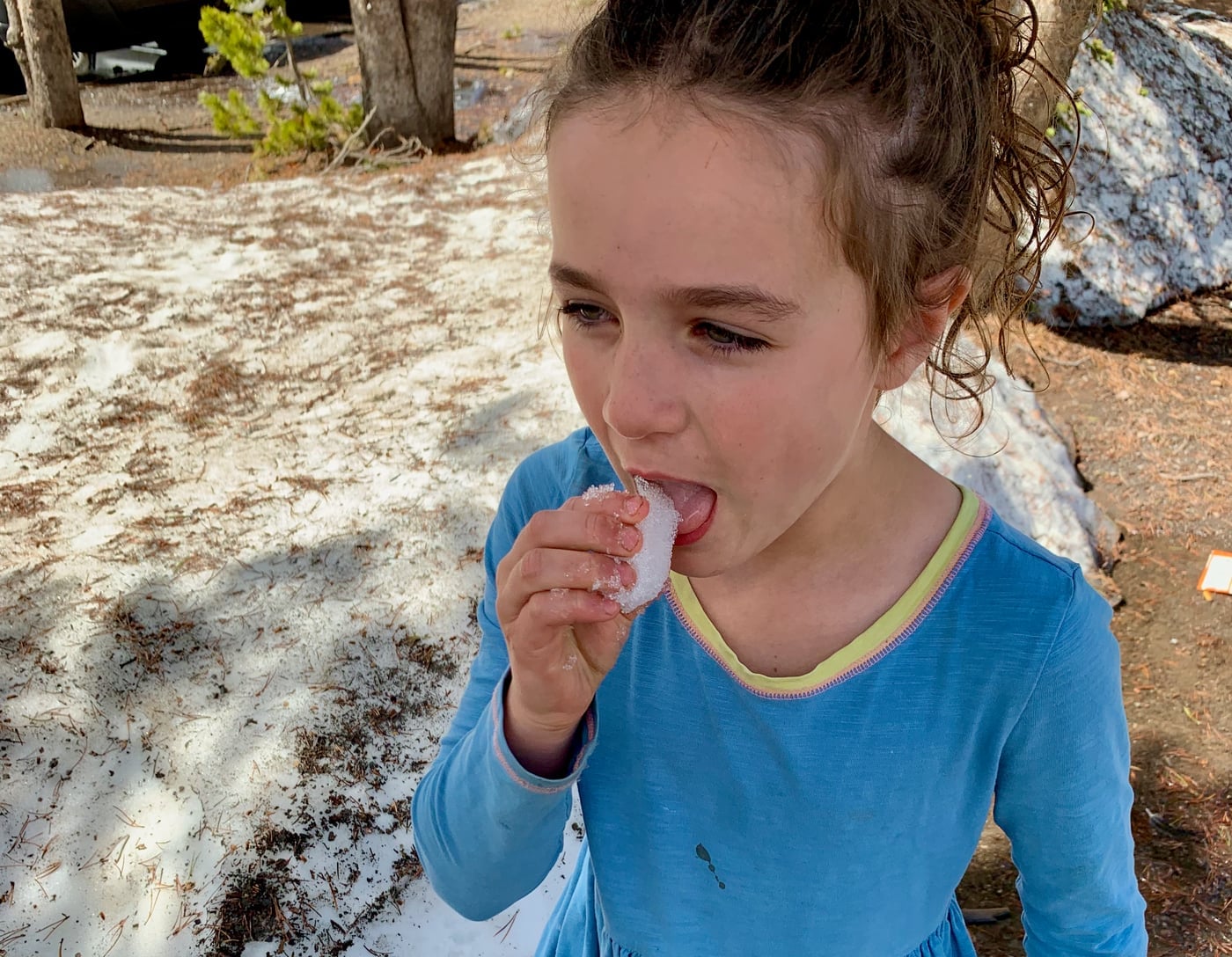 June snow, eaten by the fistful — Yellowstone, the 12th
Plan your exit before you need it. There are five main ones, and they are not equal. Be honest with yourself about your rig and the season before you commit to a route out — that single decision shaped the rest of our trip more than anything we did inside the park.
Van Life Tips for Yellowstone
Plan your exit before you arrive. There are five main entrances and they are not interchangeable — the right one depends on your rig, your route, and the season. We learned this the hard way. Look at the topography of your exit road, not just the map distance.
Know your rig honestly. We came through towing an overloaded 40-foot fifth wheel behind an F150, on tires we did not yet know were stripped. A road that is a scenic drive in a car is a different animal behind a heavy trailer. Be honest about what you are driving before you commit to a mountain exit.
Best time to visit: June is not summer up high. Expect snowpack at elevation well into the month, even when the valleys are warm. It is a beautiful, uncrowded window — just go in knowing the high country has not read the calendar.
What to bring: Real layers for the kids regardless of valley temperatures, sun protection for the open basins, and more fuel than the map says you need. The geyser boardwalks and the high passes do not care what season it technically is.
Boardwalk discipline with little ones. The hydrothermal water is genuinely lethal, not a cautionary exaggeration. Count heads, hold hands at the rails, and let the Junior Ranger temperature page do some of the teaching before you ever reach the basin — it lands better than a parent's warning.
Fuel up before the remote stretches. If you leave through Cooke City toward Beartooth, fill the tank first. There are no gas stops on that climb, and running low at 10,000 feet is a mistake you only want to read about, not live.
Where We Headed Next
We left Yellowstone through the Northeast Entrance, near Cooke City and Silver Gate, towing our overloaded forty-foot fifth wheel behind the F150 — with stripped tires we would not discover until later — straight up onto the Beartooth Highway. The road climbs above 10,000 feet through alpine lakes and snowfields and views that go on for seventy miles. One of the most scenic drives in the country. Also, without the right equipment, one of the most jaw-clenching. We drove between walls of snowpack still standing over the highway in summer, amazed and a little undone, having had no experience that would have told a local what we were about to do.
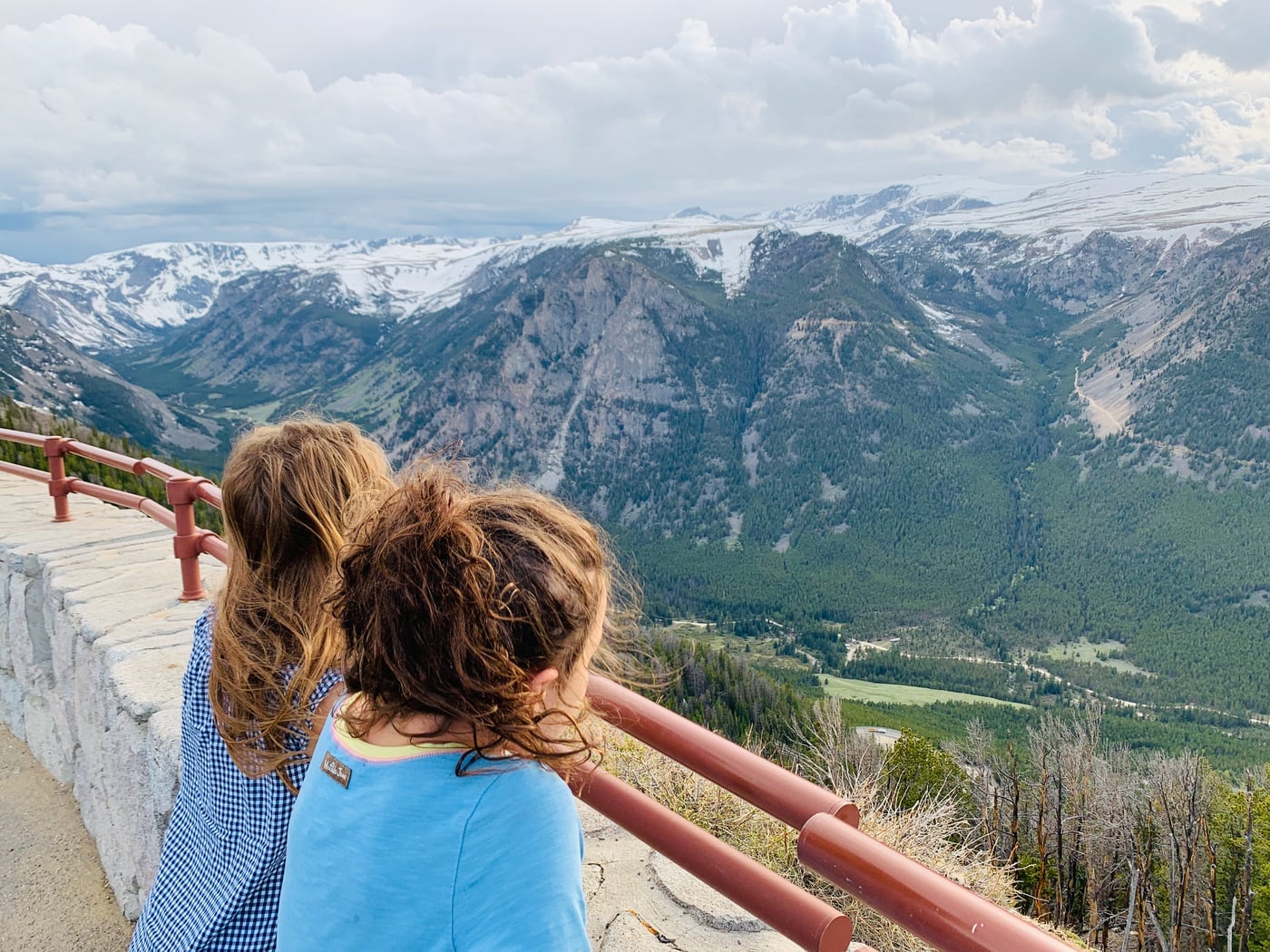 The summit of Beartooth Pass
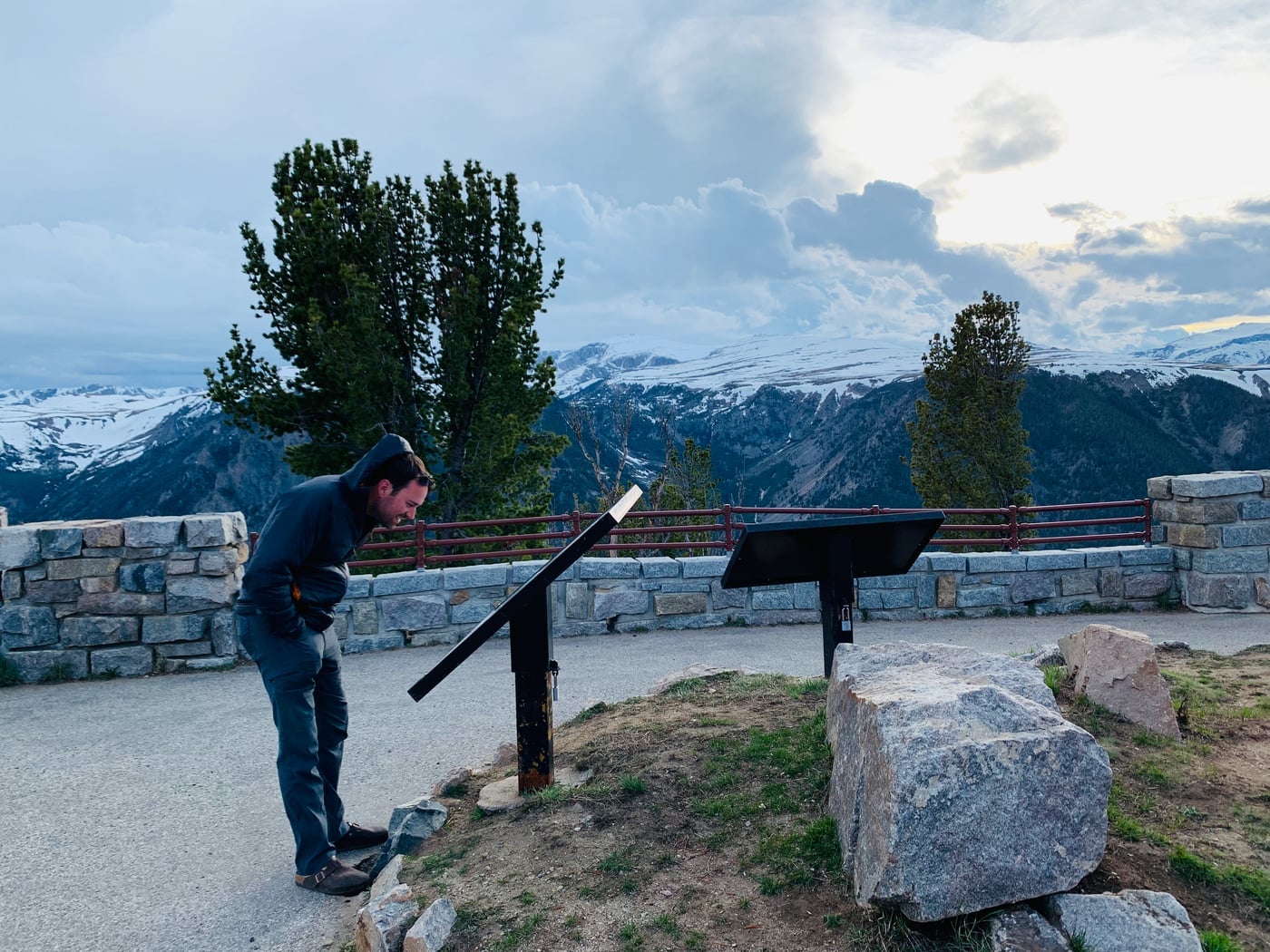 Reading the sign that told us what we had already driven
That drive earned its own story — the empty gas tank, the glacier walls, the merry little mountain town waiting on the far side. We told all of it in Montana's Highest Highway: All Hail to Beartooth Pass.
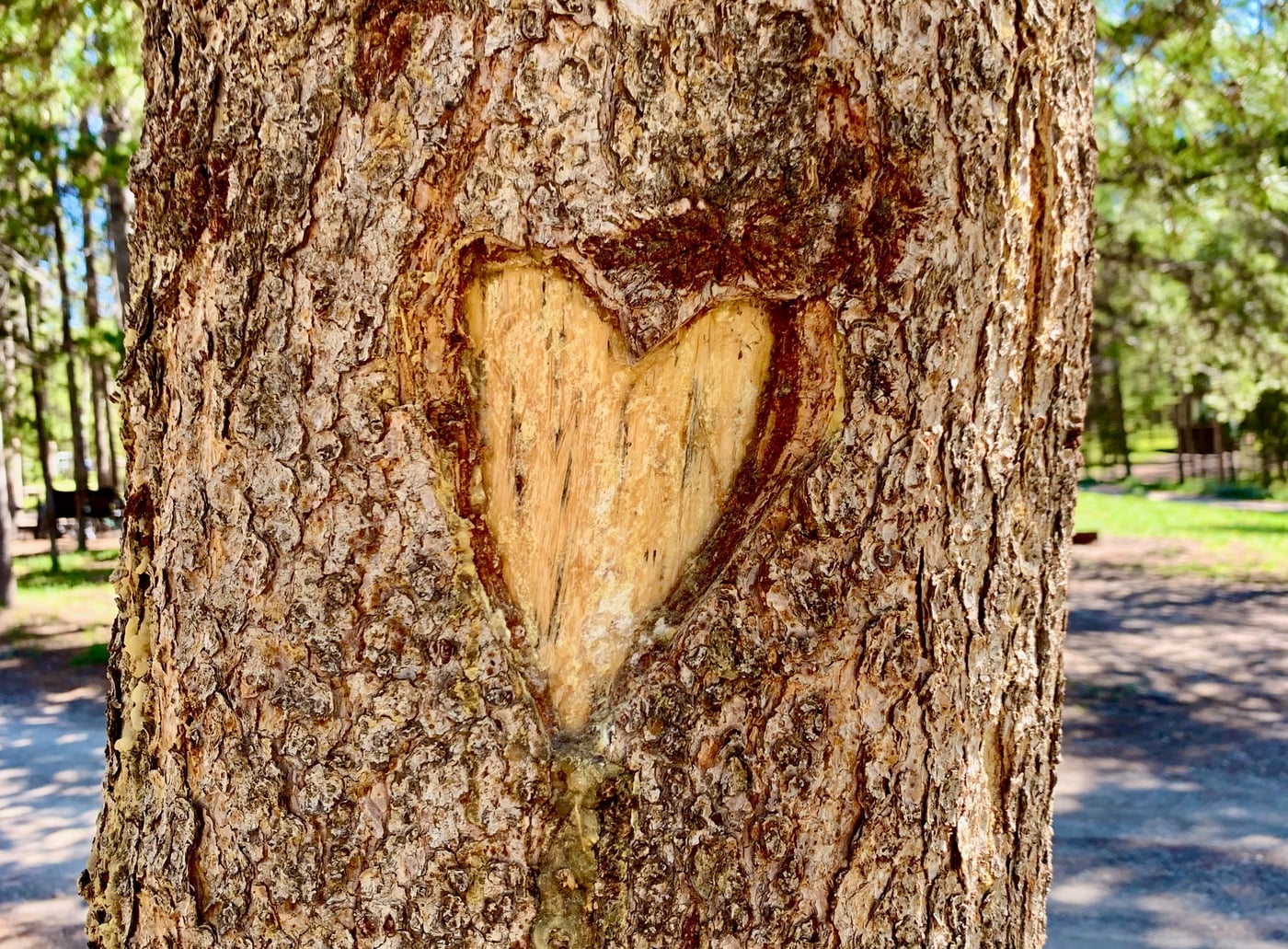 A heart on a pine, somewhere out west
Yellowstone does not let you forget that the ground is alive, patiently waiting — as nature always does — to reshape the magnificent landscapes we call the Mountain West. The reflection of our place in time, how what feels immense through human eyes may be small in the rhythm of billions of years.
Wondering how we make these trips happen with the whole family? Read Affordable, Easy and Fun Family Vacations at our National Parks.
Parks Mentioned in This Post
Earn Junior Ranger badges at these parks — track your progress on our badge tracker
Continue the Journey
More in National Parks & Places
Jul 14, 2026
Jul 4, 2026